


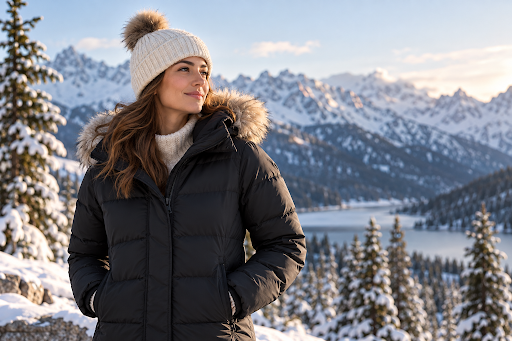
Winter-jacket shopping should be fairly straightforward. Somehow, it rarely is.
One coat promises impressive fill power. Another claims to be waterproof, breathable, packable, and warm enough for conditions that sound suspiciously close to an expedition. Then there is the stylish puffer that looks perfect in the mirror but may or may not survive an actual freezing morning.
The good news is that learning how to choose a winter jacket does not require memorizing every technical term on the tag. It starts with understanding your own winter.
Where do you live? Is the cold dry or damp? Are you outside for ten minutes at a time or an hour? Do you walk, commute, travel, hike, or mostly move between a heated house and a heated car?
Answer those questions first, and the right coat becomes much easier to spot.
The Quick Answer
A winter jacket should match your climate, activity level, time spent outdoors, and normal layers.
For dry cold, down can provide excellent warmth without excessive weight. For wetter conditions, synthetic insulation can be more forgiving. If rain, slush, or heavy snow are common, the outer shell deserves just as much attention as the insulation.
Then check the practical details: enough room for a sweater, a hood that stays put, cuffs that block drafts, useful pockets, and enough length for the amount of time you actually spend outside.
The warmest-looking jacket in the store is not necessarily the best one for you.
Start With Your Real Winter
Before comparing brands or insulation numbers, think about the conditions you face most often.
There is a big difference between a cold but dry mountain climate and a coastal winter that delivers rain, wind, and temperatures hovering around freezing. A commuter who walks 30 minutes each way also needs more protection than someone whose outdoor exposure is mostly the distance between a parking space and the front door.
Wind matters as well. The National Weather Service explains that wind increases the rate at which heat is lost from exposed skin, which is why a breezy winter day can feel considerably colder than the thermometer suggests.
So instead of asking, “What is the warmest jacket?” ask a better question:
What do I need my jacket to protect me from most often?
It might be freezing temperatures. It might be wet snow. It might be wind. For many people, it is all three.
Winter comfort also extends beyond what you wear outside. If the season tends to expose every cold corner of your house, our guide to smart winter home upgrades that save energy without sacrificing style has practical ideas for making the indoors more comfortable too.
Understand What Down and Synthetic Insulation Actually Do
The insulation conversation is often reduced to “down is best,” but real life is a little more complicated.
Down is popular because it offers an excellent warmth-to-weight ratio. It can provide substantial insulation while remaining relatively light and compressible, which is especially useful for travel.
You will often see numbers such as 600, 700, or 800 listed as the jacket’s fill power.
According to REI’s guide to insulated jackets, fill power describes the loft and efficiency of down. Higher-fill-power down can provide impressive warmth for relatively little weight and pack down efficiently.
What fill power does not tell you is exactly how warm the entire jacket will be.
A coat’s warmth also depends on how much insulation it contains, how the jacket is constructed, how long it is, whether wind can penetrate the shell, and how well it fits.
That is why an 800-fill jacket is not automatically warmer than every 650-fill jacket on the rack.
Synthetic insulation has a different advantage: it handles moisture better.
It generally dries faster and continues providing useful insulation when damp, making it a practical choice for rainy winters, wet snow, active outdoor use, and anyone who expects the coat to encounter messy weather regularly.
Some jackets deliberately combine both approaches. The REI Co-op Stormhenge 850 Down Hybrid Parka is a useful example of how hybrid construction works: it pairs 850-fill-power down with synthetic insulation mapped into areas where moisture and heat buildup are more likely, then adds a waterproof, breathable outer shell. The lesson is not that everyone needs a hybrid jacket, but that insulation can be placed strategically instead of relying on one material everywhere.
The takeaway is simple. Down is excellent for lightweight warmth, particularly in cold and relatively dry conditions. Synthetic insulation often makes more sense when moisture and activity are bigger concerns, while hybrid designs can combine advantages from both.
Do Not Ignore the Outer Shell
Insulation gets most of the attention, but the outer layer of a jacket can make an enormous difference.
A wonderfully insulated coat will still feel disappointing if wind cuts through it or wet snow soaks the exterior.
This is also where shoppers should understand the difference between water resistant and waterproof.
A water-resistant coat may handle light snow or a brief drizzle perfectly well. If you regularly walk in rain, sleet, or wet snow, a more protective waterproof shell can be worth the investment.
Look for practical features such as sealed seams, adjustable cuffs, a protective front zipper or storm flap, a high collar, and a hood that offers genuine coverage rather than merely looking good on a hanger.
The CDC’s winter-weather guidance recommends wearing several loose-fitting layers with an outer layer that helps protect against wind, rain, and snow during very cold conditions.
That outer shell may not be the glamorous part of the jacket, but on a miserable February morning, it can be the part you appreciate most.
Choose the Right Length for How You Live
Jacket length is easy to dismiss until you have spent half an hour standing in freezing wind.
Shorter jackets are convenient for driving, running errands, and active days. They allow plenty of movement and can be all you need in a relatively mild winter.
Longer parkas extend protection over the hips and thighs, making them useful for colder climates, long walks, outdoor events, commuting, and travel.
The Fjällräven Nuuk Parka is a good illustration of this approach. Its longer cut extends over the rear and thighs, while synthetic insulation and a waterproof, windproof shell are designed for cold, wet, and changeable weather. It demonstrates why shoppers facing damp cold and frequent wind may want to think about coverage and weather protection together rather than judging a coat by insulation alone.
But longer does not automatically mean better.
If you frequently get in and out of a car, hike, walk quickly, or need a wide range of movement, an extremely long coat can become cumbersome.
The right jacket should give you enough coverage for your usual winter routine without feeling as though you are trying to navigate daily life inside a sleeping bag.
Leave Room for the Layers You Actually Wear
One of the easiest mistakes to make when buying a winter jacket is trying it on over a thin shirt in a heated store.
That is not how you are going to wear it in January.
Try the coat over the type of sweater, fleece, or base layer you normally wear. Then zip it completely and move.
Raise your arms.
Reach forward.
Cross your arms.
Sit down.
If the shoulders pull sharply, the zipper strains, or the sleeves suddenly expose half your forearms, the coat is probably too small for real winter use.
At the same time, bigger is not automatically warmer. Excess space around the neck, cuffs, and hem can allow cold air to move inside.
The goal is comfortable room for layers without losing the jacket’s protective shape.
Layering is especially useful if your days move between very different temperatures. YHDC’s January capsule wardrobe for real-life men follows a similar philosophy: choose versatile pieces that work together instead of relying on one item to solve every situation.
Active Days Call for Less Bulk and More Flexibility
The coat that keeps you comfortable while watching a winter football game may feel unbearable halfway through a brisk hike.
Activity generates heat.
If your winter routine includes skiing, hiking, walking quickly, shoveling snow, or other higher-output activities, breathability and layering become more important than simply buying the thickest jacket possible.
A flexible system usually includes a moisture-managing layer closest to the body, an insulating layer when conditions require it, and an exterior layer that provides weather protection.
That way, you can adjust as your activity level changes rather than sweating inside an oversized coat and becoming cold once you stop moving.
For trips where the cold is part of the experience, our guide to cold-weather bliss has additional ideas for winter travel, layering, and making the season considerably more enjoyable.
The Small Details Become Big Details in Cold Weather
 A jacket can look perfect and still be irritating to live with.
This is why the small features deserve a few minutes of attention before you buy.
Test the hood. Does it stay on when you turn your head? Can you tighten it when the wind picks up? Does it protect your forehead without falling over your eyes?
Check the collar. A higher collar can make a surprising difference when cold air starts finding every gap in your clothing.
Look at the cuffs. Adjustable cuffs can help prevent wind and snow from traveling up your sleeves.
Then inspect the pockets.
Can you put your hands in them while wearing gloves? Are they deep enough for your phone? Is there a secure inside pocket for keys or a wallet?
These details are easy to overlook under bright store lighting.
They become considerably more important when you are waiting outside in freezing weather wondering why your supposedly excellent coat has nowhere sensible to put your hands.
Be Skeptical of Simple Temperature Ratings
Consumers naturally like labels that say a jacket is suitable for a particular temperature.
Unfortunately, human beings are not thermostats.
The same coat can feel completely different depending on wind, humidity, activity level, what you are wearing underneath it, and how naturally warm or cold you tend to run.
Treat a manufacturer’s temperature guidance as one clue rather than a guarantee.
Construction, insulation, shell protection, length, layering space, and your intended activity tell you much more when you consider them together.
Think About Cost Per Wear
A winter coat is one of the wardrobe purchases where paying a little more can make sense, but price alone does not guarantee quality.
Think about how often you will wear it.
If a jacket becomes your default outer layer for four months every year, it may be worn hundreds of times over its life. In that situation, a well-made coat that lasts for several seasons can be a better value than repeatedly buying inexpensive replacements.
Check the zipper and stitching. Look closely at the cuffs and pocket openings, where wear often appears first. Read the care instructions, particularly with down jackets.
Then look at your wardrobe.
Will this coat work with the clothes and footwear you actually own?
The most useful winter jacket is usually not the dramatic one that requires a perfectly coordinated outfit. It is the one you can grab on a Tuesday morning without thinking twice.
Use the Real-Life Try-On Test
Before buying—or before removing the tags from an online order—give the jacket one last test.
Ask yourself:
- Can I wear my normal winter layers underneath it?
- Can I move my shoulders and arms freely?
- Are the sleeves long enough when I reach forward?
- Does the hood stay in place?
- Does the collar protect my neck?
- Are the pockets genuinely useful?
- Does the hem give me enough coverage?
- Can I sit and drive comfortably?
- Does it make sense for the weather I experience most often?
- Will I realistically wear it several times a week?
That final question matters more than any technical specification.
Winter jackets live very ordinary lives. They walk dogs. They carry groceries. They sit through school pickup. They scrape ice from windshields. They travel through airports and get thrown over restaurant chairs.
The right one should handle all of that without making you think about it.
The Your Home Design Center Take
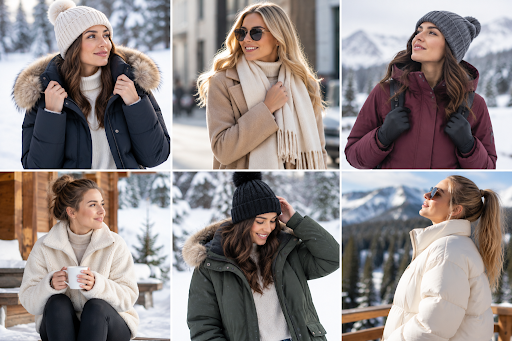 Learning how to choose a winter jacket is not about finding the coat with the biggest hood, the highest fill-power number, or the most impressive list of technical features.
It is about matching the jacket to your life.
Start with your climate. Decide whether lightweight down warmth, moisture-friendly synthetic insulation, or a combination of the two suits you better. Pay attention to wind and water protection. Choose enough length for the time you spend outside. Leave room for real layers, and do not underestimate the usefulness of a good hood, adjustable cuffs, and pockets that actually work.
The Fjällräven Nuuk and REI Co-op Stormhenge also demonstrate an important point: there is more than one way to build an effective winter coat. One emphasizes substantial synthetic insulation and longer weather protection, while the other combines down, synthetic insulation, and a waterproof shell. The better choice ultimately depends on the conditions you expect to face.
Then move around in it.
A good winter jacket should make cold weather easier, not give you another piece of equipment to manage.
When you can step outside, stay comfortable, and mostly forget about what you are wearing, you have probably found the right one.
