


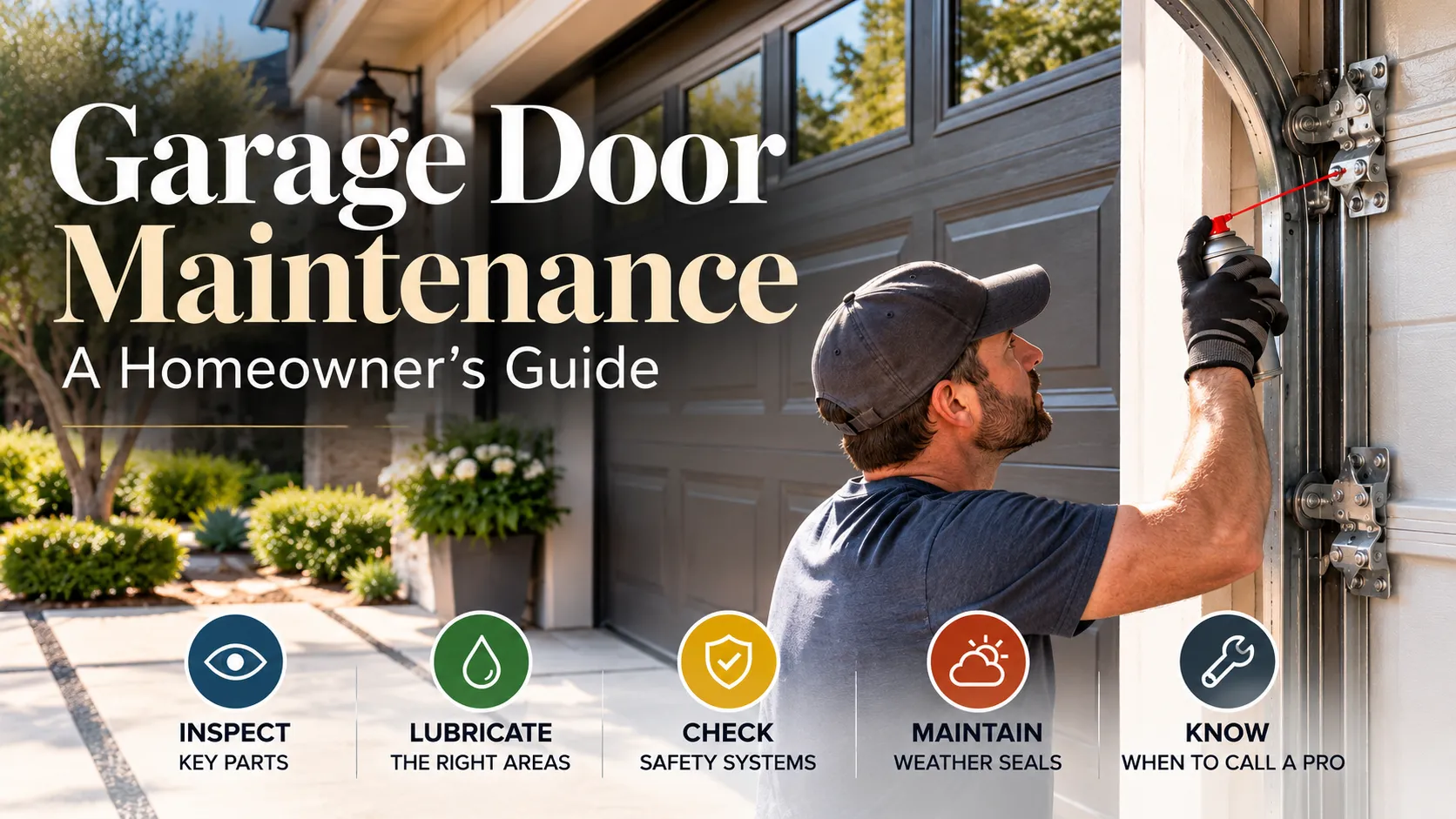
The garage door may be the largest moving object in your home, yet it is easy to ignore until something starts squeaking, shaking, sticking, or refusing to open.
That is a mistake. A garage door is part mechanical system, part exterior finish, and part safety equipment. It can go through hundreds or even thousands of opening cycles while exposed to dust, moisture, temperature changes, wind, and everyday wear.
Regular garage door maintenance does not mean taking the system apart. In fact, some of its most important components should never be adjusted by a homeowner. The smarter approach is knowing what you can safely inspect and maintain yourself, what warning signs deserve attention, and when the job belongs to a trained garage-door technician.
Start With a Slow Visual Inspection
Before reaching for a tool, operate the garage door a few times and simply watch it.
A healthy door should travel relatively smoothly and evenly. Pay attention to jerking, shaking, hesitation, unusual vibration, or one side appearing to move differently from the other.
With the door closed, inspect the hinges, rollers, tracks, panels, weather seals, springs, and visible cables. Look for rust, loose fasteners, bent components, cracked rollers, frayed cables, damaged panels, or gaps around the weatherstripping.
The same habit is useful throughout the house. When moving into a property, for example, seemingly minor issues such as worn weatherstripping, loose hardware, and small repairs are easier to address before they become larger problems. Our guide to making a new place feel like home covers several of those overlooked first inspections.
One important distinction applies particularly to garage doors: looking at a component is not the same as working on it.
Springs, cables, cable drums, bottom brackets, and related hardware can be under substantial tension. Homeowners can visually inspect them, but repairs or adjustments should be left to a qualified technician.
Garage Door Maintenance Checklist
For a quick inspection, use this checklist:
- Watch the door open and close and look for uneven or jerky movement.
- Listen for new squeaking, grinding, rattling, or banging.
- Check rollers, hinges, springs, cables, and visible hardware for damage.
- Remove dirt and debris from the tracks.
- Lubricate only the components recommended by the door or lubricant manufacturer.
- Inspect the bottom seal and perimeter weatherstripping for gaps or cracking.
- Clean the photo-eye safety sensors.
- Test the door balance and safety-reversal system according to the manufacturer’s instructions.
- Check painted and finished surfaces for peeling, fading, dents, or corrosion.
- Call a professional if you find damaged springs, frayed cables, bent tracks, or significant balance problems.
A few minutes spent on this inspection can reveal problems before they become an inconvenient—and potentially expensive—repair.
Listen to What Your Garage Door Is Telling You
Garage doors are rarely silent, but a change in sound can be an early warning.
A new squeak may indicate a hinge, bearing, or roller that needs attention. Grinding can point to worn moving components. Rattling may come from loose hardware. A sudden loud bang followed by a door that feels unusually heavy can indicate a spring problem.
Instead of assuming every noise needs lubricant, first determine approximately where it originates.
A door that becomes progressively louder, shakes during travel, moves unevenly, or appears to make the opener struggle deserves further investigation. The opener is designed to move a properly functioning door; it should not have to compensate for a mechanical problem.
Clean the Tracks Before Reaching for Lubricant
Garage-door tracks can collect dust, leaves, cobwebs, grit, and other debris. Remove loose material with a soft brush or cloth and wipe dirty areas as needed.
Avoid assuming that coating everything with grease is the solution.
Garage-door designs differ, and manufacturers do not all give identical lubrication instructions. Consult the maintenance directions for your particular door and opener before applying anything.
The broader principle applies to many exterior materials. Proper maintenance depends on what the component is made from rather than treating every surface the same way. It is something we also emphasize in our guide to seven types of home siding and how to choose the right one.
Use a Lubricant Made for the Job
When lubrication is appropriate, a purpose-built product makes more sense than grabbing whatever general-purpose spray happens to be on the workbench.
One practical option is 3-IN-ONE Garage Door Lube, which is formulated specifically for residential and commercial garage-door systems. The manufacturer lists applications including hinges, chains, springs, pulleys, latches, and tracks and says the clear formula is designed to protect against rust, corrosion, sticking, and squeaking without leaving a heavy messy residue.
The adjustable spray straw also makes it easier to direct the product onto a specific component instead of soaking the surrounding area.
That does not mean every part of the garage door should be sprayed. Follow both the lubricant directions and the maintenance recommendations from your particular garage-door manufacturer.
The goal is controlled lubrication where it belongs, not an oil-coated garage door.
Test the Door’s Balance
A properly balanced garage door should not depend entirely on the opener to control its weight.
Garage-door manufacturers commonly recommend periodically checking balance by disconnecting the automatic opener and manually moving the door according to the manufacturer’s instructions.
When properly balanced, a door should generally remain around a partially open position rather than rapidly falling toward the floor or shooting upward.
If the door feels extremely heavy, travels rapidly on its own, or refuses to remain in position, stop the test.
Do not attempt to correct spring tension yourself. A balance problem often involves the spring system, and those components can store considerable energy.
Test the Safety-Reversal System
Garage-door maintenance is not only about eliminating squeaks or avoiding a repair bill. It also involves making sure the door’s safety equipment works.
Modern automatic garage doors typically use photoelectric sensors positioned near the bottom of the opening. Keep the sensor lenses clean and make sure boxes, bicycles, gardening equipment, and other objects are not interfering with them.
The opener should also have a reversing system designed to react when the closing door encounters an obstruction.
Follow the testing instructions supplied by the opener manufacturer. If the safety system fails a test, address the problem before continuing normal use.
Home safety equipment is easy to ignore precisely because it spends most of its life doing nothing visible. The same principle applies to smoke and carbon-monoxide alarms, which is why routine testing is central to our guide on the summer cleaning task that could save lives.
Check the Weather Seal Before It Fails
The rubber or vinyl seal along the bottom of the garage door does considerably more than make the door look finished.
It helps limit water, dirt, insects, and outside air from entering beneath the door. Perimeter weatherstripping around the sides and top serves a similar purpose.
Inspect these seals for cracks, brittleness, tearing, gaps, or sections that no longer contact the floor or door properly.
This becomes particularly important when the garage is attached to the house, contains a laundry or work area, or is used to store belongings sensitive to moisture and temperature changes.
Replacement weatherstripping can be a manageable DIY project on many doors, but confirm that the replacement profile is compatible with your specific door before buying it.
Do Not Ignore How the Door Looks
Mechanical maintenance gets most of the attention, but the garage door can occupy a substantial portion of a home’s front elevation.
Wash painted or finished doors periodically using a cleaning method appropriate for the material. Look for fading, peeling paint, surface corrosion, cracking, dents, and deterioration around windows and trim.
Wood doors may require periodic refinishing depending on their exposure and the manufacturer’s recommendations. Painted steel doors should be inspected for chips that expose the material beneath. Homes near the coast deserve additional attention because salt-laden air can accelerate corrosion on exposed metal.
Then walk to the curb and look at the garage as part of the entire house.
A faded door, deteriorated weatherstripping, dented panels, or mismatched hardware can make an otherwise well-maintained exterior appear tired. Sometimes maintenance is one of the most effective and affordable ways to refresh a home without renovating, a strategy we explore further in Affordable Ways to Refresh Your Home Without Renovating.
Know Which Repairs Are Not DIY Projects
There is a clear line between routine garage-door maintenance and garage-door repair.
The Door & Access Systems Manufacturers Association warns homeowners against adjusting or repairing high-tension components such as springs, cables, bottom brackets, and related hardware.
Call a qualified garage-door technician if you notice:
- A broken or visibly damaged spring
- Frayed or damaged cables
- A door that suddenly feels extremely heavy
- A door that drops or rises rapidly when operated manually
- Uneven movement from one side to the other
- Bent or badly damaged tracks
- A safety-reversal system that does not work
- Persistent grinding, binding, or violent shaking
- Structural damage to the door or mounting hardware
These are not good opportunities to learn a repair from an online video. The consequences of getting a high-tension garage-door component wrong can be far more serious than the cost of a service call.
Make Garage Door Maintenance Part of the House Routine
Garage-door care becomes much easier when it is treated as routine home maintenance rather than something you think about only after the door stops working.
Once a month, watch and listen while the door operates. Look for obvious changes in its movement, sound, cables, springs, rollers, and safety sensors.
Several times a year, give the system a closer inspection. Clean dirt and debris, examine the weather seals, check visible hardware, inspect the exterior finish, and perform manufacturer-recommended safety tests.
Follow the manufacturer’s recommendations for lubrication and professional service rather than relying on a universal schedule.
Keeping a simple record of repairs and service dates is useful as well. A recurring noise, alignment issue, or component failure becomes easier to recognize when you know what has already been repaired.
The goal is not to turn every homeowner into a garage-door technician.
It is to notice when something changes.
Watch how the door moves. Listen when its sound changes. Keep it clean. Maintain the appropriate moving parts and weather seals. Test its safety systems. Most importantly, recognize the components that can be inspected but should never be adjusted by an inexperienced homeowner.
A few minutes of preventive attention throughout the year can help catch small problems before they become expensive ones while keeping one of the home’s largest exterior features looking like an intentional part of the property rather than an afterthought.