


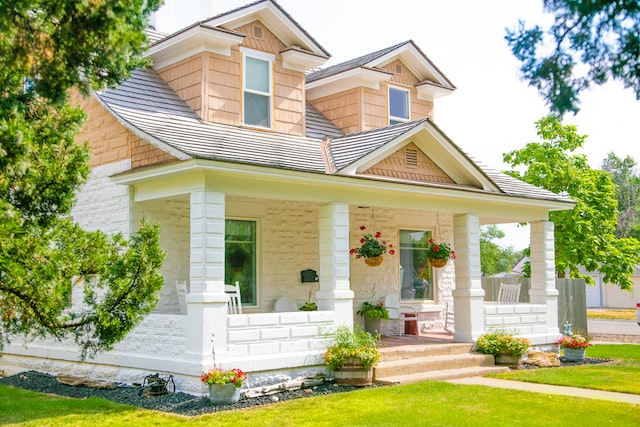
New siding can make a house look dramatically better from the street, but appearance is only the beginning of the decision.
The material covering your exterior walls has to handle sun, rain, wind, temperature changes, moisture, insects, and years of everyday exposure. It also determines how much maintenance you may be taking on after the installation crew leaves.
That is why choosing among the different types of home siding should be less about finding the material that looks best on a sample board and more about finding one that suits your house, climate, budget, and willingness to maintain it.
There is no universal winner. Vinyl remains popular for affordability and relatively simple maintenance. Fiber cement offers durability and broad design flexibility. Natural wood provides character that manufactured products try to replicate, while stucco, brick, and stone can become defining architectural features when they are well matched to the home.
Current data from the National Association of Home Builders also shows how varied those choices have become. Among new single-family homes started in 2025, vinyl accounted for 27.7% of the primary exterior material, followed by stucco at 24.1% and fiber cement at 22.6%. Regional preferences vary considerably, which is a useful reminder that what works beautifully on one house may not be the right answer for another.
1. Vinyl Siding
Vinyl remains one of the most familiar siding materials, and its appeal is easy to understand.
It is available in a wide range of colors and profiles, does not require routine repainting, and is generally easier on a renovation budget than many masonry or premium siding materials. Modern vinyl can also reproduce the appearance of traditional lap siding, shakes, and other exterior styles.
For homeowners who would rather spend a Saturday enjoying the backyard than repainting the house, that relatively low-maintenance quality is a major advantage.
Vinyl is not indestructible, however. Severe impact can crack panels, some colors can fade over time, and improper installation may cause panels to buckle or become loose.
Best for: Homeowners prioritizing affordability, straightforward maintenance, and a wide selection of styles.
Consider before choosing it: Compare product quality, panel thickness, wind ratings where appropriate, color warranties, and installer experience rather than making the decision on price alone.
2. Fiber Cement Siding
Fiber cement has become an important alternative to traditional wood siding.
Made from a mixture that typically includes cement, sand, and cellulose fibers, it can be manufactured as lap siding, shingles, vertical panels, and other profiles. That flexibility allows it to complement Craftsman, farmhouse, coastal, contemporary, and transitional homes.
Fiber cement is resistant to rot and insect damage, and the material itself is noncombustible. That does not mean a fiber cement exterior makes an entire house fireproof. Fire performance depends on the complete wall assembly, surrounding materials, openings, and construction details.
The material is also heavier than vinyl and requires careful cutting, fastening, flashing, and clearance from roofs, soil, and other surfaces.
Best for: Homeowners seeking a durable exterior with the appearance and design versatility of painted siding.
Consider before choosing it: Look at installation costs, repainting expectations, manufacturer warranties, moisture-clearance requirements, and whether the contractor regularly installs the particular product you are considering.
This is also the kind of project where installation experience can matter as much as the material. If siding replacement is part of a larger remodel, our guide to the benefits of hiring a professional to renovate your home explains why professional experience becomes particularly valuable on more technical projects.
3. Engineered Wood Siding
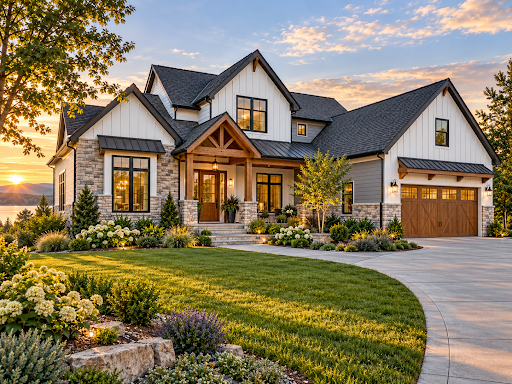 Engineered wood offers another option for homeowners who like the warmth of wood but want to compare alternatives to traditional cedar or redwood.
These products typically combine wood strands or fibers with resins, treatments, and protective finishes. They can reproduce the texture of lap siding, shakes, or panels while often weighing less than fiber cement.
Engineered wood can also come factory-finished in a variety of colors, which can simplify the initial installation.
That does not mean moisture management can be ignored. Proper clearances, flashing, sealed edges, and careful installation around doors and windows remain important to long-term performance.
Best for: Homeowners who want a convincing wood appearance with different maintenance and installation characteristics from natural wood.
Consider before choosing it: Review manufacturer installation requirements, warranty terms, cut-edge treatment, ground clearances, and how the product should be protected from persistent moisture.
4. Natural Wood Siding
Some materials imitate wood remarkably well. None of them are actually wood.
Natural cedar, redwood, pine, and other species continue to appeal because of their warmth, grain, texture, and ability to give an exterior genuine character.
Wood can be installed as traditional clapboards, shingles, shakes, board-and-batten siding, or more contemporary profiles. It can also be painted, stained, or allowed to weather depending on the species and desired appearance.
The tradeoff is maintenance.
Sunlight and moisture gradually wear down finishes, and neglected siding can become vulnerable to splitting, decay, mildew, or insect damage. Repainting or restaining therefore becomes part of ownership rather than a once-and-done project.
Best for: Homeowners who prioritize authentic materials and architectural character and are comfortable with regular upkeep.
Consider before choosing it: Think carefully about your climate and the exposure of different sides of the house. A shaded wall can age very differently from one receiving intense afternoon sun.
5. Stucco
Stucco is closely associated with Spanish, Mediterranean, Southwestern, and many contemporary homes.
Its continuous surface can give an exterior a clean architectural quality, while different colors and textures allow it to feel rustic, traditional, or distinctly modern. Its versatility has helped make stucco particularly common in Western and Southwestern markets.
Successful stucco, however, is about much more than the finish you see.
Water that moves past the exterior surface needs a reliable route back out. The U.S. Department of Energy’s building-science guidance emphasizes the importance of a properly integrated water-resistive barrier and drainage plane behind exterior cladding so moisture can drain away rather than becoming trapped inside the wall. Homeowners planning this type of exterior can review the DOE’s guidance on drainage planes behind exterior wall cladding.
Best for: Homes where stucco suits both the architecture and established regional construction practices.
Consider before choosing it: Ask about flashing, drainage, cracks, wall penetrations, window detailing, and whether the contractor has extensive experience installing stucco systems.
6. Brick and Brick Veneer
Brick has a sense of permanence that works on architectural styles ranging from traditional Colonial homes to streamlined modern houses.
Many houses described as brick homes actually use brick veneer. In these systems, the brick provides the exterior finish while the structure is carried by the wall behind it.
One of brick’s major advantages is that the finished surface generally requires relatively little routine maintenance. Mortar joints can still deteriorate over time, however, and flashing and drainage behind the masonry need to function correctly.
Brick should also not be selected on the assumption that the exterior finish alone determines a home’s energy efficiency. Insulation, air sealing, windows, framing, thermal bridging, and overall wall construction are all part of the equation.
Best for: Homeowners who want a durable masonry appearance with strong architectural presence.
Consider before choosing it: Account for mortar maintenance, potential repair costs, flashing and drainage details, and whether matching brick will be readily available if repairs are needed years from now.
7. Stone Veneer
Stone has a way of adding depth and visual weight that flatter siding materials cannot.
Natural stone veneer and manufactured stone veneer are often used around entries, foundations, chimneys, columns, or selected portions of an exterior rather than covering the entire house.
That restraint can actually produce a stronger result. Stone used thoughtfully can emphasize architecture without overwhelming it.
Transitions between materials deserve careful attention as well. Windows, doors, rooflines, ledges, and areas where stone meets another siding material all need to be properly flashed and drained.
Best for: Adding texture, visual weight, and architectural emphasis to selected areas of the exterior.
Consider before choosing it: Think about proportion, installation quality, drainage, and whether the color and texture of the stone genuinely suit the architecture rather than simply following a trend.
How to Choose the Right Siding for Your Home
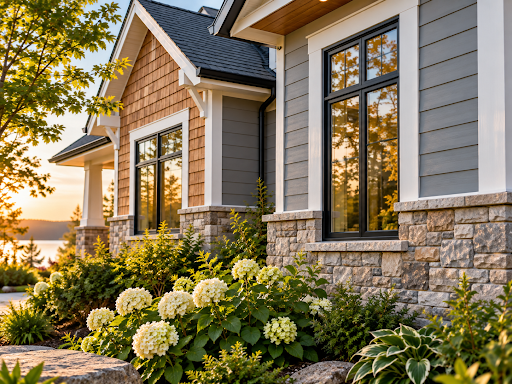 Once you have narrowed down the types of home siding you like visually, start asking less glamorous—and much more useful—questions.
Begin with climate.
A siding material used successfully in Southern California may encounter completely different conditions in coastal Florida, snowy New England, or the rainy Pacific Northwest. Sun exposure, humidity, salt air, rainfall, wind, freeze-thaw cycles, and local wildfire conditions can all influence what makes sense.
Then compare your options based on:
- Initial material cost
- Installation and labor costs
- Expected maintenance
- Painting or refinishing requirements
- Moisture and pest resistance
- Repairability
- Local climate
- Architectural compatibility
- Manufacturer warranty
- Availability of qualified installers
- HOA requirements
- Local building codes
Try not to make the siding decision independently from the rest of the house. Roofing, windows, trim, landscaping, exterior materials, and architectural details work best when they feel considered together.
Our article on why more homeowners are choosing integrated design for their dream homes explores why looking at the entire home often produces a more cohesive result than treating each improvement as a separate project.
What Is Behind the Siding Matters Too
One of the smartest opportunities in a siding project happens after the old material comes off.
That exposed wall gives the contractor a chance to identify deteriorated sheathing, damaged flashing, moisture problems, air leaks, and other issues that may have been hidden for years.
Depending on the house and local construction requirements, siding replacement may also create an opportunity to discuss insulation or air-sealing improvements before the new exterior is installed.
The siding itself should not be expected to do everything.
A durable exterior depends on several layers working together, including siding, flashing, the water-resistive barrier, drainage details, sheathing, insulation, and properly sealed penetrations.
Before approving a siding proposal, ask what happens after the existing material is removed.
Will damaged sheathing be repaired? How will doors and windows be flashed? What water-resistive barrier will be used? Will insulation need attention? How will exterior lights, vents, faucets, electrical boxes, and other penetrations be sealed?
Those questions may not be as exciting as choosing between warm white and soft gray, but they can have a much greater effect on how the finished exterior performs.
If siding replacement is part of a larger project, preparing before demolition begins can make the process considerably easier. Our guide to how to prepare your home for renovation covers planning, budgeting, protecting belongings, and preparing for the disruption that accompanies larger home projects.
Don’t Choose Siding Based on Looks Alone
Curb appeal matters. You will probably see the exterior of your house almost every day, so there is nothing wrong with wanting it to look great.
But siding is also part of a working building envelope.
A beautiful material installed badly can become an expensive problem. A less glamorous material selected thoughtfully and installed correctly may perform beautifully for decades.
When comparing types of home siding, look at the complete picture: how the material fits the architecture, how it handles your local climate, how much maintenance it requires, what is happening behind it, and whether experienced installers are available to do the job properly.
The Your Home Design Center Take
The best siding choice is rarely the material that wins every category.
Vinyl may make perfect sense for a homeowner who wants manageable costs and straightforward maintenance. Fiber cement may justify its higher installation demands for someone prioritizing durability and architectural versatility. Natural wood can be an excellent choice when character matters enough to justify regular upkeep, while stucco, brick, and stone can define the personality of the right home.
Think beyond the sample board.
Choose a siding material that works with your climate, your house, your budget, and the amount of maintenance you actually want to perform. Then give just as much attention to the wall system and installation behind it.
The best exterior renovation should look better from the curb on day one—and still feel like a smart decision years later.