


Window treatments tend to look deceptively simple. Choose a fabric, pick a color, hang it over the window, and the room is finished—at least in theory.
In practice, the wrong treatment can interfere with a window handle, leave awkward gaps, collect moisture, block more daylight than intended, or provide very little privacy after sunset. The right choice must work with the window’s size, shape, opening mechanism, and location. Return restrictions and custom-order mistakes can also make poor measurements especially expensive.
Before comparing Roman shades, curtains, shutters, and blinds, begin with what the room actually needs.
The Quick Answer
Choose window treatments by considering:
- How the window opens
- Privacy and light-control needs
- Space inside and around the frame
- Cleaning and maintenance requirements
- Child and pet safety
- Installation needs and total budget
A beautiful fabric matters, but function should narrow the choices before color and pattern take over.
Begin With the Room, Not the Window-Treatment Display
Bedrooms may benefit from room-darkening shades, lined drapery, or layered treatments that support privacy and control early-morning light. This approach fits naturally with YHDC’s advice on bedroom sleep design.
Living rooms often need greater flexibility. Sheer curtains can soften daylight, while a second layer of drapery or shades can provide privacy in the evening. Kitchens and bathrooms usually require materials that are easy to clean and less likely to absorb moisture or cooking residue.
Also consider how sunlight enters the room. A treatment that works on a softly lit north-facing window may not provide enough glare or heat control on a window receiving strong afternoon sun.
Measure Before Choosing an Inside or Outside Mount
An inside mount creates a neat, fitted appearance and keeps decorative trim visible, but it requires adequate frame depth and clearance around the hardware.
An outside mount attaches to the wall or trim surrounding the window. It can conceal uneven trim, reduce light entering around the sides, make a small window appear larger, or avoid interference with cranks and handles.
Measure the width at the top, middle, and bottom of the opening. Measure the height on the left, center, and right. Then check:
- Frame depth
- Handles
- Cranks
- Locks
- Decorative trim
- Radiators
- Air vents
- Baseboards
- Furniture placement
- Nearby door handles
- The space required for curtains to stack when open
Follow the manufacturer’s measuring instructions rather than relying on one general method. Some manufacturers make their own deductions for inside-mount shades. Homeowners should not automatically subtract from the opening measurement unless the manufacturer specifically instructs them to do so.
Match the Treatment to the Window Style
Casement Windows
Casement windows are hinged at the side and usually operated by a crank. Roller, cellular, and Roman shades can work when there is adequate clearance.
Outside-mounted shades or curtain panels that pull completely away from the opening can prevent conflicts with the crank and moving sash.
Awning Windows
Awning windows are hinged at the top and open outward from the bottom. Compact cellular shades, roller shades, and moisture-resistant blinds often work well when mounted clear of the lower operating hardware.
Single-Hung and Double-Hung Windows
These rectangular windows work with most blinds, shades, shutters, and curtains.
Top-down, bottom-up shades can admit daylight while maintaining privacy across the lower portion of the window. Confirm that locks and tilt-in cleaning functions will remain accessible.
Picture and Stationary Windows
Large fixed windows may need glare, fading, heat, and privacy control.
Solar shades can preserve part of the view, cellular shades can add insulation, and full-length drapery can soften the scale of a large expanse of glass. Extend curtain rods beyond the frame so open panels do not block valuable daylight.
Bay and Bow Windows
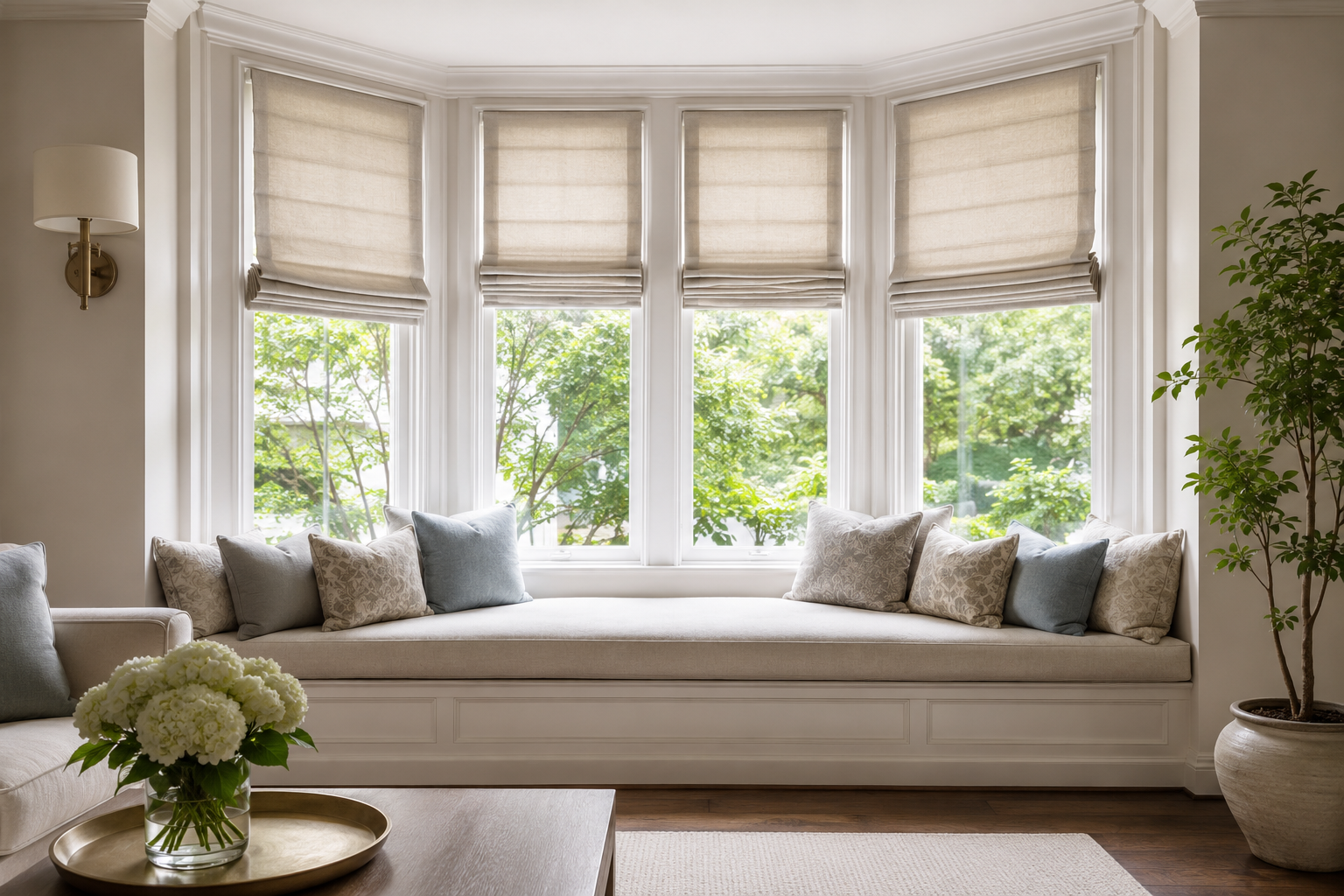
Individual shades preserve the angles of bay and bow windows and allow each section to operate independently. Curtains installed across the front create a more dramatic, unified appearance.
Curved or angled tracks may require professional measuring, especially when the window includes a seat, air vent, or built-in storage.
Arched and Geometric Windows
Custom shutters, specialty cellular shades, and fitted fabric treatments can follow unusual window shapes.
When complete coverage is unnecessary, another option is to leave the decorative upper section visible while treating the rectangular portion below it.
Sliding Windows and Patio Doors
Choose treatments that move in the same direction as the opening or stack neatly out of the way.
Vertical blinds, vertical cellular shades, panel-track blinds, wide curtains, and sliding shutters can all work, provided the door handle remains accessible and the treatment is easy to move several times a day.
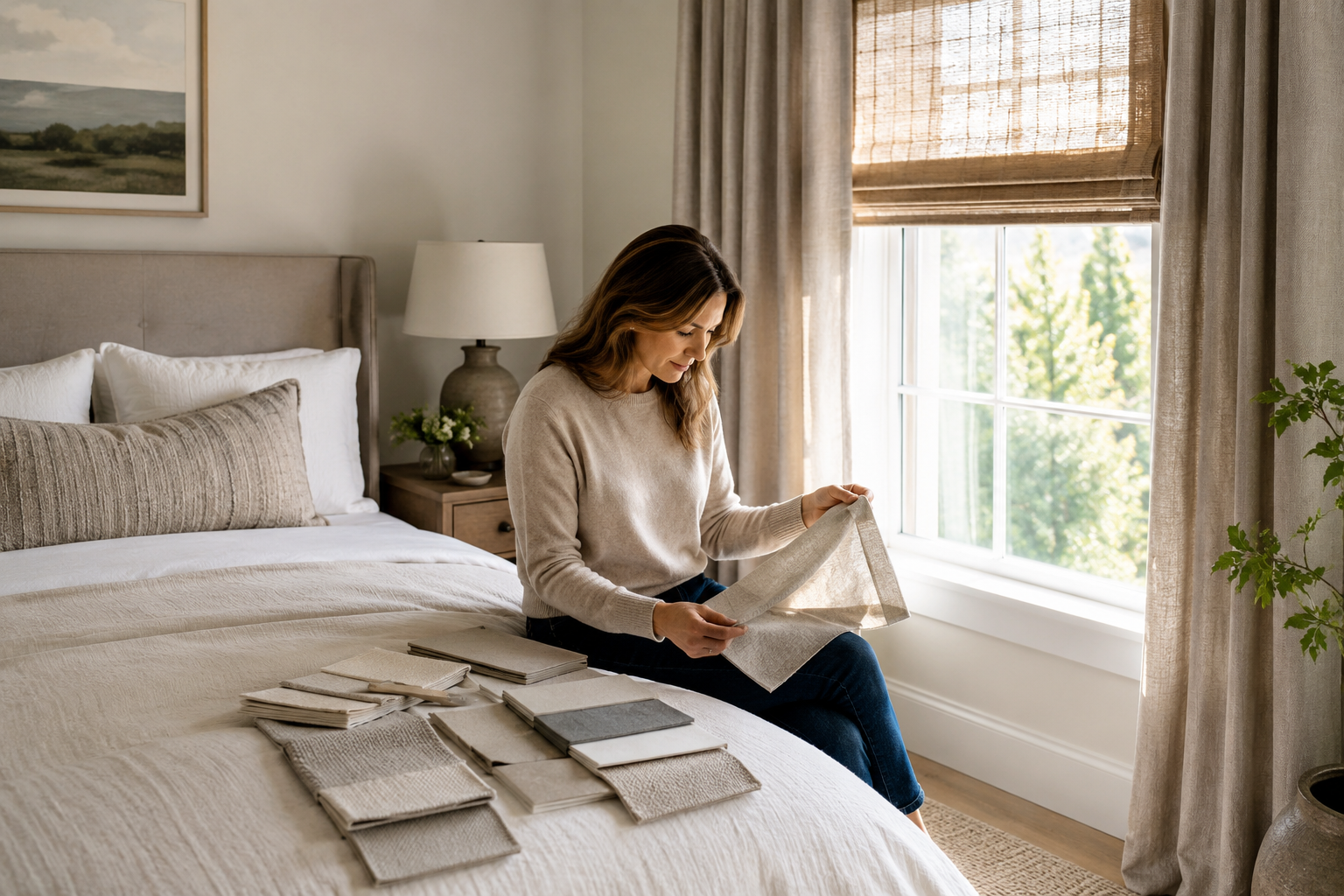
Test Samples in the Actual Room
A fabric, shade, or blind can look very different at home than it did online or in a showroom.
Review samples:
- In morning and afternoon light
- With interior lights switched on at night
- Against the actual wall color
- From inside and outside the home
- In the fully lowered position
- Beside the room’s flooring, upholstery, and wood finishes
This is particularly important for solar shades, woven materials, and light-filtering fabrics materials, and light-filtering fabrics. A material that looks relatively opaque in daylight may become much more transparent after sunset.
Sheer treatments rarely provide dependable nighttime privacy when interior lights are on.
Think About Light, Privacy, and Energy Efficiency Together
Layering often provides the greatest flexibility. Consider pairing:
- Sheers with lined drapery
- A solar shade with side panels
- A woven shade with a privacy liner
- A Roman shade with full-length curtains
According to the U.S. Department of Energy’s Interior Cellular Shades Boost Home Energy Performance fact sheet, cellular shades use honeycomb-shaped pockets to trap air between the shade and the window. Properly fitted cellular shades can help reduce nighttime heat loss, limit cold drafts, and reduce unwanted solar heat gain during warmer months.
Window coverings should still be operated according to the season and the direction of the sun. Closing suitable treatments against strong summer sunlight may help reduce indoor heat gain, while closing insulating shades during colder periods can help limit heat loss through the glass.
Window treatments should also work with the room’s lamps and fixtures. YHDC’s guide to affordable ways to refresh a home explains how layered lighting and properly positioned curtains can improve a room without requiring a major renovation.
Choose Materials You Can Maintain
Think realistically about dust, pet hair, moisture, cooking residue, and cleaning habits.
Smooth blinds and shutters are generally easier to wipe down than textured fabric. Washable curtains may suit busy family rooms, while formal lined drapery may require professional cleaning.
In kitchens, avoid absorbent treatments that hang close to cooking surfaces. In bathrooms, choose moisture-resistant products and maintain adequate ventilation.
Natural wood adds warmth but may not perform well in humid rooms unless the product is specifically made for that environment. Faux wood, vinyl, coated fabrics, and selected roller shades may be easier to maintain.
Know When Custom Window Treatments Are Worth the Cost
Custom window treatments may be appropriate for:
- Arched and geometric windows
- Bay and bow windows
- Oversized picture windows
- Very shallow frames
- Difficult cranks or handles
- Extra-wide sliding doors
- Rooms requiring precise blackout coverage
- Whole-room installations that need a coordinated fit
Custom work can accommodate unusual shapes, operating hardware, exact light-control requirements, and consistent alignment across several windows.
However, custom treatments are not necessary for every room. Standard-size shades or ready-made curtains may be sufficient for simple rectangular windows when accurate sizing is available.
Standard products are also generally easier to replace and less vulnerable to costly custom-order mistakes.
Understand What Affects the Total Cost
Window treatments that look similar can have very different final costs.
The total may be affected by:
- Window size
- Number of windows
- Fabric and lining
- Custom measurements
- Inside versus outside mounting
- Decorative rods and hardware
- Specialty or curved tracks
- Professional installation
- Motorization
- Blackout or privacy liners
- Layered treatments
- Delivery and remake costs
Compare complete written estimates rather than judging a treatment only by the advertised price of the fabric, curtain panel, blind, or shade.
Decide Whether Professional Installation Is Worth It
A simple curtain rod or standard shade may be manageable for an experienced homeowner, provided accurate measurements, appropriate tools, and the correct wall anchors are used.
Professional installation may be worth the cost for:
- Heavy shutters
- Motorized treatments
- Tall windows
- Difficult stairwell windows
- Curved or angled tracks
- Large sliding doors
- Bay and bow windows
- Treatments requiring precise alignment across several windows
Professional measuring may also provide added protection when the retailer or installer offers a measurement guarantee.
Review Returns, Remakes, and Warranties
Before ordering, confirm:
- Return eligibility
- Restocking fees
- Custom-order cancellation rules
- Remake policies
- Measurement guarantees
- Motor and hardware warranties
- Who is responsible for installation errors
- Whether replacement fabric or parts will remain available
This is especially important for custom treatments that cannot be returned once production begins.
Keep measurements, order confirmations, fabric numbers, hardware details, and warranty documents until the installation is complete and every treatment has been tested.
Make Cordless Safety a Priority
Cord safety should be considered anywhere children live or visit.
The U.S. Consumer Product Safety Commission recommends choosing cordless window coverings where young children are present because accessible window-covering cords can create a strangulation hazard.
Cordless shades, wand-operated blinds, shutters, and motorized treatments are widely available. Motorization can also make tall, heavy, or difficult-to-reach treatments easier to operate.
When replacing treatments gradually, begin with nurseries, children’s bedrooms, playrooms, and rooms frequently used by young visitors.
The Your Home Design Center Take
The best window treatment is not simply the one that looks most attractive in a showroom. It is the one that fits the window correctly, operates without interfering with hardware, provides the right balance of light and privacy, and remains practical to clean and maintain.
Before ordering, confirm:
- How the window opens
- Whether an inside or outside mount works best
- The available frame depth and hardware clearance
- How much daylight should enter during the day
- Whether the treatment provides privacy at night
- How the material will respond to dust, moisture, and regular use
- Whether a cordless operating system is needed
- Whether professional measuring or installation is justified
- What happens if the product does not fit
- What the warranty covers
Standard treatments can be a smart, economical choice for straightforward rectangular windows, while custom work may be worth the investment for unusual shapes, difficult hardware, oversized openings, or rooms requiring exact blackout coverage.
Measure carefully, test samples in the actual room, and review the full cost—including hardware, liners, installation, delivery, and potential remakes—before committing. When those practical decisions are handled first, the finished treatment will do more than complete the décor. It will improve how the room feels, functions, and protects your privacy every day.
Here are some other articles related to your search:
- Bedroom Sleep Design Ideas That Help You Sleep Better
- Affordable Ways to Refresh Your Home Without Renovating
- Kitchen Design Essentials That Improve Everyday Comfort
