


A beautiful bedroom is easy to admire. A bedroom that helps you sleep is a little harder to design.
The room may have the perfect upholstered headboard, layered neutral bedding, and bedside tables chosen with military precision, but none of that matters much if the space is too warm, too bright, too noisy, or filled with glowing devices demanding attention.
Good bedroom sleep design brings aesthetics and function together. It considers temperature, lighting, sound, technology, storage, and the way the room guides you from a busy day into a quieter evening. The goal is not to turn the bedroom into a sleep laboratory. It is to remove the small irritations that keep the mind and body alert long after the lights go out.
Begin With the Problems That Interrupt Your Sleep
Before buying another pillow or connected gadget, identify what is actually going wrong.
Do you wake up overheated? Does morning light arrive before you are ready? Is outside noise unpredictable? Do you spend too much time looking at your phone in bed? Does your partner prefer a different temperature? Are you trying to understand why some nights feel restful and others do not?
Each problem calls for a different solution. A sleep tracker will not cool a hot mattress. Blackout curtains will not help if the real issue is an irregular bedtime. A sound machine will not solve sleep apnea, no matter how soothing the rain setting may be.
The most successful bedroom upgrades are usually the ones that address a specific, recurring problem rather than adding technology simply because it looks impressive on the nightstand.
Use Lighting to Signal That the Day Is Ending For bedroom sleep design
Lighting has an outsized influence on how a bedroom feels. Bright overhead fixtures may be practical when organizing a closet, but they are rarely the ideal final impression before bed.
A layered lighting plan works better. Include dimmable overhead lighting for general use, shaded bedside lamps for reading, and low-level accent lighting for the final hour of the evening. Warm-toned bulbs help create a softer atmosphere than cool, blue-white light.
Smart lighting can automate that transition. Bulbs and wall controls can gradually dim and shift warmer at a set time, reducing the need to make one more decision at the end of the day.
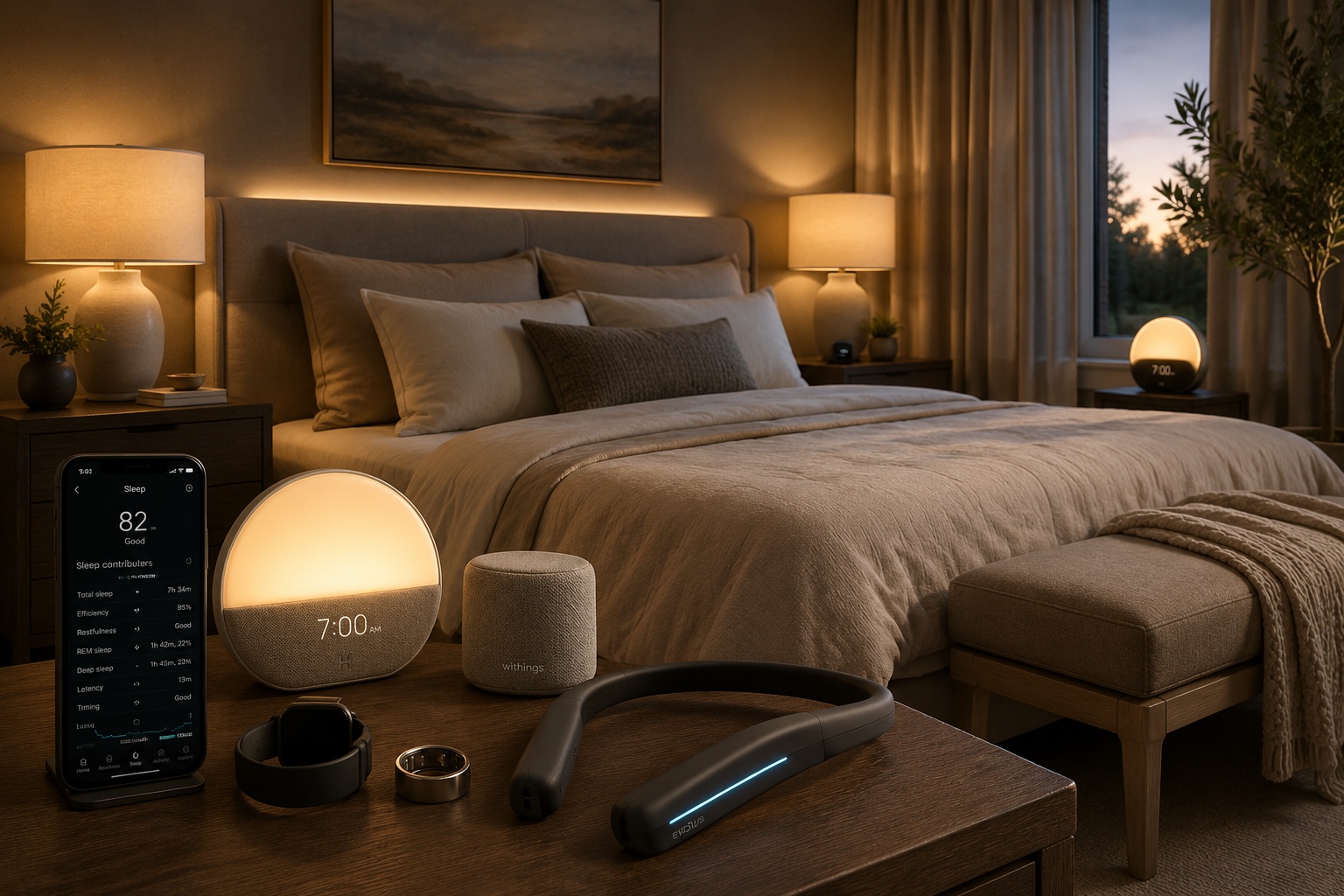
A sunrise alarm can perform the opposite function in the morning. The Hatch Restore 3 combines customizable evening light, sleep sounds, and a gradual sunrise alarm. Once programmed, it can be operated without keeping a phone in hand throughout the bedtime routine.
The design lesson is simple: the bedroom should become darker and calmer as bedtime approaches, then brighter in a gradual and intentional way in the morning.
Control Daylight Without Making the Room Feel Heavy
Blackout window treatments are practical, but they do not have to look like hotel conference-room curtains.
Layering provides more flexibility. A light-filtering shade or sheer panel can soften daytime glare while preserving privacy. A blackout-lined drapery panel or motorized shade can then provide darkness at night.
Motorized treatments are especially useful for large windows, high clerestory openings, or bedrooms where the bed placement makes cords and controls inconvenient. They can also be programmed to close in the evening and open shortly before the alarm.
For a polished look, mount drapery higher and wider than the window frame. This makes the room feel taller while reducing gaps where early sunlight can slip through.
Keep the Room Cool Without Starting a Thermostat War
Temperature is one of the most common sources of bedroom disagreement. One person wants crisp sheets and cool air. The other has three blankets and is considering a fourth.
Start with the room itself. Improve air circulation, use breathable bedding, avoid blocking supply vents, and select window coverings that reduce heat gain during the day. Ceiling fans can help move air, but they should be properly sized and positioned so they do not create an unpleasant draft directly across the bed.
For more precise control, systems such as the Eight Sleep Pod fit over an existing mattress and can heat or cool each side independently. The system also tracks sleep and adjusts temperature automatically.
That degree of control can be useful for couples with dramatically different preferences or people whose sleep is regularly interrupted by overheating. It is also a substantial investment, so temperature should be a real problem rather than a theoretical one.
Choose Bedding for Comfort, Not Just the Photograph
Layered bedding gives a room depth and softness, but there is a point at which the bed begins to resemble a decorative obstacle course.
Use breathable sheets, a duvet or coverlet suited to the season, and a manageable number of accent pillows. Natural fibers such as cotton and linen can feel comfortable in warmer climates, while heavier knits and insulating layers can be rotated in during cooler months.
The mattress and pillow should support the sleeper rather than follow a design trend. A beautifully dressed bed will not compensate for a mattress that causes pressure points or a pillow that leaves the neck unhappy by morning.
Keep extra blankets nearby in a bench, basket, or upholstered storage bed so each sleeper can adjust the layers without rebuilding the entire room at 2 a.m.
Use Sound to Make the Room More Predictable
A bedroom does not have to be completely silent. It does need to be protected from sudden, disruptive sound.
Soft furnishings help. Rugs, lined curtains, upholstered headboards, and fabric-covered furniture can reduce echo and make the room feel acoustically calmer. Solid-core doors provide better sound control than hollow interior doors, particularly when the bedroom is near a kitchen, media room, or busy hallway.
A sound machine can mask inconsistent exterior noise with a steady background sound. Position it away from the pillow and keep the volume at a comfortable level. The purpose is to soften interruptions, not compete with them.
Built-in speakers may look cleaner, but a dedicated bedside sound machine is often easier to operate and less likely to introduce notifications, voice assistants, or other unwanted digital interruptions.
Decide Whether You Want to Wear a Sleep Tracker
Sleep trackers can help identify patterns, but the best format depends on how much technology you are willing to bring into bed.
The Oura Ring is designed to provide detailed sleep analysis along with heart-rate, temperature, blood-oxygen, stress, and activity information. A ring can feel less intrusive than a smartwatch for people who do not enjoy sleeping with a screen on the wrist.
Smartwatches can offer a broader mix of sleep, activity, and health information, but they require regular charging and may be visually distracting if notifications are not disabled.
Whichever form you choose, focus on patterns over time. A single poor score should not determine your mood for the entire day. The device is most useful when it helps connect sleep with practical factors such as bedtime, alcohol, exercise, travel, illness, or bedroom temperature.
Consider an Under-Mattress Sensor for Invisible Tracking
Homeowners who do not want to wear anything can use a sensor beneath the mattress.
The Withings Sleep Analyzer is placed under the mattress, plugged into a power source, and connected to the Withings app. It records sleep without requiring a watch or ring to be charged and worn each night.
This is one of the easiest forms of sleep technology to integrate into a well-designed bedroom because the sensor remains out of sight. It works particularly well in rooms where the homeowner wants the benefits of data without making technology part of the visible decor.
Plan for power during the design stage. A conveniently located outlet near the bed prevents cords from stretching across the floor or becoming an afterthought.
Keep Charging Stations Away From the Pillow
Modern bedrooms often accumulate chargers for phones, watches, rings, tablets, headphones, and lamps. Without a plan, the nightstand quickly becomes the least attractive part of the room.
Provide concealed outlets inside a drawer, a recessed charging shelf, or a dedicated station across the room. This keeps cords organized and makes it easier to place the phone somewhere other than beside the pillow.
A wall-mounted reading light also frees valuable nightstand space. Choose a fixture with a focused beam and separate controls so one person can read without lighting the entire room.
Avoid locating bright indicator lights directly in the line of sight from the bed. Even tiny LEDs can become surprisingly irritating in an otherwise dark room.
Make the Bedroom Easier to Maintain
Visual clutter can make a room feel unfinished and restless. That does not mean the bedroom must be empty. It means everyday items need a place to go.
Include closed bedside storage, a hamper near the dressing area, hooks or a valet stand for tomorrow’s clothing, and enough drawer space to keep surfaces clear. A bench at the foot of the bed is useful only when it does not become the permanent home of every item that has not yet made it back to the closet.
Technology should also have a designated home. Rings, watches, charging cases, and sleep accessories are less likely to disappear when the charging station is incorporated into the room rather than added later.
Evolv28 Moves Sleep Technology Out of the Bedroom
Not every sleep device belongs on the nightstand.
Evolv28 is a neck-worn daytime wellness device designed around a different idea: preparing the nervous system for sleep before the user enters the bedroom. The company says the device emits ultra-low variable magnetic fields and is worn during ordinary daytime activities without electrodes or noticeable sensation.
This makes it relevant to bedroom design in an indirect way. It reflects a broader shift away from treating sleep as something that begins the moment the bedside lamp is switched off.
Evolv28 is currently marketed as a wellness device rather than an FDA-cleared treatment for insomnia. It should be presented as emerging technology, not as a replacement for medical evaluation or established treatment.
From a design perspective, its appeal is that it does not add another screen or large device to the room. It is used during the day, leaving the bedroom focused on comfort, calm, and fewer visible distractions.
Do Not Turn the Bedroom Into a Control Center
Connected lighting, automated shades, temperature systems, trackers, speakers, and alarms can work together beautifully. They can also create a room that requires an app, password, software update, and strong Wi-Fi signal before anyone can go to sleep.
Every smart bedroom should still function manually. Include physical switches, accessible controls, and settings that remain usable when the internet is down. Guests should not need an instruction manual to turn off a lamp.
Limit notifications and remove unnecessary screens. A bedroom is one of the few places where technology should become less visible as it becomes more useful.
Know When Bedroom Improvements Are Not Enough
A calmer, darker, cooler bedroom can support better rest, but it cannot diagnose or treat every sleep problem.
Persistent insomnia, loud habitual snoring, gasping during sleep, witnessed pauses in breathing, severe daytime sleepiness, morning headaches, or difficulty staying awake while driving should be discussed with a healthcare professional. Consumer sleep devices may reveal patterns, but they cannot replace appropriate medical evaluation. The CDC advises speaking with a healthcare provider when sleep problems persist.
Use sleep data as useful background information, not a final answer.
A Better Bedroom Works Quietly
The most successful bedroom sleep design does not call attention to itself. The shades close, the lights soften, the room stays comfortable, sound remains controlled, and chargers disappear into a drawer.
Technology can help, but it should support the room rather than dominate it. A well-designed bedroom makes it easier to stop working, stop scrolling, and stop noticing everything around you.
That may be the most luxurious feature of all.
By Heather Winfield
Here are some other articles related to your search:
