


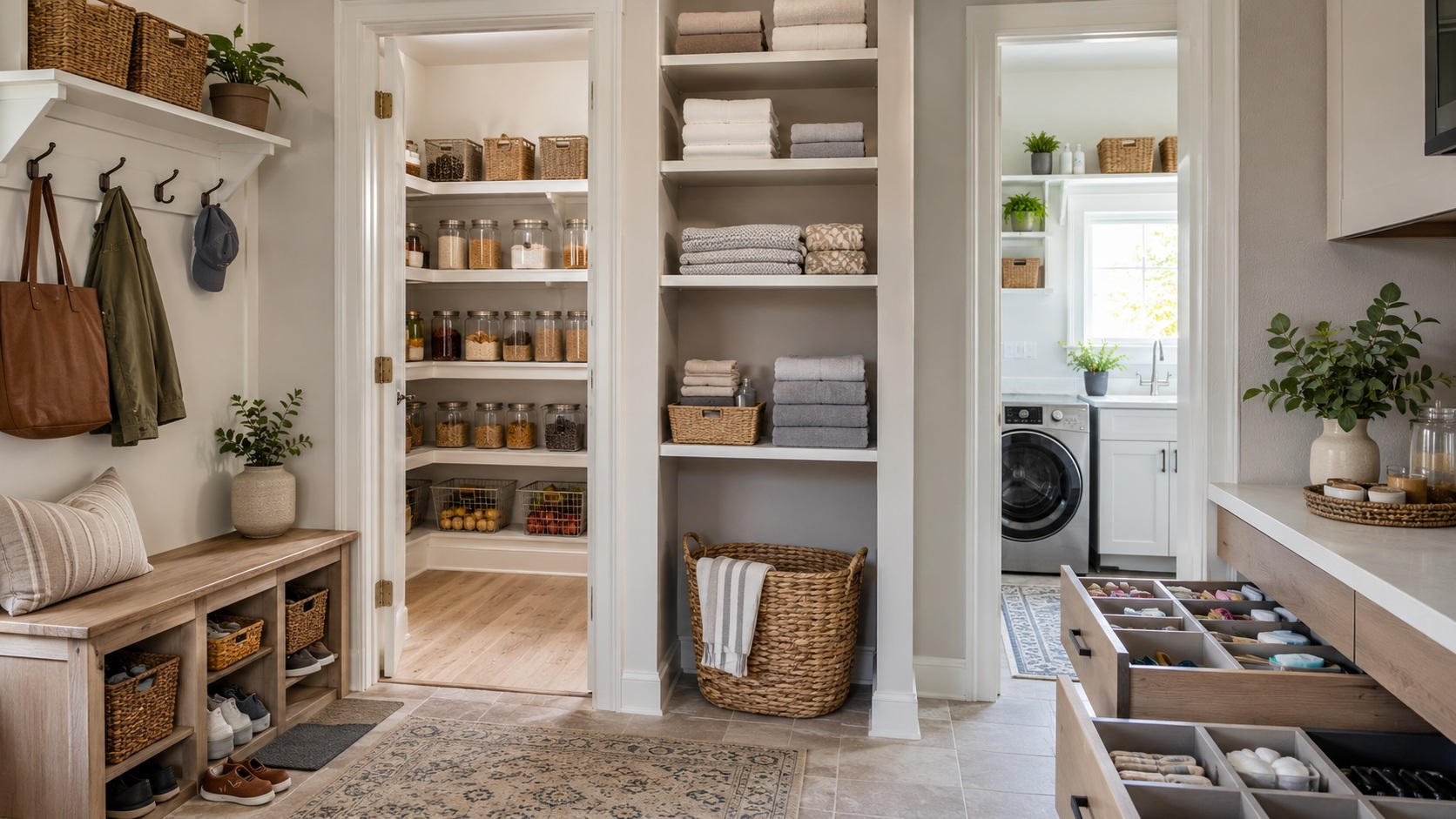
If your home feels crowded, the problem may not be the square footage. It may be the pantry hiding three open bags of rice, the entryway collecting shoes and mail, and the drawer that only closes when you lean against it.
A well-organized home is not one where every shelf looks staged. It is one where you can find what you need, put things away without moving five other items, and get through the day without turning the search for scissors into a family event.
The best way to organize your home is to fix the spaces that create the most daily frustration, then build simple systems around how your household actually lives. That means fewer random containers, better storage zones, and clear limits on what each room is expected to hold.
Start with the problem areas you use every day. Once those are working, the rest of the house becomes much easier to manage.
Fix One Problem Area at a Time
Trying to organize an entire house in one weekend usually leads to several unfinished rooms and a hallway full of bags marked “sort later.”
Choose one small area first:
- A kitchen drawer
- One pantry shelf
- The entryway bench
- A bathroom cabinet
- One section of a closet
Remove everything and sort it into five groups:
- Keep here
- Move elsewhere
- Donate or sell
- Repair or replace
- Recycle or discard
Do not buy organizers until you know what will remain. Otherwise, you may spend money creating attractive storage for things that should have left the house.
Organize Around Activities
Rooms work better when items used for the same task are stored together.
Create zones based on activity rather than scattering related supplies throughout the house. For example:
- Store mugs, filters, coffee, and sweeteners near the coffee maker.
- Keep pet leashes, waste bags, and grooming supplies together.
- Group wrapping paper, tape, scissors, gift bags, and cards in one place.
- Store batteries, flashlights, and small household tools in the same cabinet.
- Keep laundry products close to the washer and dryer.
This sounds obvious, but many homes are filled with items stored where there happened to be space rather than where they are actually used.
Create an Entryway That Can Handle Real Life
The entryway is where coats, bags, shoes, packages, keys, sunglasses, and mail all arrive. Without a plan, it quickly becomes the most honest room in the house.
A practical entryway should include:
- Hooks for coats, bags, and hats
- A bench or low shelf for shoes
- A tray for keys, wallets, and sunglasses
- A basket for items that need to leave the house
- A defined place for mail
Keep only the shoes currently worn most often near the door. Seasonal footwear and special-occasion shoes can move to bedroom closets or another storage area.
Choose sturdy hooks based on what they need to hold. A decorative hook that collapses under the weight of a winter coat is not helping.
Stop Paper Clutter Before It Spreads
Mail and household papers often become clutter because they represent decisions that have not been made.
Create three simple categories:
- Act
- File
- Recycle or shred
Place bills, forms, invitations, and documents requiring attention in one visible tray. File anything that must be kept, and recycle unwanted paper immediately.
Important documents such as insurance records, identification, financial information, and emergency contacts should be stored separately from ordinary household paperwork. Ready.gov recommends keeping copies of essential records electronically or in a waterproof, portable container.
Review the action tray weekly. Otherwise, it simply becomes a more organized-looking pile.
Build Kitchen Zones Around the Way You Cook
Kitchen organization should reduce unnecessary movement and make common tasks easier.
Store cookware near the range, plates near the dishwasher, knives and cutting boards near the prep area, and food containers close to the refrigerator.
Useful kitchen organizers include:
- Drawer dividers for utensils
- Vertical dividers for pans and cutting boards
- Pull-out shelves for deep cabinets
- Shelf risers for dishes and pantry goods
- Turntables for oils, sauces, and condiments
- Bins for snacks, baking supplies, and lunch items
Not every ingredient needs to be poured into a matching container. If the original packaging is easy to store and identify, it is already doing its job.
Set Limits for Food Containers and Lids
Food-storage containers have a talent for taking over an entire cabinet while still refusing to produce the correct lid.
Match every container with its lid. Remove cracked, warped, stained, or incomplete pieces. Nest containers by shape and size, then store lids upright in a divider, narrow bin, or rack.
Assign one drawer or cabinet to the category. When it is full, something must leave before another container joins the collection.
The same rule works for reusable water bottles, travel mugs, grocery bags, and coffee cups.
Organize the Pantry So Food Stays Visible
A pantry is only useful when you can see what is in it.
Group food into broad categories such as:
- Breakfast
- Snacks
- Baking
- Pasta and grains
- Canned goods
- Sauces and condiments
- Backstock
Place frequently used items at eye level and heavier products on lower shelves. Use risers so cans do not disappear behind one another, and use bins for smaller packets and snack items.
Keep backstock together rather than spreading duplicates throughout the kitchen. That makes it easier to check what you already own before shopping.
An organized pantry cannot stop you from buying another jar of mustard unless someone actually looks at the shelf.
Make Bathroom Storage Easier to Maintain
Bathroom cabinets tend to collect expired products, old samples, duplicate toiletries, and grooming tools that should have retired years ago.
Remove everything and discard empty packaging, expired cosmetics, worn tools, and products no one uses.
Sort the remaining items into categories:
- Daily skincare
- Hair care
- Dental care
- Cosmetics
- First aid
- Backup toiletries
- Cleaning products
Expired or unwanted medication should not automatically be flushed or placed in household trash. The U.S. Food and Drug Administration explains how to locate medicine take-back programs and dispose of unused medication safely.
Use shallow bins or drawers so smaller items remain visible. Turntables can help with bottles in deep cabinets, but do not overload them until rotating one requires both hands.
Keep only daily-use products on the counter. Clear surfaces are easier to clean and make the room feel less crowded.
Separate Daily Supplies From Backstock
Backup toiletries, paper goods, cleaning refills, and household supplies should have one designated storage area.
Keep one product in use and store extras together in a linen closet, utility cabinet, pantry, or laundry room.
Avoid spreading duplicates across the house. When paper towels are stored in three different rooms, it becomes surprisingly difficult to know whether you need more.
Set limits based on available space and how quickly each product is used. Backstock should prevent unnecessary trips to the store, not turn the house into a warehouse.
Give Bedroom Closets One Clear Job
A bedroom closet should primarily hold clothing, shoes, and accessories. It should not slowly become storage for old electronics, wrapping paper, spare paint, and everything else that lacked a destination.
Group hanging clothing by type. Use double rods for shirts, jackets, skirts, and folded pants when space allows.
Fold sweaters and heavy knits rather than hanging them, which can stretch the shoulders. Use shelf dividers to keep stacks upright.
Store frequently worn clothing between waist and eye level. Seasonal pieces, formalwear, and sentimental items can move to upper shelves or less accessible sections.
Use Drawer Dividers Where They Solve a Problem
Drawer organizers are useful for small categories such as socks, underwear, jewelry, office supplies, cosmetics, and kitchen tools.
They are less useful when they create fixed compartments that do not match the contents.
Measure the drawer and the items before buying an insert. Adjustable dividers are often more practical because storage needs change.
Not every drawer needs a complicated system. Towels, pajamas, and folded shirts may only need a neat stack and enough space to remain visible.
Turn the Laundry Room Into a Work Zone
The laundry room should support sorting, washing, drying, folding, and clothing care.
Keep detergent, stain remover, mesh bags, and dryer supplies close to the machines. Store refills elsewhere so the work surface remains clear.
A divided hamper can separate laundry before wash day. Add a smaller basket for:
- Single socks
- Items needing repair
- Clothing that must air-dry
- Objects found in pockets
Add a hanging rod, fold-down drying rack, or retractable clothesline when space permits.
When replacing a washer, the ENERGY STAR clothes-washer guide can help homeowners compare certified models designed to use less energy and water.
A clear folding surface is more useful than a counter filled with decorative containers that must be moved every time towels come out of the dryer.
Use Garage Walls Before Filling the Floor
Garage floors become crowded quickly when tools, bikes, sports equipment, gardening supplies, and seasonal decorations are stored at ground level.
Use wall-mounted tracks, hooks, pegboards, and sturdy shelves to create zones for:
- Automotive supplies
- Gardening tools
- Hardware and tools
- Sports equipment
- Camping gear
- Seasonal decorations
Keep frequently used items near the garage entrance or workbench. Store seasonal pieces higher, but keep heavy and unstable containers on lower shelves.
Label bins on more than one side so the contents remain visible when containers are stacked.
Store Hazardous Household Products Safely
Garages and utility areas often contain paint, batteries, pesticides, automotive fluids, and cleaning products that require more care than ordinary storage.
Keep these products in their original containers with labels intact. Store them upright, away from heat, and out of reach of children and pets.
Do not combine leftover products to save space. The Environmental Protection Agency’s household hazardous waste guide explains that paints, oils, batteries, cleaners, and pesticides may require special handling or disposal.
Check local disposal rules before placing these items in the trash or pouring liquids down a drain.
Create a Donation and Repair Station
Every home needs a place for items that are on their way out or waiting for attention.
Keep one basket for donations and another for clothing or household items that need repair, cleaning, or alterations.
When the donation basket is full, move it to the car and complete the trip. Do not allow it to become permanent storage for items you have already decided to release.
The sweater did not become more flattering during its month in the donation basket.
Use Labels to Explain the System
Labels are especially useful in shared spaces because they show everyone where things belong.
Use broad, recognizable categories such as:
- First aid
- Batteries
- Pet supplies
- Cleaning cloths
- Winter accessories
- School supplies
Avoid labels such as “miscellaneous” or “other.” Those are simply future clutter wearing a name tag.
Labels should make the system easier to understand, not so rigid that every small item requires its own compartment.
Leave Some Storage Space Empty
A drawer or cabinet filled to capacity is difficult to use. Items become hidden, and removing one thing often disturbs everything around it.
Leave room in closets, drawers, pantry shelves, and cabinets. Empty space improves visibility and gives the system room to handle normal changes.
When a category no longer fits, review the contents before buying another storage unit. The problem may not be the shelf. It may be 15 reusable shopping bags attempting to live in a space designed for six.
Follow a Simple Daily Reset
Organization systems fail when temporary piles become permanent.
Whenever practical, put items away after using them. Hang the jacket instead of placing it on a chair. Sort the mail instead of moving it from one counter to another. Put clean laundry into drawers instead of treating the basket as a second dresser.
A brief evening reset can prevent small messes from spreading throughout the house.
Review One Zone Each Week
Choose one small area each week and spend a few minutes returning items, removing trash, and checking whether the system still works.
This could be a pantry shelf, bathroom drawer, entryway basket, closet section, or part of the garage.
Once each season, review clothing, food, household backstock, and seasonal equipment. Remove expired products, donate unused items, and adjust storage as routines change.
For items that truly do not fit inside the home, read How to Use a Storage Unit Without Turning It Into a Dusty Cave of Regret for tips on labeling, packing, and arranging off-site storage.
Organize Your Home for the Way You Live
The most effective way to organize your home is to build systems around real habits rather than an imaginary household where everyone immediately folds laundry and no one leaves shoes by the door.
Start with the spaces that slow you down. Remove what no longer belongs, group related items by activity, and keep frequently used things within easy reach.
Choose storage products only after measuring the space and understanding the problem. Leave some room in every system, label shared areas clearly, and reset small zones regularly.
An organized home does not remain perfect every minute. It simply returns to order without requiring an entire weekend, a shopping cart full of bins, and a family meeting.
Related Articles You May Enjoy From Your Home Design Center
How to Use a Storage Unit Without Turning It Into a Dusty Cave of Regret