


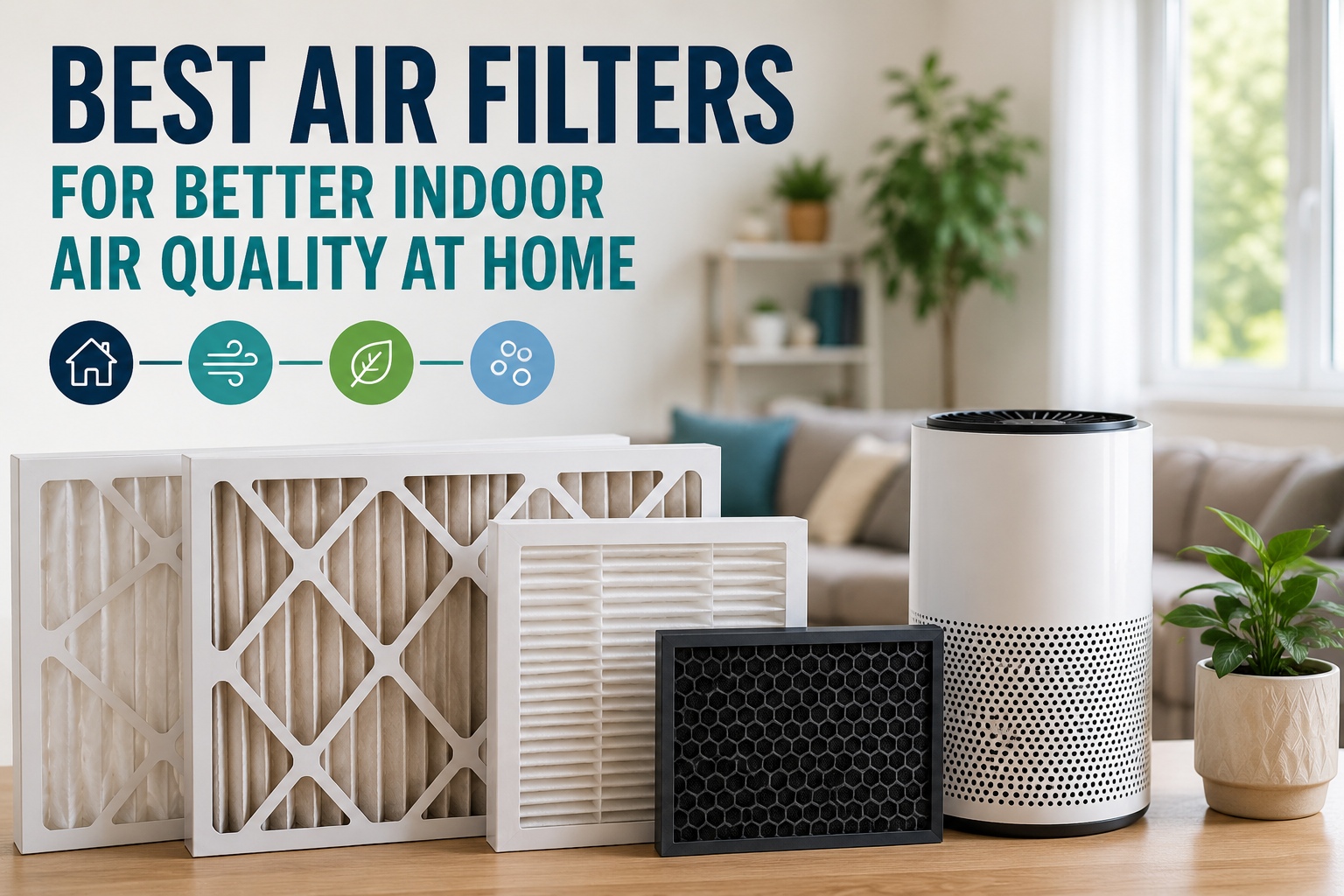
Indoor air is one of those home issues people rarely think about until the house starts to feel off. Dust keeps coming back. Pet hair floats through the room. Cooking smells linger longer than they should. Allergy season follows everyone indoors. During wildfire season, even a closed house can start to feel less fresh.
That is where the best air filters for better indoor air quality at home can make a real difference. Air filters cannot solve every indoor air problem on their own, and they will not turn a house into a mountain spa overnight. But the right filter, used correctly and changed regularly, can help reduce dust, pollen, pet dander, smoke particles, and other airborne irritants that affect how clean and comfortable a home feels.
For homeowners, the goal is not to buy the most expensive filter on the shelf. The goal is to choose the right type of filter for your HVAC system, your room size, your lifestyle, and the way your household actually lives.
Why Indoor Air Quality Matters at Home
Indoor air quality affects everyday comfort. Dusty rooms, stale odors, pet dander, pollen, cooking particles, moisture problems, and poor ventilation can make a house feel less clean even when the surfaces look tidy.
The U.S. Environmental Protection Agency explains that improving indoor air quality usually involves source control, ventilation, and air cleaning or filtration. In simple terms, filters help, but they work best when they are part of a larger home-care routine.
That means an air filter is not a substitute for regular cleaning, fresh air when outdoor conditions allow, moisture control, or basic maintenance. A good filter helps capture particles moving through the air, but it cannot fix a dirty vent, a clogged HVAC system, a hidden leak, or a room that never gets cleaned.
HVAC Filters and Portable Air Purifiers Are Not the Same
One of the biggest points of confusion is the difference between an HVAC filter and a portable air purifier. They both filter air, but they do not do the same job.
An HVAC filter sits inside the heating and cooling system. Its main job is to protect the equipment while also capturing particles as air moves through the system. A portable air purifier is designed to clean the air in one room or a specific area of the home.
The EPA notes that portable air cleaners are designed for individual rooms or areas, while central furnace and HVAC filters can help filter air as it circulates through a home. Both can help reduce particles, but neither removes every indoor air pollutant.
For many homes, the best approach is to use both correctly. Choose the right HVAC filter for the system, then add a portable air purifier in the rooms where air quality matters most, such as bedrooms, living rooms, home offices, nurseries, or spaces used by people with allergies or asthma.
Start With the Right HVAC Filter
The easiest place to start is the HVAC filter. This is the filter most homeowners already have, but it is also the one most likely to be ignored until the system struggles or the filter looks like it has been collecting dust since the last decade.
Before buying a replacement filter, check the size printed on the current filter or listed in the HVAC system manual. A filter that is too small can allow air to bypass the filter. A filter that is too thick or dense for the system can restrict airflow.
That matters because an HVAC system needs proper airflow to work efficiently. A filter that sounds impressive on the package may not be the right choice if the system cannot handle it.
For most homeowners, a pleated filter with a reasonable efficiency rating is a practical starting point. It can capture more particles than a basic fiberglass filter while still allowing proper airflow when matched correctly to the system.
What MERV Ratings Mean
MERV stands for Minimum Efficiency Reporting Value. It is a rating system that describes how well an air filter captures particles. A higher MERV rating generally means better particle capture, but higher is not automatically better for every home.
A very high-MERV filter may restrict airflow if the HVAC system is not designed for it. That can make the system work harder and may reduce performance. The best filter is one that improves filtration without creating problems for the equipment.
For many standard residential systems, homeowners use mid-range MERV filters, but the safest move is to follow the HVAC manufacturer’s guidance or ask a qualified HVAC professional what your system can handle.
When a HEPA Filter Makes Sense
HEPA filters are often mentioned in air-quality conversations because they are designed to capture very small particles. They are commonly found in portable air purifiers and some specialized filtration systems.
For homes with pets, allergies, wildfire smoke concerns, or rooms that collect dust quickly, a portable air purifier with a HEPA filter can be useful. Bedrooms are often the best place to start because people spend hours there overnight.
The American Lung Association notes that portable air cleaners can help remove particulate matter and other airborne pollutants, and units with HEPA-rated filters are among the more effective options for air cleaning.
A HEPA purifier only works well when it is sized correctly for the room and maintained properly. A small purifier in a large open living space may not move enough air to make a meaningful difference.
Choose the Right Size Air Purifier
Portable air purifiers are usually rated for specific room sizes. Before buying one, measure the room where it will be used. A purifier designed for a small bedroom may not be strong enough for a large family room with high ceilings.
Look for room-size recommendations, clean air delivery information, noise level, filter replacement cost, and maintenance requirements. A unit that is quiet enough for a bedroom may be more useful than one that sounds like it is preparing for takeoff.
Placement also matters. Put the purifier where air can move freely around it. Do not wedge it behind a sofa, hide it under a table, or tuck it into a decorative basket. Air needs room to circulate.
Best Rooms for Air Filters and Purifiers
If you are not ready to add portable purifiers throughout the house, start with the rooms where they can do the most good.
Bedrooms are a strong first choice because people spend long stretches of time there. Living rooms are another smart option, especially in homes with pets, fireplaces, open kitchens, or heavy foot traffic. Home offices can also benefit from cleaner air, particularly if the room feels stuffy or collects dust quickly.
For allergy-prone households, consider placing a purifier in the bedroom and keeping windows closed during high-pollen periods. For pet owners, focus on rooms where pets sleep, lounge, or shed most often.
Do Air Filters Help With Dust?
Air filters can help reduce airborne dust, but they will not eliminate dust entirely. Dust also comes from fabric fibers, skin cells, outdoor dirt, pet dander, and everyday household activity.
That is why filtration works best alongside regular cleaning. Vacuuming, washing bedding, dusting surfaces, cleaning vents, and reducing clutter can all help lower dust levels.
For more cleaning support, see Best Vacuum Cleaners for a Cleaner, Easier Home. Air filters help with particles moving through the air, while a good vacuum helps remove dust and debris from floors, rugs, upholstery, stairs, and baseboards.
How Often Should You Change Air Filters?
How often you change your HVAC filter depends on the filter type, your HVAC system, household size, pets, allergies, dust levels, and how often the system runs.
Many homeowners check filters monthly and replace them when they look dirty or according to the manufacturer’s recommendation. Homes with pets, heavy dust, nearby construction, wildfire smoke, or allergy concerns may need more frequent changes.
Portable air purifiers also need maintenance. Most units have replacement schedules for HEPA filters, carbon filters, or pre-filters. Ignoring those schedules can reduce performance and make the purifier less effective.
What About Activated Carbon Filters?
Activated carbon filters are designed to help with certain odors and gases. They are often used in portable air purifiers alongside particle filters.
Carbon filters can be helpful in homes with cooking smells, pet odors, smoke odors, or general stale-air issues. However, they do not replace a particle filter, and they eventually become saturated. Once that happens, they need to be replaced.
If odors are a major problem, also look for the source. A carbon filter may help reduce smells, but it will not fix hidden moisture, dirty trash cans, pet accidents, mold, or a forgotten container in the refrigerator that has become scientifically interesting.
Air Filters and Wildfire Smoke
For many homeowners, wildfire smoke has made indoor air quality feel more urgent. During smoky conditions, keeping outdoor air from entering the home and using proper filtration can help reduce indoor particle levels.
Portable HEPA air purifiers can be especially useful in bedrooms or main living areas during poor outdoor air-quality days. HVAC systems may also help when fitted with an appropriate filter and used correctly, but homeowners should follow manufacturer guidance and local public-health recommendations.
The EPA cautions that air cleaners alone cannot guarantee good indoor air quality, especially when major pollutant sources are present or ventilation is insufficient. Air cleaning works best when paired with source control and ventilation strategies when appropriate.
Common Air Filter Mistakes
One common mistake is buying the strongest-looking filter without checking whether the HVAC system can handle it. Another is forgetting to replace filters until they are visibly packed with dust.
Homeowners also sometimes place portable purifiers in poor locations. A purifier needs breathing room. If it is trapped behind furniture or tucked into a corner with blocked airflow, it cannot circulate air properly.
Another mistake is expecting filters to solve everything. Air filters can help with particles and certain odors, but they are not a cure-all. If a home has excess moisture, mold, leaks, poor ventilation, or ongoing smoke exposure, those problems need to be addressed directly.
Air Quality During Home Projects
Indoor air quality also matters during home updates. Painting, remodeling, installing new flooring, replacing window treatments, and moving furniture can stir up dust and introduce odors or particles into the air.
If you are planning a project, prepare the space before work begins. Cover nearby furniture, close doors to rooms that do not need to be disturbed, vacuum after dusty work, and change filters more often if the HVAC system has been running during the project.
For related home updates, see How to Remodel a House on a Budget Without Cutting the Wrong Corners and How to Choose the Right Window Treatments for Every Window in Your Home.
Air Quality When Entertaining at Home
Airflow becomes more noticeable when guests are over. Cooking, candles, pets, closed windows, and a full room can make a house feel stuffy quickly.
Before entertaining, check that vents are not blocked, replace a dirty HVAC filter, and use a portable purifier in the room where guests will spend the most time. If the weather and outdoor air quality are good, opening windows for a short period before guests arrive can also help freshen the space.
This is especially useful for backyard and indoor-outdoor gatherings. For more home entertaining setup ideas, see Country Western Party Ideas for a Fun Backyard Dance Night at Home.
Best Air Filter Features to Look For
When choosing the best air filters for better indoor air quality at home, focus on practical features that fit your household.
- Correct HVAC filter size
- Filter rating compatible with your HVAC system
- Good particle capture for dust, pollen, and pet dander
- HEPA filtration for portable air purifiers when appropriate
- Activated carbon layer for odor control
- Reasonable replacement-filter cost
- Quiet operation for bedrooms and offices
- Room-size rating that matches the space
Replacement cost matters more than people think. A purifier with expensive filters may seem fine at checkout, but it can become annoying if replacement filters are expensive or hard to find.
The Bottom Line on Air Filters at Home
The best air filters for better indoor air quality at home are the ones that match your HVAC system, your room size, your lifestyle, and your maintenance habits. A good HVAC filter can support whole-home filtration, while a portable HEPA air purifier can offer extra support in bedrooms, living rooms, offices, and other high-use spaces.
For most households, the smartest approach is simple. Use the right HVAC filter, replace it regularly, keep vents clear, clean dust-prone surfaces, vacuum often, and add a portable air purifier where it makes sense.
Cleaner indoor air does not require panic-buying every gadget with a glowing blue light. It starts with practical choices, steady maintenance, and filters that actually fit the home you live in.