


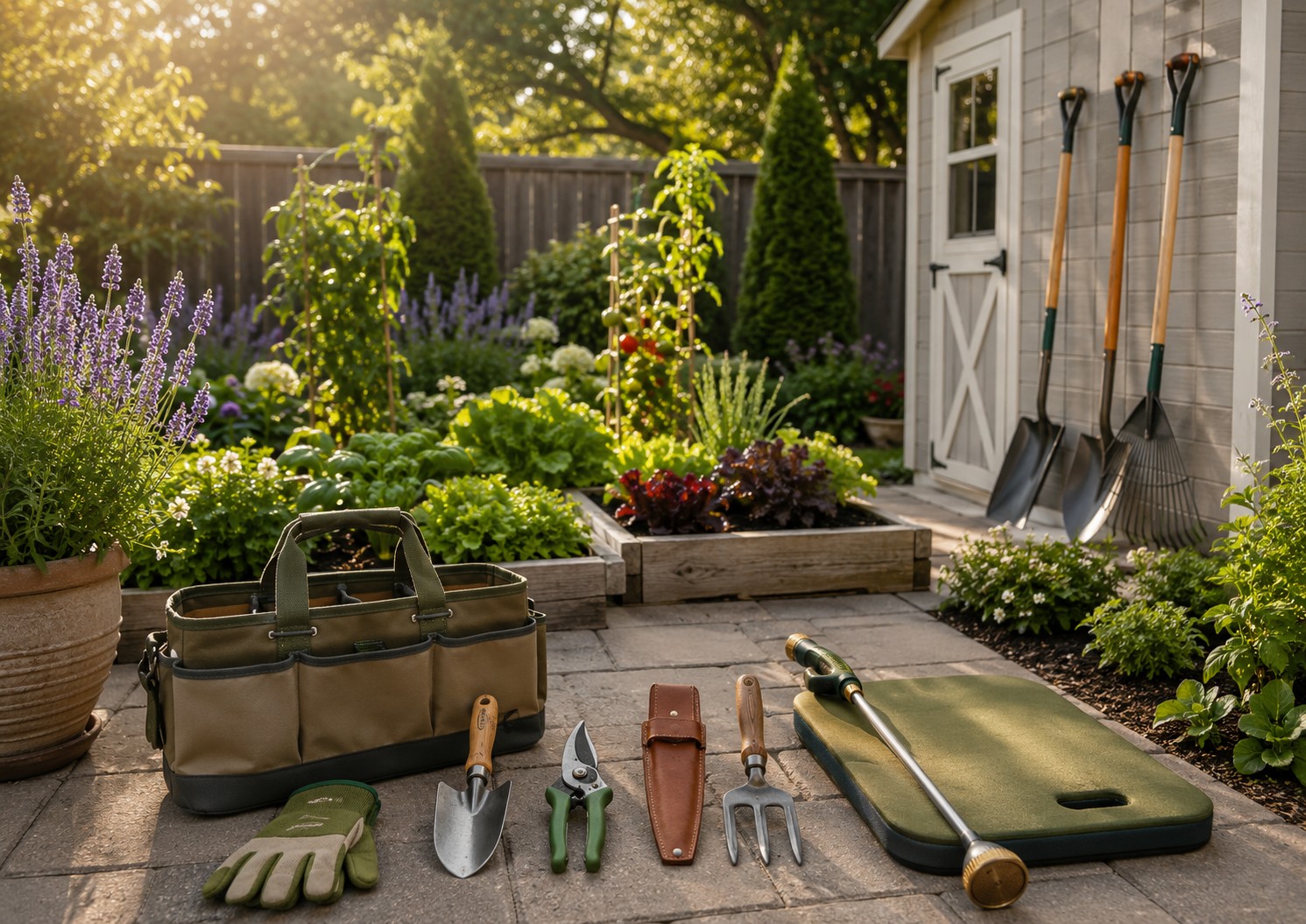
Garden centers have a special talent for making every tool look essential. One minute, you need a trowel. Ten minutes later, you are considering three kinds of hoes, a telescoping fruit picker, and a wagon large enough to relocate a small tree.
The truth is that most homeowners do not need an overflowing shed. They need a thoughtfully chosen garden tool kit that matches the size of the yard, the type of plants they grow, and the maintenance jobs they perform regularly.
A patio filled with containers requires different equipment than a lawn, vegetable garden, or property with mature shrubs. Buying around those real needs saves money, reduces clutter, and makes garden care considerably easier.
Start With the Jobs You Actually Do
Before purchasing tools, make a simple list of the work your outdoor space requires during a typical month.
You may need to plant flowers, trim shrubs, pull weeds, water containers, rake leaves, move mulch, edge a lawn, or maintain raised beds. You probably do not perform every possible garden task, and your tool collection should reflect that.
Divide the work into five basic categories:
- Digging and planting
- Pruning and trimming
- Weeding and cultivating
- Watering
- Moving soil, plants, and debris
Once you know which categories apply to your property, you can build a useful garden tool kit instead of buying an impressive assortment of objects that never leave the garage.
The Basic Kit for Almost Every Homeowner
A few tools are versatile enough to earn a place in nearly any home with an outdoor area.
Start with a comfortable pair of gardening gloves, a durable hand trowel, bypass pruners, and a watering tool suited to your plants. A small hand cultivator or soil knife can also be useful for loosening soil and removing weeds.
These basics can handle container planting, deadheading, light pruning, transplanting, small weeds, and routine seasonal cleanup. For a small patio or townhouse yard, that may be almost everything required.
Before purchasing a large kit, check the quality of each individual tool. A solid connection between the handle and working end matters more than decorative packaging or the number of pieces included.
Build a Container-Gardening Kit
Container gardens do not require long-handled shovels, full-size rakes, or a wheelbarrow. They need smaller tools that work efficiently in confined spaces.
A practical container kit includes:
- A narrow hand trowel
- A soil scoop for filling pots
- Small bypass pruners or garden scissors
- A watering can or soft-flow watering wand
- Gardening gloves
- A small brush for cleaning potting soil from surfaces
A hori-hori soil knife can replace several separate tools because it can dig, cut roots, open bags, divide plants, and remove weeds. Look for one with a secure handle and protective sheath.
If you have many containers, add a lightweight garden cart or plant caddy. Moving a large ceramic planter after it has been filled with wet soil is an excellent way to discover exactly which muscles you have neglected.
Build a Kit for Flower Beds and Landscaped Borders
Established flower beds require more reach and cutting ability than container gardens. Add a sturdy spade, leaf rake, hand fork, and long-handled weeding tool to the basic kit.
A spade has a relatively flat blade and works well for cutting clean bed edges, dividing plants, lifting sod, and digging defined planting holes. A shovel has a more curved blade and is better for lifting and moving loose soil, compost, gravel, or mulch.
Homeowners frequently buy one and expect it to perform both jobs. It can, but usually with more effort and less attractive results.
A flexible leaf rake is useful for removing light debris from around plants, while a small hand rake can reach beneath shrubs without flattening everything nearby. For routine weeds, a long-handled stirrup hoe or stand-up weeder allows you to work without constantly bending.
Build a Kit for Shrubs and Small Trees
Properties with roses, hedges, ornamental trees, or mature shrubs need a clearly organized pruning kit.
Begin with bypass pruners for live stems and smaller branches. Their blades pass one another like scissors, creating a relatively clean cut. Add loppers when branches become too thick for comfortable one-handed cutting.
A pruning saw belongs in the kit when branches exceed the stated cutting capacity of the loppers. Never twist, force, or repeatedly chew through a large branch with undersized pruners. That can damage the plant, the tool, and your hand.
Your pruning kit may include:
- Bypass hand pruners
- Loppers
- A folding pruning saw
- Protective gloves
- Eye protection
- A tool-cleaning cloth and disinfecting supplies
Large limbs, unstable trees, overhead work, and branches near power lines should be left to qualified professionals.
Build a Kit for Raised Beds and Vegetable Gardens
Raised-bed gardens benefit from narrow tools that can work between plants without disturbing their roots.
A hand trowel, garden fork, soil knife, small cultivator, and watering wand will cover most daily needs. Add a full-size garden fork if you regularly turn compost or loosen a larger volume of soil.
A rigid garden rake can level newly prepared soil, but it may be unnecessary once a raised bed is densely planted. Avoid buying oversized tools simply because they appear more serious. The correct tool is the one that fits comfortably between the plants without treating the tomatoes like collateral damage.
Keep plant ties, labels, garden twine, and harvesting scissors in a small bucket or portable tool tote. That prevents repeated trips back to the shed and makes five-minute garden jobs more likely to remain five-minute jobs.
Build a Lawn-Care Kit Only When You Have a Lawn
A lawn mower is not an automatic part of every garden tool kit. It is necessary only when a property contains turf that must be cut.
For a small lawn, a compact battery-powered or corded mower may be sufficient. Larger lawns may require greater cutting width, longer battery life, or self-propelled assistance.
A lawn-care kit may also include:
- A string trimmer
- A manual or powered edger
- A leaf rake
- A spreader
- A hose or irrigation system
Do not buy equipment for a landscape you no longer have. Homeowners who replace turf with native plants, gravel, ground covers, or expanded planting beds should reassess the tool collection instead of automatically replacing an aging mower.
Choose Tools That Fit Your Body
Garden tools should not require pain as proof that you worked hard enough.
Handle shape, grip size, tool weight, reach, and balance can all affect how comfortable equipment feels during repetitive work. The North Carolina Cooperative Extension notes that newer hand-cultivation tools include ergonomic designs intended to make garden work more efficient and manageable.
When possible, hold a tool before buying it and mimic the movement you will use in the garden. A pruner that feels comfortable for thirty seconds in the store may become awkward after fifty cuts, so check whether the spring action, handle width, and lock can be operated easily.
Useful comfort additions include:
- A kneeling pad or folding garden kneeler
- Long-handled weeders
- Telescoping handles
- Lightweight hoses
- Padded or enlarged grips
- A stable four-wheel garden cart
A tool that reduces bending, gripping, or lifting is often more valuable than one with fifteen highly advertised functions.
Avoid Buying Large Tool Sets
Prepackaged tool sets can look economical, but many contain duplicate or poorly made pieces. One well-constructed trowel is more useful than six miniature tools with loose handles and mysterious purposes.
Purchase the basics individually when possible. Look for solid construction, replaceable parts, smooth moving joints, secure blade connections, and materials appropriate for outdoor use.
This approach also makes upgrades easier. When a particular job becomes more frequent, you can invest in the specialized tool that solves it instead of buying everything in advance.
Create a Garden Tool Storage Zone
Even a modest tool collection becomes irritating when nothing has a designated place.
Install wall hooks or a rail system for long-handled tools. Store sharp hand tools in a drawer, tote, or covered container rather than leaving them loose on a shelf. Keep gloves, plant ties, labels, and small accessories together.
If you use a greenhouse or outdoor work area, consider creating a dedicated potting and storage station. YHDC’s guide to using a metal structure for a backyard greenhouse offers additional ideas for creating a protected growing space.
Tools stored outdoors should be protected from rain, irrigation overspray, and prolonged direct sunlight. Battery-powered equipment and chargers require dry storage and should be handled according to the manufacturer’s directions.
Keep the Tools You Own in Working Condition
A dull, dirty tool turns a simple task into unnecessary work. Brush off soil after use, dry metal surfaces, and keep cutting blades sharp.
Inspect handles for cracks, tighten loose fasteners, and lubricate moving joints when recommended. The University of Minnesota Extension recommends removing visible soil and plant debris before disinfecting garden tools and allowing the equipment to dry completely afterward. Cleaning tools can help reduce the possibility of carrying plant pathogens from one area of the garden to another.
Pruning tools deserve particular attention because sap and plant residue can accumulate around blades and moving joints. Clean them after use, keep the blades sharp, and disinfect them when working around plants showing signs of disease.
At the end of the growing season, review the collection. Repair useful tools, discard unsafe ones, and donate duplicates that are still in good condition.
Add New Tools Only When a Job Justifies Them
Specialty tools can be worthwhile, but they should answer a recurring need.
An electric pruner may help someone who regularly cuts woody stems or experiences hand fatigue. A bulb auger can save time when planting a large number of bulbs. A stand-up weed puller can reduce bending on a lawn with persistent taproot weeds.
These are upgrades rather than starting essentials. Borrowing or renting infrequently used equipment may make more sense than storing it year-round.
A Smaller Garden Tool Kit Often Works Better
A good garden tool kit is not measured by how many pieces it contains. It is measured by how often the tools are used and how well they perform.
Start with gloves, a trowel, pruners, a suitable watering tool, and one or two pieces matched to your garden type. Add digging, pruning, lawn-care, or hauling equipment only when your property requires it.
The result is a cleaner storage area, less wasted money, and a collection that makes outdoor work feel manageable. That is much more useful than owning every tool in the catalog and still being unable to find the one pair of pruners that actually cuts.