


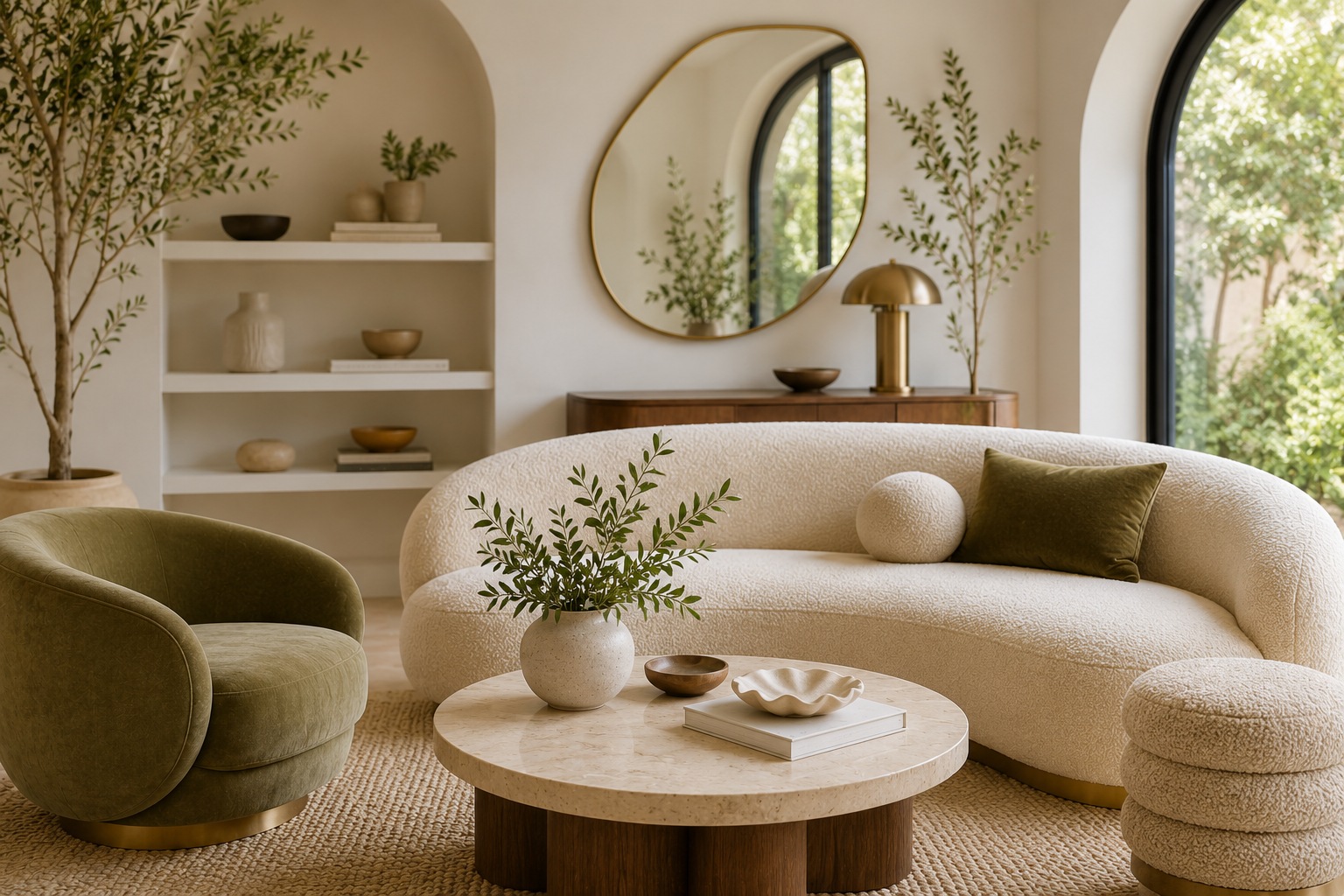
Curvy furniture and decor is back, although anyone who has ever loved an arched doorway, a round dining table, or a sofa that looks like it might actually be pleasant to sit on would argue it never really left. Straight lines will always have their place, especially in clean modern homes, but rooms made only of sharp corners can start to feel a little like a waiting room with better pillows.
The return of curves makes sense. Homeowners are moving toward interiors that feel warmer, softer, and more personal. Rounded sofas, circular coffee tables, curved accent chairs, arched mirrors, scalloped details, and oval dining tables can make a home feel more comfortable without making it look overly trendy.
The best part is that curvy furniture and decor does not require a full redesign. You do not need to replace every rectangular thing you own. In fact, please do not. A room still needs structure. The goal is to soften the space, improve flow, and add visual interest without making the house look like every piece of furniture is trying to roll away.
If you are updating a room on a realistic budget, this trend also pairs well with smaller design moves like lighting, rugs, mirrors, and furniture layout. For practical upgrades that work with this look, see YHDC’s guide to inexpensive home makeover ideas.
This softer design direction is showing up across home interiors. The National Association of Realtors has highlighted scalloped, circular shapes and curves as a major design trend, especially in rounded kitchen islands, curved ottomans, arched doorways, and sculptural sofas. Houzz’s 2026 U.S. Emerging Summer Trends Report also points to rising interest in arched details, rounded kitchen islands, curved peninsulas, scalloped tile, and wave-like forms.
In other words, curvy furniture and decor is not just a cute sofa moment. It is part of a larger move toward homes that feel more relaxed, livable, and layered.
Why Curvy Furniture and Decor Works So Well
Curves soften a room quickly. A rounded sofa can make a living room feel more inviting. A circular coffee table can improve flow around a seating area. A curved mirror can make a hallway feel less stiff. Even a scalloped lampshade or rounded vase can take the edge off a space that feels too square, too flat, or too builder-basic.
There is also a practical reason curved pieces are popular. Most rooms are built from straight lines: walls, windows, cabinets, doorways, sofas, rugs, tables, shelves, and counters. Add only rectangular furniture and the room can start to feel rigid, even if every piece is technically attractive.
Curvy furniture and decor introduces contrast. It gives the eye a softer place to land. It also makes a room feel more layered without requiring a remodel, which is helpful for anyone who has ever priced out a renovation and briefly considered pretending the old room was charming all along.
Start With One Strong Curved Piece
The easiest way to use curvy furniture and decor is to choose one major piece and let it lead the room. A curved sofa, rounded accent chair, circular dining table, oval coffee table, or upholstered bed with a soft headboard can change the entire feeling of a space.
In a living room, a curved sofa works best when it has room to breathe. Do not shove it into a corner and expect magic. Curved sofas usually look better floating slightly away from the wall or paired with a round or oval coffee table.
If the room is small, a curved accent chair, round side table, arched mirror, or rounded ottoman may be a smarter choice than a dramatic crescent sofa that eats the entire floor plan. The point is to add softness, not create a furniture obstacle course.
For bedrooms, a curved headboard or rounded nightstand can make the room feel more restful. In a dining room, a round or oval table naturally encourages conversation and works especially well in square rooms or open-plan spaces where a rectangular table would feel too severe.
Balance Curves With Straight Lines
The most common mistake with curvy furniture and decor is using too many rounded pieces at once. A room still needs structure. If every item is curved, scalloped, wavy, boucle-covered, and cloud-shaped, the space can start to feel less like a home and more like a very expensive marshmallow.
The better approach is contrast. Pair a rounded sofa with a clean-lined console. Place a circular mirror over a simple rectangular dresser. Use a curved chair beside a squared-off side table. Combine a round dining table with tailored dining chairs, or use curved dining chairs around a simple table.
This balance keeps the room from feeling like it is chasing a trend. The goal is to make the space feel softer and more current while still looking grounded.
Use Curves to Fix Awkward Room Flow
Curves are not just decorative. They can solve real layout problems.
A round coffee table is often easier to walk around than a sharp-edged rectangular one, especially in smaller living rooms or family spaces. A curved sectional can define a seating area without making an open room feel boxed in. A round dining table can soften the transition between a kitchen and living room. An oval table can give a narrow room better movement than a chunky rectangle.
If your furniture arrangement feels awkward, look at the traffic paths. Are people squeezing between the sofa and coffee table? Is the dining area too sharp for the room? Does the entry feel narrow and stiff? Curved pieces can make those spaces easier to move through while making the design look more intentional.
Try Smaller Curved Decor Before Buying New Furniture
Not every trend deserves a sofa-sized commitment. If you like the look but are not ready to replace major furniture, start with smaller pieces.
A round mirror, sculptural lamp, curved tray, scalloped bowl, wavy picture frame, arched floor mirror, rounded vase, oval ottoman, or circular side table can add the same softness without taking over the room.
This is also the safest way to test whether curvy furniture and decor works with your existing style. In a modern home, a curved mirror can warm up a clean hallway. In a traditional home, a scalloped lamp or rounded ottoman can feel charming instead of trendy. In a coastal home, curved rattan, woven textures, and soft-edged wood pieces can make the space feel relaxed without falling into beach-house cliché.
Use Curves to Soften Leather, Wood, and Dark Furniture
Curves are especially helpful when a room has heavier materials like leather, dark wood, metal, or stone. Those pieces can be beautiful, but they also carry visual weight. A room with a dark leather sofa, square coffee table, dark media cabinet, and rectangular rug can start to feel heavy fast.
Instead of replacing the main furniture, soften what is around it. A round coffee table can make a leather sofa feel more current. An arched mirror can lighten a dark console. A curved accent chair can balance a square sectional. A softer rug can make heavier wood furniture feel warmer and less formal.
If you already own leather pieces, see YHDC’s guide to how to mix leather furniture with softer, curved decor. It shows how leather sofas, chairs, ottomans, and benches can feel more modern when paired with the right shapes, textures, and lighting.
Choose the Right Materials
Curves look different depending on material. A curved velvet chair feels glamorous. A boucle sofa feels cozy and modern. A rounded wood table feels warm and organic. A curved metal lamp feels sculptural. A rattan or cane piece feels relaxed and coastal.
For most homes, the safest route is to mix materials instead of buying a full matching set. A curved upholstered sofa can look beautiful with a wood coffee table. A round stone side table can sharpen up a soft chair. A scalloped wood console can feel charming beside a cleaner upholstered bench.
Texture matters too. Because many curved pieces are visually soft, they can handle richer materials. Think nubby upholstery, warm wood, honed stone, woven fibers, linen, leather, aged brass, plaster, ceramic, and natural fiber rugs.
The goal is to create a room that feels collected, not ordered in one afternoon from the same product page after too much coffee.
Where Curvy Furniture Works Best
Curvy furniture and decor can work almost anywhere, but it is especially useful in rooms that feel too hard, plain, or boxy.
In the living room, rounded sofas, curved chairs, circular coffee tables, and soft ottomans make conversation areas feel more relaxed. In the bedroom, curved headboards, rounded nightstands, and arched mirrors help soften the space. In the dining area, round and oval tables are excellent for flow and conversation. In the entryway, a curved console or round mirror can make the first impression feel more considered.
Kitchens and bathrooms can use curves through architectural details if you are remodeling. Arched range hoods, rounded islands, curved peninsulas, scalloped tile, and arched cabinet details can soften hard-working spaces. If you are not remodeling, use smaller touches: round stools, curved lighting, arched mirrors, or soft-edged hardware.
Curvy Decor Works Outside Too
The softer design trend does not stop at the back door. Patios, balconies, pool areas, and outdoor dining spaces can also benefit from rounded shapes.
Outdoor areas are often built from hard materials like concrete, stone, brick, stucco, metal railings, tile, and fencing. Curved outdoor seating, round fire pits, circular coffee tables, rounded planters, and oval dining tables can make those spaces feel more relaxed and usable.
If your patio feels stiff or unfinished, curved pieces can help create a softer outdoor room. For more ideas, see YHDC’s guide to curved outdoor furniture and the softer patio trend.
How to Keep the Trend From Looking Dated
The best way to keep curvy furniture and decor from looking dated is to avoid the most extreme version of the trend.
A gently rounded sofa will age better than a wildly wavy one. A classic arched mirror will outlast a novelty-shaped mirror. A round dining table will always make sense. A sculptural chair can work beautifully, but only if it is also comfortable enough for a real human body.
Color also matters. If the shape is bold, keep the color more restrained. Cream, camel, olive, chocolate, warm gray, soft black, ivory, and natural wood tones all help curved furniture feel elevated.
If you want color, try it in smaller accents first. A rust velvet ottoman is easier to live with than an enormous bubblegum-pink sofa that seemed fun online and now dominates the house like a frosted pastry.
The Best Curvy Furniture and Decor Pieces to Consider
If you want to bring this trend home, start with the pieces that solve a real design problem rather than buying something only because it has a rounded edge.
- Curved sofa: Best for larger living rooms or open spaces where the sofa can float slightly away from the wall.
- Round coffee table: A practical choice for small rooms, family spaces, and seating areas with tight walkways.
- Curved accent chair: A lower-commitment way to add softness without replacing your main sofa.
- Arched mirror: Excellent for entryways, bedrooms, bathrooms, and narrow hallways.
- Oval dining table: A strong choice when you want the elegance of a rectangle with better flow.
- Rounded ottoman: Useful as extra seating, a coffee table alternative, or a soft landing spot in a family room.
- Scalloped or curved lighting: A small detail that can make a room feel more designed.
- Curved outdoor furniture: Ideal for patios and pool areas that need to feel more like an extension of the home.
Common Mistakes to Avoid
The first mistake is overdoing the trend. A curved sofa, round coffee table, arched mirror, scalloped lamp, wavy rug, and bubble chair all in one room may be too much. Choose the pieces that improve the room, not every curved item available.
The second mistake is ignoring scale. Curved furniture often needs breathing room. If a sofa is too large for the space, the shape will not save it. Measure carefully and leave enough walking room around major pieces.
The third mistake is forgetting comfort. A chair can be sculptural and still unpleasant. A sofa can look dramatic and still fail the basic test of whether anyone wants to sit there for more than nine minutes. Beauty matters, but furniture is still furniture.
The fourth mistake is using curves without contrast. Rounded pieces look better when balanced by clean lines, structured materials, and thoughtful lighting. A room needs softness and shape.
How to Add Curves Without Spending Much
You do not need a large budget to bring curvy furniture and decor into a room. Start with the simplest changes first.
- Swap in a round mirror over a console, dresser, or bathroom vanity.
- Add a circular side table beside a sofa or accent chair.
- Use a curved lamp to soften a nightstand, desk, or entry table.
- Try an oval tray on a coffee table or kitchen island.
- Replace sharp-edged decor with rounded ceramics, bowls, or vases.
- Add a small rounded ottoman to a living room, bedroom, or reading corner.
- Use an arched floor mirror to create height and softness without remodeling.
Small updates can be surprisingly effective when they are chosen well. A room does not need to be completely redone to feel softer. It may only need one or two shapes that interrupt all the straight lines.
So, Is Curvy Furniture and Decor Here to Stay?
Yes, but the best version is not the overly trendy one. Curves have a long design history, from Art Nouveau and Art Deco to midcentury furniture and contemporary interiors. What feels current now is the way homeowners are using curved pieces to make rooms feel softer, more comfortable, and more personal.
Curvy furniture and decor works because it answers a real design problem. Many homes feel too hard, too square, too gray, or too staged. Rounded silhouettes add warmth without clutter. They can make a room feel more expensive, more relaxed, and more welcoming without requiring a full renovation.
The smartest approach is simple: choose one strong curved piece, balance it with cleaner lines, use texture to keep the room grounded, and skip anything that feels too gimmicky. Done well, curvy furniture and decor is not just a trend. It is a practical way to make a home feel better to live in, which is the part of design that matters after the photos are taken.