


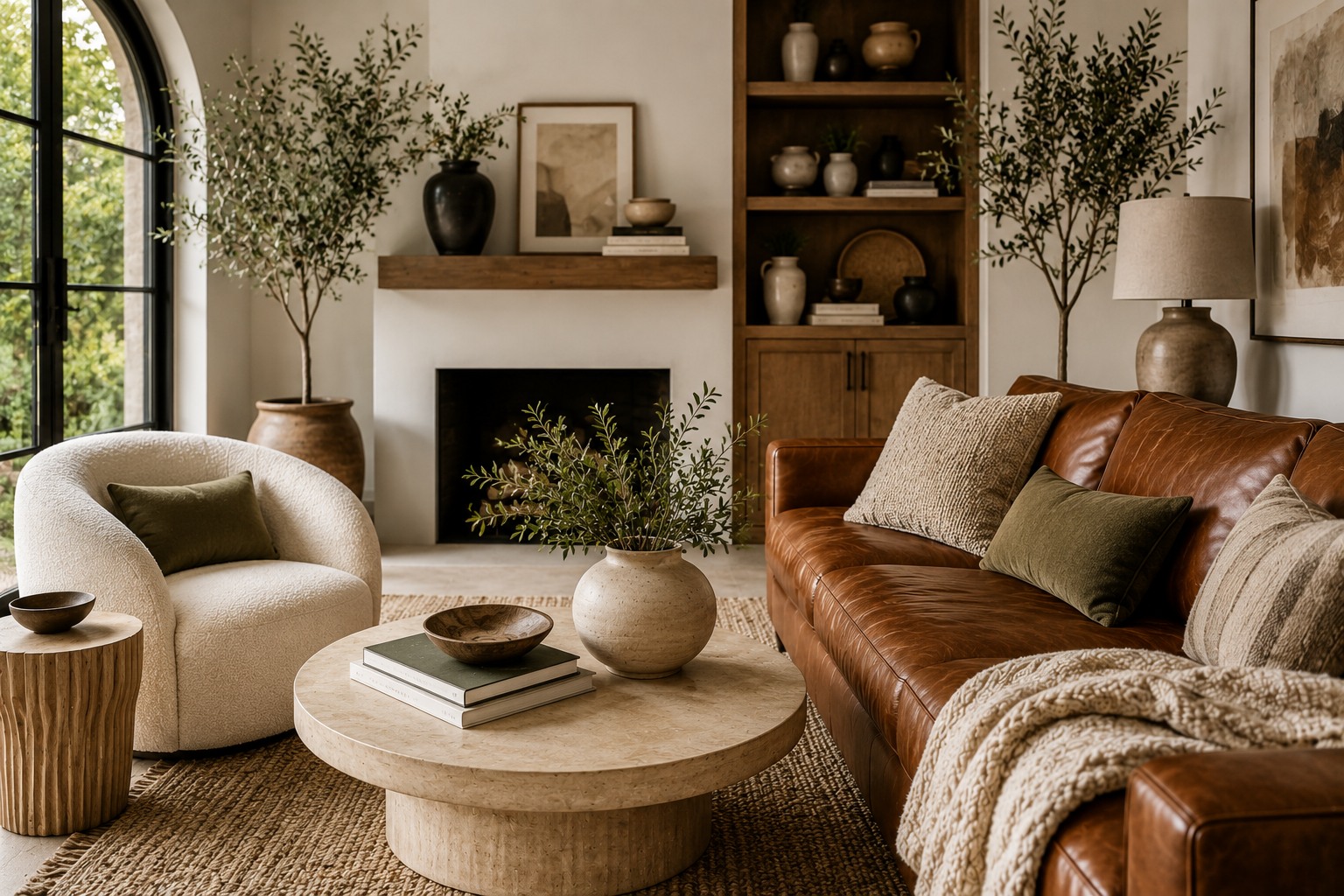
Leather furniture has a way of making a room feel instantly more grounded. It brings warmth, texture, durability, and a little grown-up polish, which is helpful in homes where the rest of the room may currently be held together by throw pillows, half-finished projects, and optimism.
The challenge is that leather can go very right or very wrong. A beautiful leather sofa can make a living room feel timeless and collected. The wrong leather piece, styled poorly, can make the same room feel dark, heavy, or like a corporate lobby that serves disappointing coffee.
The good news is that leather furniture works beautifully with one of the strongest home design shifts right now: softer, warmer, more curved interiors. Rounded tables, arched mirrors, sculptural lamps, textured rugs, and curved chairs can balance leather’s visual weight and make a room feel more current without replacing everything you already own.
That softer direction is showing up across home design. Houzz’s 2026 U.S. Emerging Summer Trends Report points to rounded silhouettes, wave-like details, scalloped tile, rounded kitchen islands, and curved architectural features as homeowners move away from rigid lines. The National Association of Realtors has also highlighted scalloped, circular shapes and curves as a major design trend because they help homes feel more approachable and comfortable.
For homeowners, that means leather furniture does not have to feel old-fashioned, overly masculine, or too heavy. When it is paired with softer shapes, better lighting, layered texture, and the right colors, leather can become one of the most flexible pieces in the house.
Why Leather Furniture Still Works in Modern Homes
Leather has stayed relevant because it solves several design problems at once. It adds texture to flat rooms, warmth to neutral spaces, and durability to homes that actually get used. A leather sofa, chair, ottoman, bench, or dining seat can make a room feel more finished without relying on too many accessories.
It also brings visual weight. That can be a good thing. Many rooms need something to anchor them, especially if the rest of the design is light, airy, or full of pale neutrals. A cognac sofa, dark brown club chair, black leather bench, or warm leather ottoman can give a room backbone.
The mistake is treating leather as if it only belongs in one style of home. Brown leather does not automatically mean rustic. Black leather does not automatically mean bachelor pad. Cream leather does not automatically mean panic every time someone holds a glass of red wine. The shape, color, finish, and surrounding decor determine how the piece feels.
Start With the Room You Actually Have
Before buying or restyling leather furniture, look at the room honestly. Is it bright or dark? Large or compact? Modern, traditional, coastal, farmhouse, transitional, or somewhere between three Pinterest boards and real life?
In a bright room with white walls, a cognac leather sofa can add warmth without feeling heavy. In a darker room, a deep brown or black leather piece may need lighter rugs, pale walls, glass tables, brass accents, or brighter lamps to keep the space from feeling closed in. In a small room, a leather accent chair or ottoman may be smarter than a massive sectional.
Scale matters. A giant leather sofa in a small living room can dominate everything. A slim leather chair, rounded ottoman, or leather bench can give you the richness of leather without swallowing the floor plan.
If the room already has a lot of straight lines, leather will usually look better with rounded decor nearby. If the room already has curves, arches, and soft shapes, leather can add the structure needed to keep the space from feeling too floaty.
Pair Leather With Curved Decor
One of the easiest ways to modernize leather furniture is to pair it with curved decor. Leather has visual weight, especially in darker colors. Curves soften that weight.
Try a round coffee table in front of a leather sofa. Add an arched mirror above a leather bench or console. Place a curved accent chair across from a leather couch. Use a scalloped lamp, rounded ceramic vase, oval tray, or circular side table to break up the harder edges in the room.
This does not mean every item needs to be round. It should not. The best rooms mix structure and softness. Leather brings the structure. Curved decor brings the ease. For more on using this trend throughout the home, see YHDC’s guide to curvy furniture and decor.
Make a Leather Sofa Feel Softer
A leather sofa can be the strongest piece in a living room, but it should not be the only interesting thing in the room. If the sofa feels too heavy, start with the rug. A large wool, jute, vintage-style, or patterned rug can anchor the seating area and make the sofa feel intentional instead of bulky.
Then look at the coffee table. A round or oval coffee table is often the best partner for a leather sofa because it softens the front edge and improves traffic flow. This is especially useful in living rooms where every person, dog, and coffee mug seems to move through the same narrow path.
Pillows also help, but choose them carefully. Leather does not always hold pillows the same way fabric does, so pick pillows with texture and enough weight to stay put. Linen, velvet, wool, boucle, and heavier cotton usually work better than flimsy decorative pillows that slide around like they are trying to leave the room.
Finish with a throw blanket that looks relaxed, not staged for a catalog. A soft wool throw, nubby cotton blanket, or textured knit can make leather feel warmer without burying it under accessories.
Use Texture So Leather Does Not Feel Flat
Leather looks best when it is surrounded by texture. A leather sofa beside a flat wall, flat rug, flat table, and flat lighting plan can feel cold, even if the sofa itself is expensive.
Layer leather with woven rugs, linen curtains, boucle pillows, wool throws, wood tables, ceramic lamps, rattan baskets, plaster accents, stone trays, greenery, and softer lampshades. These materials help leather feel relaxed instead of severe.
If the leather piece is smooth and polished, add more tactile texture around it. If the leather is distressed or rustic, balance it with cleaner lines and more refined accents. A room should not look like every item came from the same showroom display. It should look like the homeowner made thoughtful choices over time.
Choose the Right Leather Color
Leather color changes the whole mood of a room. Cognac and camel leather feel warm, casual, and easy to pair with white, cream, olive, navy, black, and natural wood. Dark brown leather feels classic and traditional, especially with wool rugs, library-style lighting, and rich wood tones. Black leather can feel modern and sharp, but it needs softness nearby so the room does not become too severe.
Cream, ivory, and taupe leather can look beautiful in lighter homes, especially coastal, modern, or transitional spaces. They also require more honest thinking about pets, children, denim transfer, red wine, and whether the household lives in a way that supports pale upholstery.
If you are unsure, cognac is often the most forgiving choice. It adds warmth without feeling too dark and works with many design styles, from modern farmhouse to coastal, transitional, midcentury, and contemporary.
How to Style Brown Leather Furniture
Brown leather is classic, but it can look dated if the rest of the room is too heavy. The simplest fix is contrast.
Pair brown leather with lighter walls, warm white lampshades, textured cream pillows, natural wood, soft black accents, aged brass, and greenery. Blue, olive, rust, charcoal, ivory, and warm gray all work well with brown leather. Avoid surrounding it with only dark wood, dark walls, and dark rugs unless you are intentionally creating a moody library look.
For a relaxed home, try a cognac leather sofa with a round wood coffee table, woven rug, cream pillows, and an arched mirror. For a more traditional space, pair dark brown leather chairs with a patterned rug, brass reading lamps, and wood bookshelves. For a modern room, use brown leather with black metal, pale oak, stone, and clean-lined lighting.
How to Style Black Leather Furniture
Black leather can look sleek and expensive, but it needs balance. Too much black leather with sharp furniture can make a room feel cold. The goal is to soften the edges without losing the drama.
Use black leather with warm wood, sculptural lamps, off-white rugs, textured pillows, and rounded tables. Cream boucle, walnut, travertine, brass, linen, and plaster all pair well with black leather. A black leather chair can look beautiful beside a curved side table and a soft floor lamp. A black leather sofa can work in a modern room if the rug, walls, art, and lighting keep the space from feeling harsh.
Black leather is best when it feels intentional. If it feels too stark, add warmth through wood, texture, plants, and lighting before replacing the piece.
Use Leather Chairs as Accent Pieces
A leather chair is often easier to style than a leather sofa. It adds warmth and character without controlling the entire room.
A pair of leather club chairs can create a cozy conversation corner. A slim black leather chair can sharpen a modern space. A cognac sling chair can bring warmth to a bedroom, office, or reading nook. A leather swivel chair can work well in an open-concept room because it allows people to turn toward the TV, the conversation, or the kitchen where someone is pretending not to eat directly from the cutting board.
Leather chairs work especially well with curved side tables, small round rugs, floor lamps, and soft throws. The goal is to make the chair feel inviting, not like it belongs in a private airport lounge where no one is allowed to touch the magazines.
Use Leather Ottomans and Benches for Function
Leather ottomans and benches are useful because they add polish without taking over a room. A leather ottoman can work as a coffee table, footrest, extra seat, or landing spot for a tray. A leather bench can make an entryway, bedroom, hallway, or dining nook feel more finished.
For family rooms, a leather ottoman can be more forgiving than a hard-edged coffee table. It softens the space and removes sharp corners, which is helpful in homes with kids, pets, or adults who walk through the room while looking at their phones.
In an entryway, a leather bench gives people a place to sit while putting on shoes. In a bedroom, it can soften the foot of the bed. In a dining area, a leather bench can make the room feel relaxed but still pulled together.
Bring Leather Into the Dining Room or Kitchen Carefully
Leather dining chairs, counter stools, and banquettes can add warmth to kitchens and dining spaces. They are especially helpful when a kitchen has a lot of hard surfaces: stone countertops, tile backsplashes, metal appliances, painted cabinets, and wood or tile floors.
The key is choosing leather that can handle real use. Dining spaces are not theoretical. People spill, slide chairs, lean back, sit with damp swimsuits, and occasionally treat the counter stool like playground equipment. Protected or performance-friendly leather finishes are often more practical than delicate aniline leather in high-traffic dining areas.
For a modern kitchen, leather counter stools can soften a waterfall island or crisp cabinetry. For a traditional dining room, leather chairs can make the space feel less formal and more comfortable. For a breakfast nook, a leather banquette can add both seating and polish.
Mix Leather With Wood, Metal, Stone, and Fabric
Leather furniture becomes more interesting when it is mixed with other strong materials. Wood adds warmth. Metal adds contrast. Stone adds polish. Woven pieces add casual texture. Glass can lighten a room that already has heavy furniture.
A cognac leather sofa with a black metal floor lamp and a round wood coffee table feels warm and modern. A dark leather chair beside a marble-topped side table feels classic but fresh. A leather ottoman under a sculptural lamp can make a sitting area feel pulled together without becoming too formal.
If the room feels too rustic, add metal or stone. If it feels too cold, add wood, fabric, and woven texture. Leather is flexible, but it needs balance.
Do Not Forget Lighting
Lighting can make or break a leather-heavy room. Leather absorbs and reflects light differently depending on its finish. A dark leather sofa in a poorly lit room can look heavy. A warm leather chair under a good reading lamp can look rich and inviting.
Use layered lighting: table lamps, floor lamps, wall sconces, picture lights, and soft overhead lighting where needed. Warm bulbs are usually more flattering than harsh cool bulbs. A good lamp near leather furniture can highlight the material’s texture and make the room feel intentional.
If your home is a rental or you do not want electrical work, lamps are your friend. YHDC’s guide to renter-friendly home improvement ideas includes lighting upgrades that can make a room feel warmer without major renovation.
Keep Leather Away From Too Much Direct Sun
Leather is durable, but it is not indestructible. Sun, heat, and harsh cleaning products can age leather faster than normal use. If possible, avoid placing leather furniture where it gets intense direct sunlight every day. Use window treatments, rugs, and thoughtful placement to reduce fading and drying.
For cleaning and care, follow the manufacturer’s instructions for your specific leather type. Leather Naturally’s leather care guide explains that different leather finishes, including aniline, nubuck, suede, and pigmented leather, respond differently to water, stains, cleaning, and care products.
A practical routine is simple: dust regularly, blot spills quickly, avoid soaking the material, and use cleaners made for leather when needed. For more detailed cleaning advice, see YHDC’s guide to cleaning leather furniture.
How to Make Leather Furniture Work in a Small Room
Leather can work in a small room, but proportion matters. Instead of a bulky leather sectional, consider a slim sofa, leather accent chair, small ottoman, or bench. Keep the legs visible when possible because furniture that sits slightly off the floor can make a room feel lighter.
Choose a lighter rug, use mirrors to bounce light, and avoid crowding the room with too many heavy wood pieces. A round coffee table or oval side table can help people move around more easily. Wall-mounted lighting can also free up floor space if the room is tight.
In a small room, the goal is not to make leather disappear. The goal is to let it anchor the space without making the room feel crowded.
How to Make Leather Furniture Work in an Open Floor Plan
Open floor plans need furniture that creates zones. Leather can help because it has enough visual weight to define a living area, dining nook, or reading corner.
A leather sofa can separate the living room from the dining area. A pair of leather chairs can create a conversation zone near a fireplace. A leather bench can bridge a hallway and entryway. In an open room, leather works best when the color repeats subtly elsewhere, such as in wood tones, frames, lighting, or small accessories.
Curved decor is especially useful in open spaces because it helps furniture groupings feel more natural. A round coffee table, arched mirror, circular rug, or curved chair can soften the transition between zones.
How to Mix Leather With Outdoor Living Spaces
Leather is usually an indoor material, but many homes now have patios, decks, and sliding doors that make the living room visible from outside. That means the indoor furniture and outdoor furniture should feel connected.
If the living room has a cognac leather sofa, the patio might use warm wood, woven chairs, camel cushions, or black metal accents. If the interior uses black leather, the patio can echo that with dark frames, stone tables, or charcoal cushions. The point is not to match everything. It is to create a visual conversation between indoors and out.
For more on softening outdoor spaces, read YHDC’s guide to curved outdoor furniture and the softer patio trend.
What to Avoid With Leather Furniture
The biggest mistake is surrounding leather with too many heavy pieces. A dark leather sofa, dark wood table, dark rug, dark walls, and dim lighting can turn a living room into a stylish cave. Unless that is the goal, add contrast.
Avoid matching every piece. A full leather sofa, loveseat, chair, and ottoman set can feel dated quickly. One strong leather piece usually looks more current than a whole matching suite.
Avoid tiny rugs. Leather furniture often has visual weight, so it needs a rug large enough to anchor it. A small rug floating in front of a large sofa makes the whole room feel unfinished.
Avoid pretending lifestyle does not matter. If pets sleep on the sofa, kids eat snacks there, or the room gets strong afternoon sun, choose leather and placement accordingly. Design should be beautiful, but it should also survive Tuesday.
Easy Ways to Update a Room With Leather Furniture
If you already own leather furniture and the room feels dated, you may not need a new sofa. Try refreshing the pieces around it first.
- Add a round coffee table: It softens the front of a leather sofa and improves movement through the room.
- Use an arched mirror: It adds height and curves without taking up floor space.
- Change the rug: A larger, lighter, or more textured rug can transform the whole seating area.
- Update the pillows: Choose linen, velvet, wool, boucle, or heavier cotton in colors that soften the leather.
- Add better lighting: Lamps can make leather look rich instead of heavy.
- Bring in greenery: Plants soften leather and add life to rooms with too many hard surfaces.
- Use wood or stone accents: These materials add warmth and polish without competing with leather.
- Remove one heavy item: Sometimes the problem is not the leather. It is the dark table, dark rug, and dark bookcase surrounding it.
For budget-friendly room updates that pair well with this approach, see YHDC’s guide to inexpensive home makeover ideas.
Where Leather Furniture Works Best
Leather furniture works best in rooms that need grounding. Living rooms, studies, bedrooms, dining areas, and home offices can all benefit from leather when the scale and color are right.
In a living room, a leather sofa or chair can anchor the seating area. In a bedroom, a leather bench or chair can add warmth. In a study, leather naturally suits bookshelves, lamps, and wood desks. In a dining room, leather chairs can make the space feel more relaxed. In an entryway, a leather bench adds function and polish.
The best placement is the one that matches how the room is used. A formal leather chair in a room no one sits in is not a design win. A comfortable leather sofa in a family room, a hardworking leather stool in the kitchen, or a bench in a busy entryway will do more for the home because it supports real daily life.
The Bottom Line
Leather furniture is not outdated. Poorly styled leather furniture is outdated. A good leather piece can still feel warm, current, and practical when it is paired with curved decor, soft textiles, layered lighting, natural materials, and enough contrast to keep the room from feeling heavy.
The best approach is simple: choose leather for texture and grounding, use curves to soften the room, add light where the space feels dark, and avoid matching sets that make the room feel frozen in time. Done well, leather furniture does not just decorate a home. It gives the room backbone, warmth, and a reason to feel finished.