


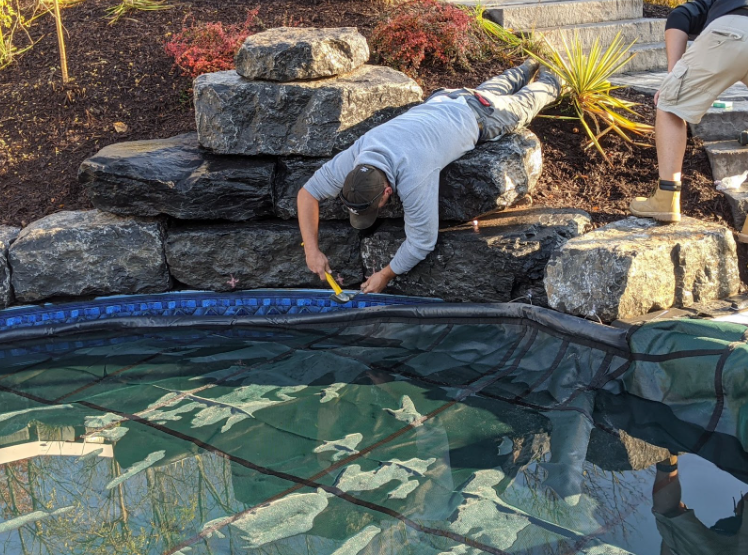
As fall temperatures begin to dip, pool owners face an important seasonal decision: when and how to properly close their pool. While it may feel like a routine task, strategic winter preparation protects your investment, preserves water quality, and ensures safety throughout the colder months.
Done correctly, winterizing your pool reduces spring cleanup, prevents structural damage, and safeguards your backyard design.
When Is the Right Time to Cover Your Pool?
Timing matters more than many homeowners realize.
Industry professionals recommend closing your pool once water temperatures consistently fall below 70°F. Covering too early can trap warm water, encouraging algae growth. Waiting too long can allow leaves, debris, and contaminants to accumulate.
In most climates, this window falls between late September and early November.
If you live in regions with fluctuating temperatures, monitor both water temperature and overnight lows rather than relying solely on the calendar.
Strategic seasonal planning — similar to what we discuss in our guide to
eco-conscious outdoor renovations — ensures your outdoor space remains protected year-round.
Winter Covers vs. Safety Covers: What’s the Difference?
Standard Winter Covers
Designed to block debris, these covers rest over the pool and are typically secured with water bags or weights. They provide surface protection but do not offer structural support.
They are functional — but limited.
Safety Covers
Safety covers anchor directly into the pool deck. When properly installed, they create a taut, secure surface capable of supporting significant weight.
For families with children or pets, safety covers dramatically reduce accidental fall risks.
From a design perspective, safety covers also create a cleaner visual profile — maintaining the polished aesthetic of your outdoor space during the off-season.
If your backyard includes features like outdoor entertaining areas — similar to those highlighted in our article on
creating the perfect relaxation space with lighting — a well-fitted safety cover preserves that cohesive design appeal.
How to Properly Install a Pool Cover
- Clean the pool thoroughly. Remove debris, vacuum the floor, and balance water chemistry.
- Clear the surrounding deck. Leaves and dirt trapped beneath the cover can stain or damage materials.
- Center the cover carefully. Proper alignment prevents sagging and stress on anchor points.
- Secure all anchors. Safety covers must be properly tensioned to function correctly.
- Check for water pooling. Standing water can reduce longevity.
is recommended for custom pool shapes or integrated deck designs.
Why Safety Covers Offer Long-Term Value
- Reduced spring cleaning
- Lower algae risk
- Protection against UV damage
- Structural support during snow accumulation
- Peace of mind for households with children or pets
They also extend the life of your pool finish, equipment, and decking.
If your pool is part of a broader backyard transformation — like the sustainable upgrades discussed in
green home renovation strategies — protecting materials during winter helps preserve long-term value.
Winter Monitoring Matters
Closing the pool does not mean ignoring it until spring.
- Remove heavy snow accumulation
- Check anchor tension periodically
- Ensure drainage systems remain clear
Light seasonal monitoring prevents costly repairs and makes reopening significantly easier.
Making the Right Decision for Your Backyard
If your goal is basic debris protection, a winter cover may suffice. If safety, durability, and long-term investment protection are priorities, a safety cover is the smarter choice.
A pool is more than a water feature — it is part of your home’s architectural and lifestyle footprint. Winter protection should reflect that same level of intentional planning.
By choosing the right cover and installing it properly, you ensure your backyard remains secure, visually cohesive, and ready to reopen beautifully when warmer weather returns.
