


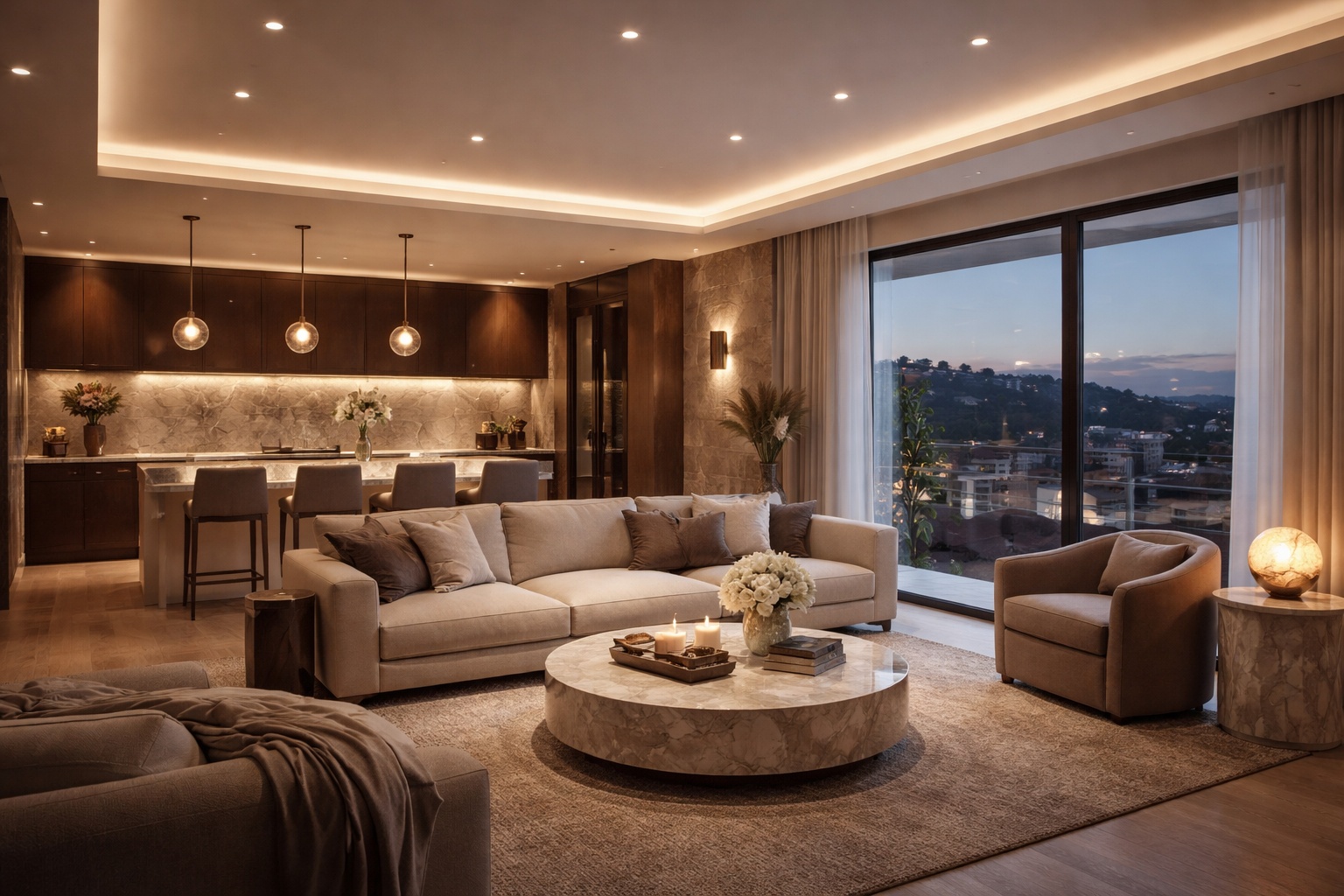
Fix Your Natural Light First (Before You Spend a Dollar)
Before you buy anything, look at your daylight. Most homes already have more natural light than they are using.
Heavy window coverings, furniture blocking windows, and darker finishes near light sources all reduce how far daylight travels. Clean your windows, pull furniture slightly away, and use lighter tones near windows to reflect light deeper into the room.
According to the U.S. Department of Energy, effective daylighting not only reduces energy use but also improves how spaces feel and function. Translation: your home looks better and costs less to run.
Layer Your Lighting or Accept That It Will Always Feel Off
One ceiling light is not a lighting plan. It is a placeholder.
Every functional room should have three types of lighting working together:
- Ambient: general lighting that fills the room
- Task: focused lighting for things like cooking, reading, or working
- Accent: lighting that adds depth and highlights design details
This is where most homes fall apart. You walk into a room and it technically has light, but nothing feels right. That is a layering problem.
If your home feels cold or uneven at night, you are likely making some of the same mistakes covered in this lighting breakdown.
Stop Buying Bright Bulbs and Start Fixing Glare
Brighter is not better. Better is better.
Glare is what makes a home feel harsh, not the amount of light. Exposed bulbs, poorly placed recessed lights, and overly strong overhead fixtures create visual fatigue fast.
Instead, focus on soft, indirect light:
- Use shaded fixtures instead of exposed bulbs
- Add under-cabinet lighting in kitchens
- Use floor and table lamps to fill dark corners
- Consider wall lighting to reduce harsh shadows
The goal is even, comfortable light that does not shout at you every time you look up.
Upgrade to LEDs That Actually Make Your Home Look Good
Not all LED lighting is good lighting. Some still make rooms look cold and people look worse than they should.
Focus on a few key details:
- Color temperature between 2700K and 3000K for most living spaces
- High CRI (90+) so colors look accurate
- Full dimming compatibility
- ENERGY STAR certified products (ENERGY STAR)
Good lighting should make your home look better, not more clinical.
Use Smart Lighting, But Keep It Simple
Smart lighting is worth it when it removes effort, not when it adds complexity.
The best setups handle things automatically:
- Lights dim in the evening
- Pathway lighting turns on when needed
- Rooms shut off when empty
- You can control everything easily from one place
Platforms built on standards like Matter are making this easier across brands, which means fewer headaches and better long-term compatibility.
Tunable Lighting Is One of the Smartest Upgrades Right Now
This is where lighting gets noticeably better in 2026.
Tunable white lighting lets you shift color temperature throughout the day. Cooler light in the morning helps with focus. Warmer light at night feels calmer and more natural.
This is not just a trend. It is a practical upgrade that makes your home feel more comfortable without changing anything else.
Your Materials Are Either Helping or Hurting Your Lighting
Lighting does not work alone. It interacts with everything in the room.
Light surfaces reflect and spread illumination. Dark surfaces absorb it. Satin finishes bounce light better than flat paint. Mirrors and glass can extend light deeper into a space.
This is why lighting should always be part of a bigger design plan. If you are thinking about updates beyond lighting, take a look at what is shaping modern home design right now.
What Lighting Trends Actually Matter in 2026
Forget overly futuristic concepts. The real shift is toward lighting that feels better to live with.
Current direction includes:
- Softer, diffused lighting instead of harsh brightness
- Sculptural fixtures that double as design elements
- Warmer tones replacing overly cool white lighting
- Smarter systems that require less interaction
Global design events like Light + Building confirm that lighting is moving toward comfort, flexibility, and simplicity rather than complexity.
The Bottom Line
If your home feels off, lighting is usually the reason.
You do not need more light. You need better light. Fix your daylight, layer your lighting, reduce glare, upgrade your bulbs, and add simple controls. Do that, and your home will immediately feel more comfortable, more functional, and more finished.
That is the difference between a house that looks good and one that actually feels good to live in.