


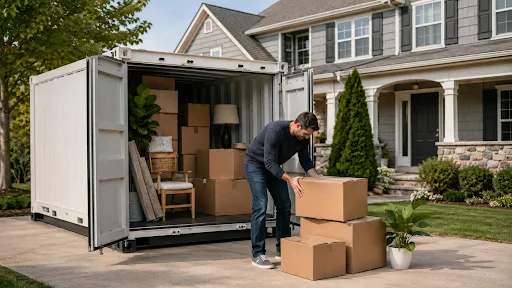
Portable storage containers can make moving, remodeling, downsizing, and seasonal organization easier. The key is knowing when they genuinely solve a space problem—and when another storage option makes more sense.
There is a particular stage of homeownership when every closet seems full, the garage has stopped behaving like a garage, and the guest room has quietly become a holding area for everything without a permanent address.
Sometimes decluttering is the answer. Sometimes you genuinely need temporary space.
That is where a portable storage container can be useful. Unlike a traditional self-storage unit that requires repeated trips to a facility, a portable container can usually be delivered to the property, packed gradually, and then transported or stored according to the rental arrangement.
The trick is using one strategically rather than paying every month to avoid deciding what to do with your belongings.
Is a Portable Storage Container Worth It?
A portable storage container can be particularly useful when you are moving, renovating, staging a home, downsizing, or temporarily clearing a large amount of household space.
Before renting one, compare the full cost rather than the advertised monthly rate. Delivery, pickup, transportation, redelivery, storage, insurance, and access fees can affect the final price.
Also check where the container can legally and safely be placed. Driveway space, homeowners association rules, municipal restrictions, drainage, overhead clearance, and delivery-truck access can all matter.
Here are ten practical ways to put that extra space to work.
1. Make a Household Move Less Chaotic
Moving does not have to begin with a frantic weekend of filling every cardboard box within reach.
A portable storage container allows you to pack gradually. Start with belongings you do not need every day: seasonal decorations, books, framed artwork, guest-room furniture, extra dishes, and garage items. Everyday essentials can stay inside the house until closer to moving day.
Pack heavier boxes at the bottom, protect furniture before loading, and leave important documents, medication, chargers, toiletries, and moving-day necessities outside the container.
If you are hiring a company for an interstate household move, use the Federal Motor Carrier Safety Administration’s registered mover search to verify its registration and U.S. DOT information before signing a contract.
Useful Product: U-Haul Furniture Pads
Large furniture can rub against other belongings or the container walls during transportation. U-Haul Furniture Pads are reusable moving blankets designed to help protect furniture and appliances from scratches and minor bumps.
Secure the pads with moving wrap or appropriate straps rather than sticking tape directly to finished furniture.
2. Protect Belongings During a Renovation
Renovation dust has a remarkable ability to reach rooms that seem completely unrelated to the project.
Moving furniture, rugs, lamps, electronics, artwork, and décor into temporary storage can protect belongings while also giving contractors room to work.
For a small project, shifting furniture into another room may be enough. For a kitchen remodel, flooring replacement, whole-house painting project, or major renovation, an on-site container may be much more practical.
Before clearing the house, ask your contractor which rooms need to be emptied and for approximately how long. There is no reason to pay for months of storage when the furniture needs to move for only a week or two.
Our guide on how to prepare your home for renovation covers additional planning, decluttering, budgeting, and temporary-living considerations.
3. Create Space for Home Staging or Downsizing

A room can be beautifully designed and still look smaller when it contains too much furniture.
When preparing a property for sale, temporary storage can help remove oversized pieces, packed collections, exercise equipment, extra toys, overflowing closet contents, and highly personal décor.
The goal is not to strip every room bare. It is to make the home’s actual proportions easier for potential buyers to see.
Storage can also take some pressure out of downsizing. Instead of making every keep-or-donate decision in a weekend, possessions can be sorted more deliberately.
Just set a deadline. Indefinitely paying to store objects nobody uses is less of an organization strategy and more of a subscription to procrastination.
4. Rotate Seasonal Belongings
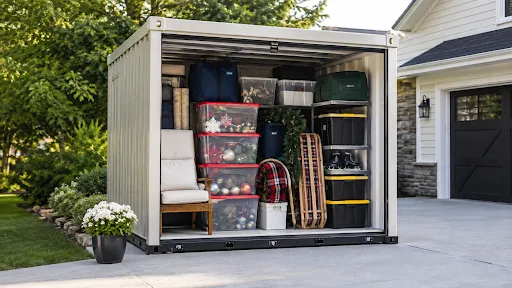
Holiday decorations are charming in December. They are considerably less charming when six boxes of them occupy prime garage space in July.
Seasonal storage is useful for:
- Holiday décor
- Patio cushions
- Camping equipment
- Winter clothing
- Sports equipment
- Outdoor entertaining supplies
- Seasonal bedding
If you only have a handful of bins, renting an entire portable container probably does not make financial sense. First compare the cost with reorganizing a garage, adding shelving, or renting a smaller conventional storage unit.
For belongings that do go into storage, our guide to using a storage unit without turning it into a dusty cave of regret explains how to label, stack, protect, and organize possessions so they remain accessible.
Useful Product: Rubbermaid Roughneck Storage Containers
For seasonal items that need more protection than a cardboard moving box provides, Rubbermaid Roughneck Storage Containers provide a durable, stackable option for decorations, textiles, sporting goods, and household supplies.
Plastic totes can help protect belongings from dirt and minor moisture exposure, but they should not be treated as waterproof protection against flooding or an active container leak.
5. Store College Belongings Between Terms
Dragging a mini refrigerator, bedding, clothing, fan, desk accessories, and half a dorm room across the state every summer gets old quickly.
For students returning to the same school, a nearby self-storage facility may be the easiest choice. A portable container may make sense when several students share storage, the family is also moving, or belongings need to be transported elsewhere.
Before storing dorm-room possessions, wash bedding and clothes, remove every bit of food, clean and dry appliances, and leave a cleaned mini refrigerator slightly open so moisture and odors do not become an unpleasant surprise in the fall.
Keep passports, medication, important documents, irreplaceable keepsakes, and other essential valuables with you.
6. Organize Event and Holiday Supplies
Large weddings, community events, fundraisers, seasonal parties, and school functions can require an astonishing amount of equipment.
Linens, serving pieces, folding furniture, decorations, signs, lighting, display materials, and boxes of supplies can all be organized temporarily in a storage container.
Load according to when the items will be needed. Equipment required during initial setup should be near the doors rather than buried behind the centerpieces and cleanup supplies.
A simple inventory attached to the inside of a nearby project folder—or stored on your phone—can save a great deal of searching.
Remember that a storage container is storage space. It should not be treated as a gathering space for staff, guests, or volunteers.
7. Hold Small-Business Inventory
Running a small business from home can make the line between living space and stockroom disappear surprisingly quickly.
A storage container or conventional storage unit may provide temporary space for approved inventory, displays, shipping boxes, packaging materials, and supplies.
Create a basic inventory system recording what is stored, quantities, box or shelf locations, dates received, and replacement values.
Do not assume that renting a storage space gives you permission to turn it into an office, retail shop, manufacturing area, or workshop. Rental agreements, zoning rules, electrical limitations, fire codes, and occupancy requirements may prohibit working or meeting customers inside the unit.
Use it for approved storage unless the provider explicitly permits something more.
8. Secure Tools and Equipment Near a Project
Home renovations, landscaping jobs, property maintenance, and construction projects often require tools that are expensive and inconvenient to transport every day.
A portable container can provide an approved storage location near the project.
Placement matters. Before delivery, confirm that the container and delivery equipment will not cross or sit above septic systems, drainage infrastructure, irrigation components, fragile paving, or buried utilities.
Good organization matters too. Shelving, toolboxes, and clearly defined equipment zones are safer than piling everything onto the floor.
Useful Product: ABUS GRANIT 37/55 Padlock
For compatible container doors or locking systems, the ABUS GRANIT 37/55 is a hardened-steel high-security padlock designed for applications that include containers, gates, trucks, and other higher-risk locations.
Check the container’s locking mechanism before purchasing any lock because shackle dimensions and protective lock boxes vary.
A high-quality lock is useful, but it should complement—not replace—appropriate placement, controlled access, lighting, inventory records, and insurance.
9. Protect Belongings During Home Repairs or Weather Disruptions
A leaking roof, burst pipe, smoke cleanup, flooring replacement, or another unexpected home repair may suddenly make part of the house unusable.
Temporary storage can give contractors room to work while helping protect unaffected furniture and belongings.
The important distinction is that weather-resistant does not necessarily mean waterproof.
Inspect the container before loading. Look at the roof, floor, doors, seals, and visible damage, and keep moisture-sensitive belongings elevated rather than directly on the floor.
If temperature or humidity could damage electronics, artwork, wood furniture, photographs, musical instruments, or important documents, ask about climate-controlled storage instead.
And never use a standard storage container as an emergency shelter or temporary bedroom. Storage containers are not automatically designed or approved for human occupancy.
10. Reclaim Space Without Storing Everything Forever
Perhaps the smartest use of temporary storage is giving yourself enough room to make better decisions.
Before loading anything, separate possessions into four categories:
- Keep and use
- Keep and store
- Sell or donate
- Recycle or discard
There should be considerably more thought involved in the second category than simply saying, “I might need this someday.”
Put a review date on the calendar. If belongings remain untouched through several seasons, reconsider whether keeping them is worth the continuing storage cost.
The objective is not simply to move clutter from inside the house into a large metal box outside.
It is to make the home work better.
How to Protect Belongings in a Storage Container
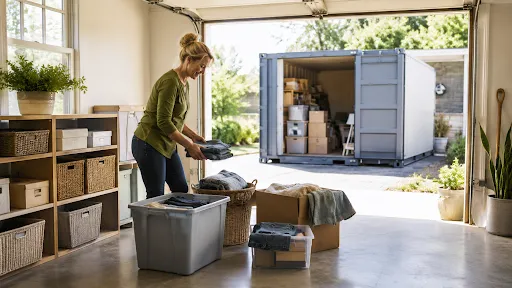
Before handing over valuable possessions to any storage arrangement, think about what happens if something goes wrong.
Check whether your homeowners or renters insurance provides coverage for property stored away from the residence and whether different coverage limits or exclusions apply. The Insurance Information Institute’s guidance on self-storage and insurance recommends reviewing off-premises coverage, considering security and climate conditions, and maintaining an inventory of stored possessions.
Before loading:
- Photograph valuable items
- Create an inventory
- Review insurance coverage
- Inspect the container
- Keep vulnerable belongings off the floor
- Use sturdy, clearly labeled containers
- Ask about climate-controlled options when appropriate
- Review prohibited-item policies
- Keep valuables and critical documents elsewhere
Gasoline, propane, fireworks, pesticides, paint, solvents, and other hazardous materials may be prohibited. Never assume that an item is acceptable simply because it physically fits inside the container.
The Your Home Design Center Take
A portable storage container is most valuable when it solves a specific problem for a specific period of time.
It can make moving less frantic, keep furniture out of a renovation zone, create breathing room while staging a home, rescue the garage from college belongings, or keep approved equipment organized during a project.
Choose the right storage format, understand the complete cost, check insurance and access rules, protect possessions properly, and decide when everything is coming back out before the first box goes in.
Because good storage creates more usable space. It should not simply give clutter a new address.