


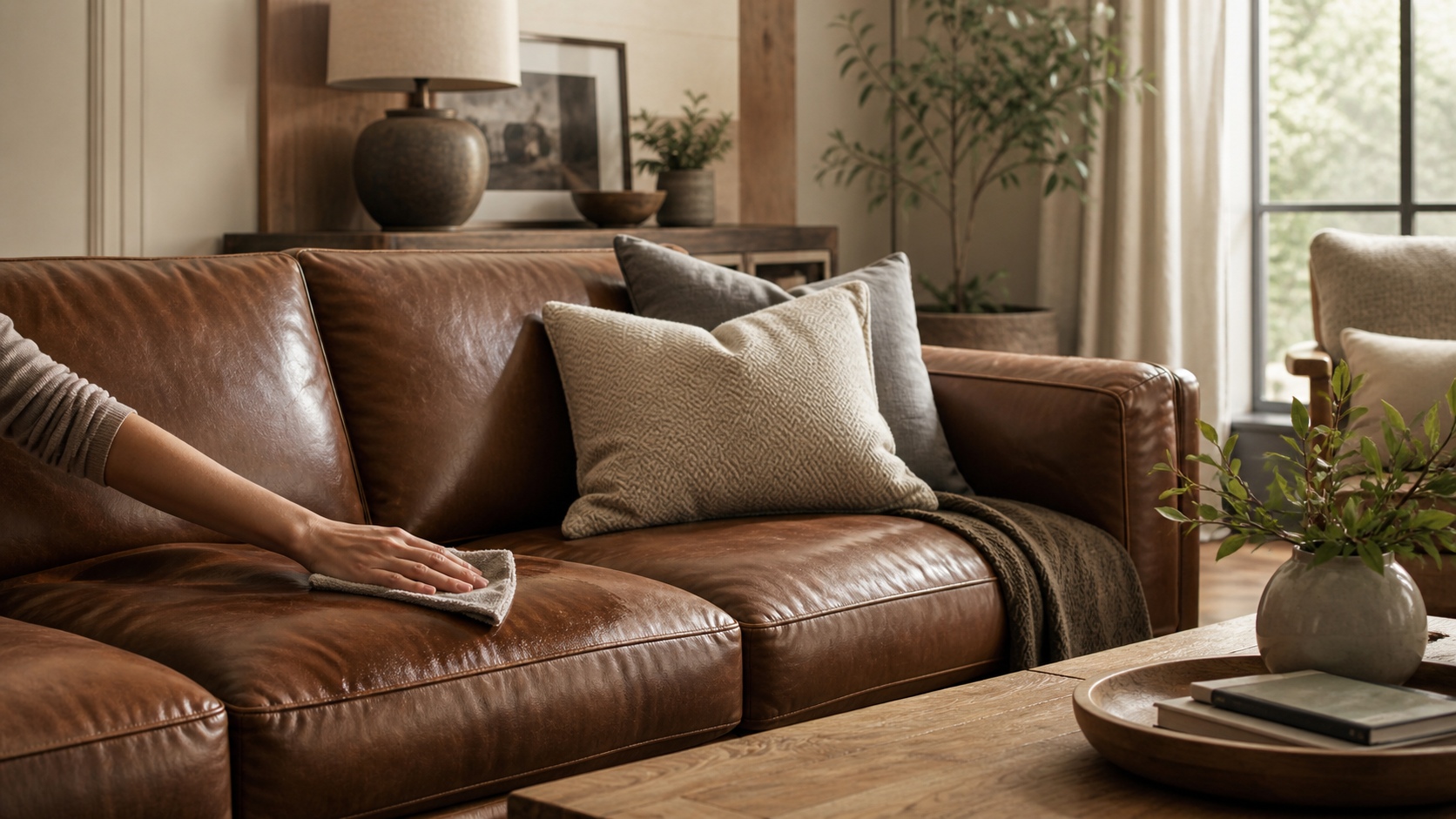
Leather furniture has a way of making a room feel polished, comfortable, and a little more grown-up. It also has a way of showing dust, crumbs, pet hair, body oils, water spots, and the occasional “I have no idea how that got there” mark. Unlike fabric upholstery, leather needs a gentler approach. The wrong cleaner can dry it out, dull the finish, or leave behind stains that are far more noticeable than the original mess.
The good news is that cleaning leather furniture does not need to be complicated. With the right tools, a light touch, and a little patience, you can keep leather sofas, chairs, ottomans, and sectionals looking clean and comfortable for years. If you are refreshing your whole home-care routine, it also helps to keep a simple set of essential cleaning products nearby so you are not reaching for the wrong cleaner in a moment of panic.
Before you start, always check the manufacturer’s care instructions if you still have them. Different types of leather may require different care. Finished leather, aniline leather, nubuck, suede, and faux leather do not all respond the same way to moisture or cleaning products. When in doubt, test any cleaner on a hidden area first and wait to see how the leather reacts.
Start by Removing Dust and Loose Dirt
The first step in cleaning leather furniture is removing loose dust, dirt, crumbs, and pet hair. Use a vacuum with a soft brush attachment or upholstery tool. Move gently across the cushions, arms, back, and base of the furniture.
Pay special attention to seams, folds, tufting, and the spaces between cushions. Those little creases are where crumbs go to start a second life. If your sofa has removable cushions, lift them and vacuum underneath. You may find dust, pet hair, coins, remote controls, and possibly one cracker from a previous era.
After vacuuming, wipe the leather with a clean, dry microfiber cloth. This removes surface dust and gives you a better look at any areas that need extra attention.
Use a Damp Cloth for Light Cleaning
For routine cleaning, start with the mildest method first. Dampen a soft microfiber cloth with distilled water, then wring it out well. The cloth should be lightly damp, not wet. Wipe the leather gently, working in small sections.
Distilled water is often a safer choice than tap water because it does not contain the same minerals that can sometimes leave marks behind. Avoid soaking leather. Too much water can stain, stiffen, or damage the surface.
After wiping, use a dry microfiber cloth to remove any remaining moisture. Leather should never be left wet. Think lightly refreshed, not freshly mopped.
Choose a Cleaner Made for Leather
If water alone is not enough, use a cleaner designed specifically for leather furniture. Avoid reaching for all-purpose cleaners, disinfecting wipes, glass cleaner, bleach, ammonia, alcohol, or abrasive products. These may work beautifully on counters or tile, but leather is not a kitchen sink.
Apply the leather cleaner according to the product directions. In most cases, that means applying a small amount to a soft cloth rather than directly soaking the furniture. Work gently and avoid scrubbing aggressively.
Martha Stewart recommends avoiding harsh cleaners such as bleach, ammonia, and abrasive products when cleaning leather because they can damage the surface. That is the rule worth remembering: leather usually responds better to gentle care than aggressive cleaning.
Always test the cleaner on a hidden area first, such as the back of a cushion or a low, out-of-sight section. Wait for the test spot to dry before cleaning a larger area. If the leather darkens, changes texture, feels sticky, or loses color, stop and use a different method.
Blot Spills Immediately
Spills are easier to handle when they are treated quickly. If water, coffee, wine, juice, or another liquid lands on leather, blot it immediately with a clean, dry cloth or paper towel. Do not rub. Rubbing can push the liquid deeper into the leather or spread the stain.
Work from the outside of the spill toward the center so the mark does not grow. Once you have absorbed as much liquid as possible, let the area air dry naturally. Do not use a hair dryer or heat source, which can dry out or damage the leather.
For homeowners who are also thinking about comfort and everyday livability, leather furniture can be part of a larger room refresh. A clean sofa, better lighting, soft textiles, and less clutter can help make your home feel like a more comfortable sanctuary instead of a room full of things you keep meaning to deal with later.
Be Careful With Grease and Oil Stains
Grease and oil stains can be difficult because they may sink into leather quickly. If the stain is fresh, blot gently with a dry cloth. Do not add water, and do not scrub.
Some sources suggest using baking soda or cornstarch to absorb oil, but this should be done carefully and only after testing in a hidden area. Powders can sometimes affect the finish or leave residue behind. If the leather is expensive, delicate, light-colored, or unfinished, it is safer to contact a professional leather cleaner before experimenting.
Good Housekeeping also recommends using caution with leather cleaning and testing products before applying them broadly. That small test spot can save you from a very expensive lesson.
Do Not Use Vinegar on Leather Without Caution
Older cleaning advice often recommends vinegar and water for leather furniture. This is one of those tips that sounds simple but can backfire. Vinegar is acidic, and some leather-care brands warn against using it because it may dry out or damage leather finishes.
If your furniture manufacturer recommends a specific cleaning solution, follow that guidance instead. If you are unsure what type of leather you have, avoid vinegar and use a leather-safe cleaner. Leather furniture is not the place to get overly creative with pantry science.
Condition Leather After Cleaning
Leather can dry out over time, especially in sunny rooms, near heat vents, or in homes with dry indoor air. A leather conditioner helps keep the material supple and can reduce the risk of cracking.
Use a conditioner designed for leather furniture, not shoe polish or oil-based products meant for something else. Apply a small amount according to the directions, buff gently, and avoid over-conditioning. Too much product can leave leather sticky or greasy.
Conditioning every six to twelve months is enough for many homes, though furniture in sunny, dry, or high-use areas may need more frequent care. Always follow the manufacturer’s recommendation when available.
Protect Leather From Sunlight and Heat
Cleaning is only part of leather care. Where the furniture sits also matters. Direct sunlight can fade leather over time, while heat can dry it out and contribute to cracking.
Try to keep leather sofas and chairs away from strong direct sun, fireplaces, radiators, and heating vents. If that is not possible, use window coverings during the brightest part of the day and condition the leather as needed.
Crate & Barrel recommends conditioning leather, keeping it away from direct sunlight and heat, wiping up spills immediately, and avoiding harsh products such as bleach, ammonia, window cleaners, and alcohol-based cleaners. That matters because leather is not just another surface. It is a natural material that changes with use, sunlight, and time.
Keep Pets and Sharp Objects in Mind
Leather is durable, but it is not invincible. Pet claws, keys, belt buckles, toys, and sharp-edged decor can scratch the surface. Keep throws or pet blankets on favorite animal lounging spots, and trim pet nails regularly if your dog or cat treats the sofa like a personal throne.
Minor surface scratches may soften over time, especially on certain types of leather. Deep scratches, punctures, or peeling finishes usually require professional repair.
Leather can work beautifully in many design styles, from modern farmhouse to relaxed coastal interiors. If you like a more layered, relaxed look, leather furniture can also pair well with natural textures, woven accents, and warm colors in a boho chic home.
Create a Simple Leather Cleaning Routine
The easiest way to keep leather furniture looking good is to clean it lightly and regularly. A simple routine is enough for most homes:
- Dust or vacuum weekly with a soft brush attachment.
- Wipe with a dry microfiber cloth as needed.
- Blot spills immediately.
- Use a leather-safe cleaner for deeper cleaning.
- Condition leather every six to twelve months, depending on use and climate.
- Keep leather away from harsh sunlight, heat, and excess moisture.
What Not to Use on Leather Furniture
Leather can be damaged by products that are too harsh, too wet, or simply not designed for upholstery. Avoid using:
- Bleach
- Ammonia
- Alcohol-based cleaners
- Disinfecting wipes
- Glass cleaner
- Harsh all-purpose cleaners
- Magic erasers or abrasive scrubbers
- Excess water
- Shoe polish or shoe-care products
The Spruce also recommends a gentle approach when cleaning leather furniture and warns against using too much moisture. These products can strip oils, discolor the surface, dull the finish, or cause cracking. A cleaner that works on a bathroom counter may be completely wrong for leather furniture.
Final Thoughts on Cleaning Leather Furniture
Leather furniture can last for years when it is cared for properly. The key is to clean gently, avoid harsh products, blot spills quickly, and condition the leather when needed.
The best approach is usually the simplest one: vacuum, wipe with a soft cloth, use a leather-safe cleaner when necessary, and protect the furniture from heat, sun, and unnecessary moisture. Leather does not need aggressive cleaning. It needs consistent care, a little restraint, and a homeowner who does not panic and reach for bleach.