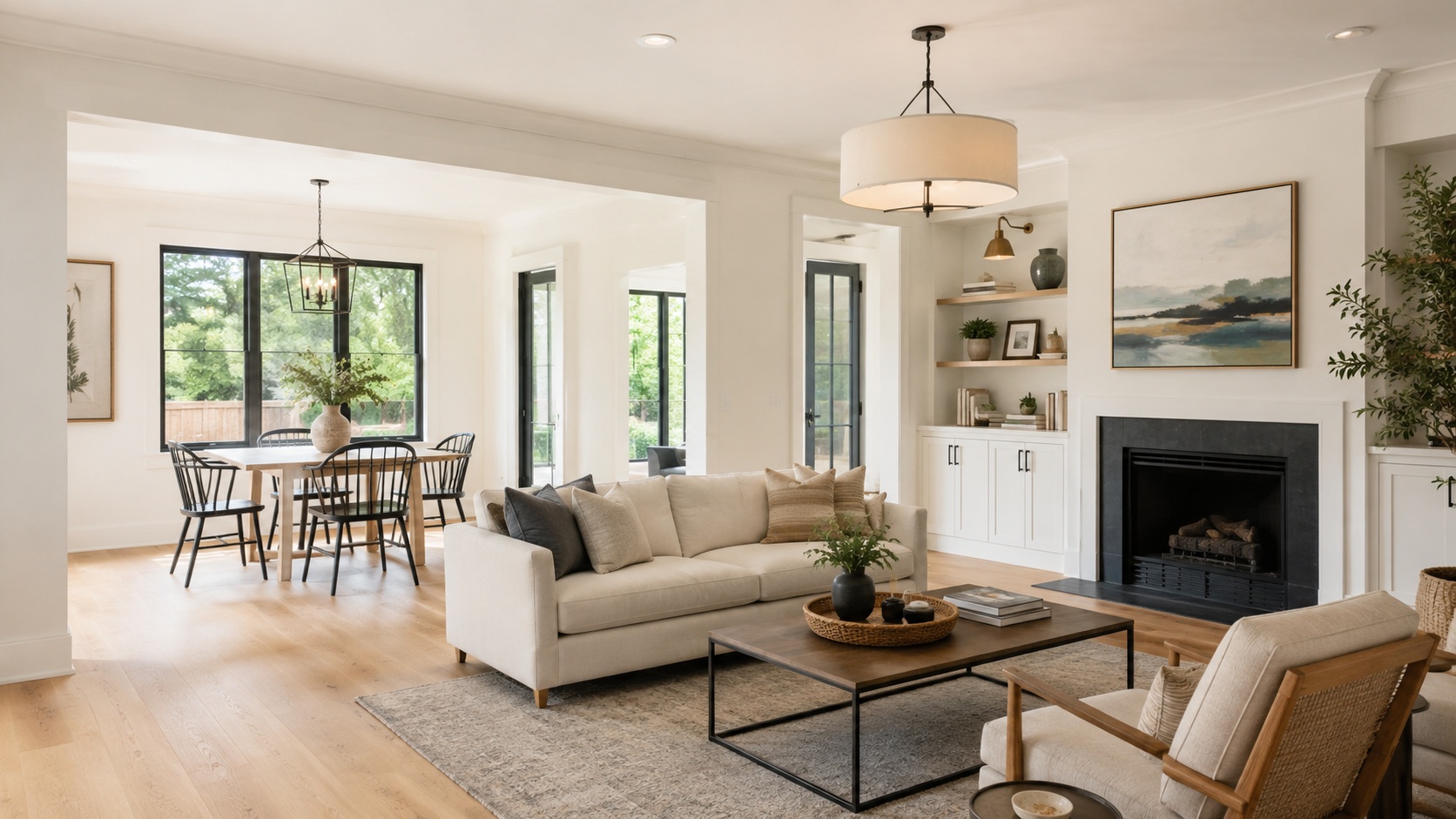


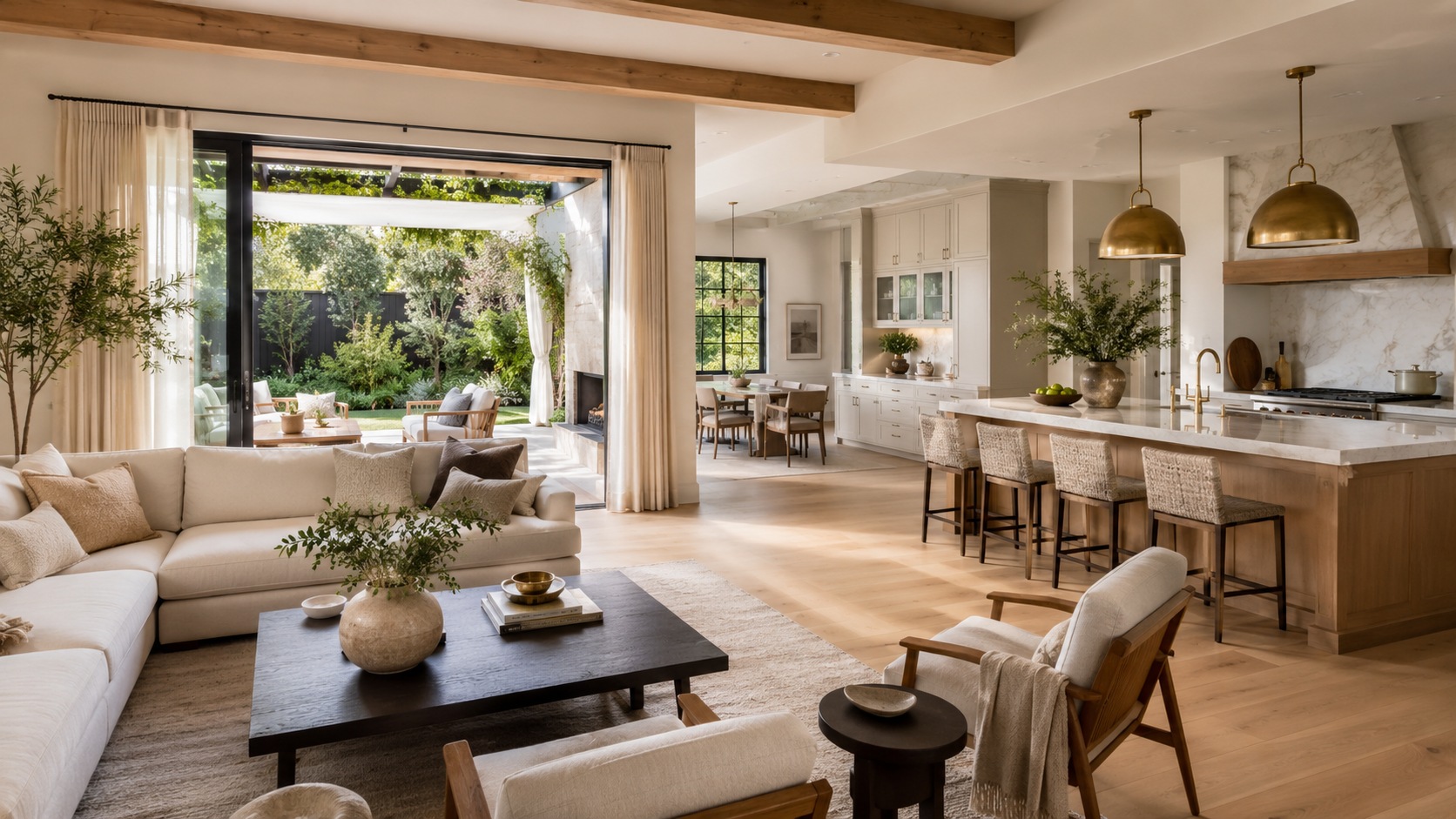
A total home makeover does not have to involve a demolition crew, a six-month timeline, or the kind of budget that makes you suddenly very interested in eating cereal for dinner. Some of the best home updates are smaller, smarter, and far less dramatic than ripping out walls.
The most effective inexpensive home makeover ideas usually come down to strategy. Improve the lighting. Refresh the paint. Edit the clutter. Upgrade the finishes people actually touch. Make the entry feel intentional. Add softer shapes. Bring in texture. Give the kitchen, bathroom, living room, and patio a cleaner, more current look without pretending every cabinet needs to be hauled to the curb.
Whether you are preparing to sell, settling into a new season, or simply tired of looking at the same dated corners every morning, these design-forward updates can make your home feel fresher, warmer, and more pulled together without requiring a full remodel.
Refresh the Front Entry First
The entry is the first design moment your home offers, and it is often one of the easiest places to improve. A freshly painted front door, updated hardware, modern house numbers, clean lighting, and a better doormat can instantly make the home feel more cared for.
Choose a color that feels intentional rather than random. Deep charcoal, warm black, muted olive, soft blue-gray, rich clay, creamy taupe, or a deep green can add polish without screaming for attention. Replace tired hardware with aged brass, matte black, brushed nickel, or oil-rubbed bronze, depending on the style of the home.
Do not stop at the door. Sweep the walkway, trim plants, clean the porch light, remove faded planters, and make sure the house numbers are easy to see. These are small details, but together they make the home feel maintained. That matters because curb appeal is not only about beauty. It is about confidence.
Use Paint Like a Designer
Paint remains one of the most affordable ways to change how a home feels. The mistake many homeowners make is treating paint as a last-minute color choice instead of a design tool. The right shade can soften harsh light, make small rooms feel calmer, highlight architectural details, and help older spaces feel more current.
For a refined update, look beyond basic white. Warm alabaster, mushroom greige, muted sage, soft clay, creamy taupe, warm gray, and pale olive can make rooms feel layered without becoming too trendy. Interior doors can also be painted in a contrasting tone for a custom look.
Trim, baseboards, and ceilings matter too. Nothing ruins a beautiful wall color faster than scuffed trim quietly announcing that the room has given up.
If the room feels cold, go warmer. If it feels cramped, keep contrast low and use similar tones on the wall and trim. If the architecture is plain, consider painting doors, built-ins, or a fireplace surround to create a stronger focal point. Paint is inexpensive, but it should still have a plan.
Upgrade Lighting Before Replacing Furniture
Lighting can make an inexpensive room look considered, and poor lighting can make expensive furniture look like it is waiting in a dentist’s office. Start by replacing builder-grade fixtures with pendants, sconces, flush mounts, or chandeliers that fit the scale of each room.
Layer lighting whenever possible. Use overhead lighting for general brightness, table lamps for warmth, under-cabinet lighting for tasks, and accent lighting to highlight art, shelves, or architectural details. The U.S. Department of Energy explains that LED lighting uses significantly less energy and lasts longer than incandescent lighting, making fixture and bulb upgrades practical as well as decorative.
Choose warm LED bulbs instead of harsh, blue-white bulbs unless your design goal is “luxury interrogation room.” Most living spaces feel better with soft, warm light. Kitchens and work areas may need brighter task lighting, but even there, the goal is clarity, not punishment.
If you are renting or avoiding electrical work, use lamps. Table lamps, floor lamps, plug-in sconces, and rechargeable lamps can change a room quickly. For more easy upgrades that do not require a major renovation, see YHDC’s guide to renter-friendly home improvement ideas.
Edit the Room Before You Buy Anything New
One of the most overlooked inexpensive home makeover ideas is also the least glamorous: remove what is not working. Many rooms do not need more furniture. They need better spacing, fewer visual distractions, and a clear focal point.
Pull sofas and chairs slightly away from the walls when space allows. Create conversation areas instead of furniture lineups. Remove small pieces that do not serve a purpose. If every surface has a candle, a tray, a stack of books, a vase, and something “collected,” the room may not be styled. It may be negotiating with clutter.
Editing does not mean making the home sterile. It means letting the best pieces have room to work. A beautiful coffee table looks better when it is not buried. A fireplace looks stronger when the mantel is not hosting twelve unrelated objects. A room feels calmer when the furniture placement supports how people actually move through it.
Add Curves to Soften a Boxy Room
Many homes are full of straight lines: rectangular rooms, square windows, flat cabinets, boxy sofas, hard-edged tables, and sharp corners everywhere. That can make a room feel stiff, even when the furniture is technically nice.
One affordable way to soften the space is to add curves. Try a round mirror, circular coffee table, curved lamp, scalloped tray, rounded ottoman, arched cabinet, oval dining table, or softer accent chair. These pieces help break up hard lines and make a room feel more welcoming.
This works especially well if you are not ready to replace major furniture. A round side table beside a straight sofa can make the whole seating area feel less rigid. An arched mirror in an entryway can create height and softness. A curved ottoman can make a family room feel more relaxed while removing sharp corners.
For more on this design shift, see YHDC’s guide to curvy furniture and decor. It is one of the easiest ways to make a home feel warmer without doing anything drastic.
Make Leather and Older Furniture Feel Current
Before replacing older furniture, look at what can be restyled. A leather sofa, wood table, traditional cabinet, or older armchair may not be the problem. The problem may be the room around it.
Leather furniture, for example, can feel heavy when paired with dark rugs, dark walls, dark tables, and poor lighting. But the same piece can look warm and expensive with a larger textured rug, round coffee table, lighter pillows, better lamps, and greenery.
Wood furniture can also feel more current when balanced with soft textiles, clean-lined lamps, updated hardware, or modern art. The goal is not to erase character. It is to make older pieces feel intentional instead of abandoned.
If you already own leather pieces, YHDC’s guide to how to mix leather furniture with softer, curved decor explains how to make leather sofas, chairs, ottomans, and benches feel more modern without replacing them.
Make the Kitchen Look Updated Without Gutting It
A full kitchen remodel can be expensive, but a kitchen refresh can still make a strong impact. Start with the most visible and touchable elements: cabinet hardware, faucet, lighting, backsplash, counter styling, and storage.
If the cabinets are structurally sound, consider painting or refacing them instead of replacing them. New pulls, soft-close hinges, and drawer organizers can make old cabinets feel more functional. Under-cabinet lighting can also make the kitchen feel brighter and more polished.
Clear the counters. This is not glamorous advice, but it works. A kitchen with fewer appliances, cleaner surfaces, and better lighting often looks more expensive before a single new finish is installed.
A cleaner backsplash, simplified counter decor, updated faucet, and better cabinet hardware can do more than another appliance you bought because it looked inspiring for three days.
Give Cabinets a Custom Look
Cabinetry has a major effect on how polished a room feels, and this applies beyond the kitchen. Bathroom vanities, laundry room cabinets, mudroom storage, built-ins, and hallway storage can all benefit from small upgrades.
Swap dated knobs for modern hardware. Replace only the cabinet doors if the boxes are still in good shape. Add organizers inside drawers and cabinets so the function matches the exterior. Paint or stain tired cabinetry if the finish is worn but the structure is solid.
A cabinet that looks beautiful but hides a falling avalanche of hair tools, batteries, tape, and mystery screws is not quite the design triumph it appears to be.
If you want a custom look on a smaller budget, consider longer cabinet pulls, matching hinges, cleaner interior organizers, and a consistent finish throughout the room. Small hardware changes can make builder-grade cabinetry look much more intentional.
Refresh the Bathroom With Spa-Like Details
Bathrooms are one of the most important rooms to update because they affect both daily comfort and resale appeal. Fortunately, not every bathroom needs to be gutted to feel cleaner and more modern.
Start with the vanity, mirror, lighting, faucet, towel bars, shower curtain, bath mat, storage, and ventilation. A backlit mirror, floating vanity, matte black fixtures, brushed brass hardware, or large-format tile can make the room feel more elevated.
The U.S. Environmental Protection Agency notes that ventilation helps reduce indoor air pollutants and moisture, which is especially relevant in bathrooms where humidity can lead to mold and mildew problems. A beautiful bathroom still needs to breathe. Otherwise, the “spa atmosphere” becomes a science experiment.
For an inexpensive refresh, replace tired towels, add a better mirror, update the light fixture, use closed storage for clutter, and keep the counter simple. A bathroom does not need seventeen decorative jars to feel spa-like. It needs good light, clean surfaces, decent ventilation, and towels that have not given up emotionally.
Improve Airflow and Comfort
A home makeover should not only be about how the space looks. It should also improve how the home feels. Better airflow, proper ventilation, and temperature control can make rooms more comfortable without requiring a major remodel.
Check that exhaust fans work properly in bathrooms and kitchens. Replace dirty HVAC filters. Use window treatments to control heat and glare. Add ceiling fans where they make sense. Seal obvious drafts. Improve shade where afternoon sun makes a room uncomfortable.
ENERGY STAR explains that certified smart thermostats are independently tested for energy savings, which makes them a practical upgrade for homeowners who want better comfort control.
These practical updates may not be as thrilling as a new chandelier, but they can make daily life noticeably better. Comfort is part of design. A room that looks beautiful but feels too hot, too dim, too stuffy, or too loud is not finished.
Use Texture to Make Rooms Feel Finished
Texture is what keeps a room from feeling flat. Even a simple space can feel expensive when it has the right mix of materials.
Add woven baskets, linen curtains, wood accents, ceramic lamps, wool rugs, stone trays, rattan seating, velvet pillows, plaster bowls, leather details, or natural fiber shades to create depth. The goal is not to cover every surface with accessories. The goal is contrast: smooth beside rough, matte beside glossy, soft beside structured.
This is where inexpensive home updates can look far more elevated than they actually are. A textured rug can make a basic sofa look better. Linen curtains can soften a plain room. A ceramic lamp can make a nightstand feel less temporary. A wood tray can make a coffee table feel styled instead of cluttered.
A room with texture feels collected. A room without it can feel like the furniture showroom forgot to finish its sentence.
Upgrade Window Treatments
Window treatments are often ignored because they do not feel exciting until they are fixed. Then suddenly the whole room looks more expensive.
Hang curtains higher and wider than the window when possible. This makes the ceiling feel taller and the window look larger. Choose linen, cotton, woven shades, bamboo shades, Roman shades, or simple panels depending on the room’s style. Avoid flimsy curtains that are too short, too shiny, or too narrow for the window.
Good window treatments also help control glare, privacy, and heat. That makes them both decorative and practical, which is exactly where inexpensive upgrades earn their place.
Turn Outdoor Areas Into Real Living Space
Outdoor areas are no longer an afterthought. Patios, balconies, side yards, and small decks can function like additional rooms when they are treated with the same care as the interior.
Start with defined zones. Add an outdoor rug, comfortable seating, planters, string lights, lanterns, or solar path lighting. Gravel patios, paver areas, deck tiles, and container gardens can also help define an outdoor room without a major build-out.
Soft shapes matter outside too. Round tables, curved chairs, rounded benches, and circular planters can make patios feel more inviting and less stiff. If your patio feels boxy, uncomfortable, or unfinished, YHDC’s article on curved outdoor furniture and the softer patio trend is a smart next read.
If you are planning a broader renovation with sustainability in mind, this guide to eco-friendly home renovation and waste management offers useful ideas for keeping materials and disposal choices more thoughtful.
Add Greenery With Intention
Plants can soften hard lines, bring life into neutral rooms, and make a home feel more finished. Large plants such as olive trees, rubber plants, snake plants, or fiddle leaf figs can add vertical interest, while smaller plants work well on shelves, bathroom counters, and kitchen windowsills.
Choose plants based on the light and maintenance level of each room, not just because they looked charming in a photo. A sad plant in the wrong corner does not say “organic modern.” It says someone had good intentions and then forgot about watering.
Greenery works especially well in rooms with leather, stone, tile, metal, or lots of straight lines because it adds movement and softness. Even one large plant in the right pot can make a room feel more considered.
Replace the Small Details People Touch Every Day
Some of the best inexpensive home makeover ideas involve the details people touch constantly. Door handles, cabinet pulls, light switches, outlet covers, faucets, towel bars, drawer organizers, closet hooks, and shower hardware all affect how a home feels.
These updates do not always photograph dramatically, but they change the daily experience of the home. A sturdy handle feels better than a loose one. A smooth drawer feels better than a chaotic one. A quiet soft-close hinge feels more expensive than a cabinet door that slams every morning like it has personal issues.
Choose finishes that work with the rest of the home. Matte black, aged brass, polished nickel, brushed nickel, bronze, and chrome can all look good when used consistently. Mixing metals can work, but random metals in every room usually looks less collected and more like the hardware aisle won.
Create One Strong Focal Point Per Room
Rooms often feel unfinished because they do not have a clear focal point. The eye does not know where to land. Instead, it bounces from sofa to TV to cluttered shelf to tiny rug to blank wall and gives up.
Choose one main focal point. It might be the fireplace, bed, dining table, window view, sofa wall, entry console, or a large piece of art. Then make the room support that moment.
A focal point does not need to be expensive. A large mirror, oversized art, painted fireplace, styled console, upgraded headboard, or well-placed lighting can do the job. The point is to make the room feel designed instead of accidental.
Choose Smart Renovations Over Dramatic Ones

The best inexpensive home makeover ideas are not about doing everything at once. They are about choosing updates that create the biggest visual and functional improvement for the least disruption.
Paint before replacing walls. Change lighting before buying all-new furniture. Update hardware before tearing out cabinets. Improve ventilation before adding decorative bathroom upgrades. Refresh the entry before worrying about every corner of the exterior. Restyle the sofa before replacing it.
The National Association of Realtors Remodeling Impact Report looks at remodeling decisions through both resale value and homeowner satisfaction, which is an important reminder: the best updates should make a home work better for the people living in it now, not just for a hypothetical future buyer walking through with a clipboard.
What to Update First If the Whole Home Feels Tired
If the entire home feels dated, do not start everywhere at once. Start with the spaces that create the strongest daily impact.
- Entry: Update the door, hardware, lighting, doormat, planters, and house numbers.
- Living room: Improve furniture layout, add a larger rug, use warmer lighting, and bring in texture.
- Kitchen: Replace hardware, update lighting, clear counters, and improve storage.
- Bathroom: Upgrade the mirror, lighting, faucet, towels, ventilation, and storage.
- Bedroom: Add better bedding, lamps, window treatments, and a more intentional focal point.
- Patio: Add seating, lighting, planters, shade, and one soft curved element.
Start where the improvement will be most visible and most useful. A home makeover should reduce frustration, not create twelve half-finished projects that stare at you every time you walk by.
The Bottom Line on a Total Home Makeover
A home does not need to be completely reinvented to feel transformed. In many cases, the smartest makeover is a series of refined decisions: better lighting, cleaner paint, improved storage, edited furniture, stronger curb appeal, softer shapes, richer texture, and outdoor spaces that actually invite you outside.
These inexpensive home makeover ideas prove that good design is not always about spending more. Sometimes it is about noticing what feels dated, removing what does not belong, and upgrading the details that make everyday life feel more polished.
Your home does not need to become unrecognizable. It just needs to look like someone finally gave it the attention it deserved.