


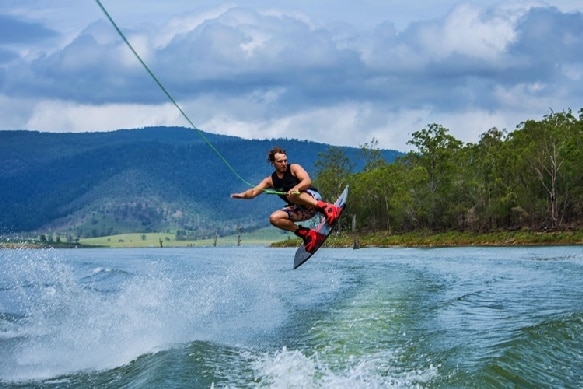
Wakeboarding comes with speed, hard falls, and plenty of time spent in the water. That makes a properly fitted wakeboarding life jacket one of the most important pieces of equipment a rider can wear. The right vest must provide appropriate flotation without restricting the arm and upper-body movement needed to hold the tow rope, balance on the board, and recover after a fall.
Choosing one is not as simple as finding a comfortable vest in an appealing color. Wakeboarding life jackets, buoyancy aids, and competition impact vests may look similar, but they do not necessarily provide the same protection or satisfy the same boating requirements. Before buying, riders should examine the approval label, intended activity, fit, construction, and condition of the vest.
Why Wakeboarding Requires the Right Life Jacket
A wakeboarder can hit the water with considerable force. Even an experienced rider can become disoriented, lose hold of the tow rope, or need assistance after an awkward landing. A properly selected life jacket helps keep the rider afloat while also remaining secure during a sudden impact.
Wakeboarding also requires more mobility than ordinary recreational boating. A bulky jacket that rises toward the rider’s face or restricts the shoulders can interfere with movement. However, choosing the smallest or thinnest vest available is not the answer. The goal is to find a vest designed for active water use that fits closely, permits a comfortable range of motion, and provides the level of flotation required for the activity.
Life Jackets and Impact Vests Are Not the Same
The distinction between an approved life jacket and a competition-style impact vest is one of the most important things to understand before shopping.
A U.S. Coast Guard-approved life jacket has been evaluated according to established flotation and labeling standards. Its label identifies its approval status, performance classification, intended users, limitations, and activities for which it is or is not appropriate.
An impact vest is primarily designed to cushion the torso during falls and provide riders with greater flexibility. Some impact vests provide a degree of buoyancy, but many are not Coast Guard approved. An unapproved competition vest should not automatically be treated as a substitute for an approved personal flotation device.
This does not mean that every thin or flexible vest is unapproved. Manufacturers now produce streamlined wakeboarding life jackets that combine segmented foam, flexible panels, and approved flotation. The deciding factor is the label, not the appearance or marketing language.
Read the Label Before Buying
Do not rely solely on an online product title or a salesperson’s description. Read the permanent label attached to the vest. It should tell you whether the device is approved, who may use it, and whether it has any activity restrictions.
Life jackets sold in the United States may use the traditional Type I, Type II, Type III, or Type V classifications. Newer models may instead carry performance-level labels such as Level 70. Because both labeling systems remain in circulation, shoppers may encounter either format.
Many inherently buoyant life jackets designed for active recreational use have traditionally been classified as Type III. A Type V device may be approved for a specific activity or may only satisfy legal requirements when worn according to the instructions on its label. Newer level-based labels use numbers to communicate minimum buoyancy and may include icons showing turning ability and activity limitations.
The classification alone does not establish that a vest is suitable for wakeboarding. Check for warnings stating that the device is not intended for water skiing, wakeboarding, personal watercraft, or other high-speed uses. The exact directions printed on the vest should guide the decision.
How a Wakeboarding Life Jacket Should Fit
A wakeboarding life jacket should feel snug without making breathing uncomfortable. It should remain close to the torso when the rider raises both arms, rotates the shoulders, bends at the waist, and mimics holding a tow rope.
To check the fit, fasten every zipper, buckle, and strap. Have another person pull upward at the shoulders. The jacket should not slide over the chin, cover the face, or rise significantly around the neck. If it does, it may be too large or improperly adjusted.
Do not assume that a vest will fit simply because it carries a familiar small, medium, or large label. Manufacturers use different measurements and proportions. Use the brand’s current sizing chart and measure the rider’s chest or torso as directed. Body weight is especially important when selecting a child’s life jacket.
A good fit should provide:
- Secure contact around the chest and torso
- Enough room to breathe and move comfortably
- Armholes that do not rub or restrict the shoulders
- Closures that remain fully fastened during movement
- No excessive space around the waist or upper chest
- No significant upward movement when the shoulders are lifted
Whenever practical, test a new life jacket in shallow, controlled water before relying on it behind a boat. This allows the wearer to check its flotation position, comfort, and tendency to ride upward.
Neoprene and Nylon Wakeboarding Life Jackets
Material affects comfort, drying time, adjustability, and how closely a vest follows the body.
Neoprene life jackets typically feel softer and more fitted. They are popular among wakeboarders because they conform closely to the torso and can reduce loose material around the arms. Neoprene may absorb some water and take longer to dry, but many riders prefer its flexible, close-to-the-body feel.
Nylon life jackets are often lighter, highly adjustable, and easier to share among people of similar sizes. They can be a practical choice for a family boat or vacation property where several guests may use the equipment. However, a poorly adjusted nylon vest may shift more than a fitted neoprene model.
Hybrid designs combine materials, segmented foam, stretch panels, and multiple closures. These can offer a useful balance of structure and mobility, but the same approval and fit checks still apply.
Zippers, Buckles, and Segmented Foam
Wakeboarding life jackets are available with front zippers, adjustable buckles, or a combination of both. A zipper can create a close, streamlined fit, while buckles provide greater adjustability. Designs that use both can offer additional security when each closure is properly fastened.
Segmented foam panels allow the jacket to bend with the rider instead of behaving like one rigid block. This can make it easier to rotate the torso, bring the knees forward, and move the shoulders freely. Large arm openings may also improve mobility, provided they do not allow the vest to shift excessively.
Try to evaluate the vest in a position similar to the one used while wakeboarding. A jacket may feel comfortable while standing upright in a store but become restrictive once the rider reaches forward, bends the knees, and rotates the upper body.
Choosing a Wakeboarding Life Jacket for a Child
Children should wear life jackets designed specifically for their weight and body proportions. A small adult vest is not an appropriate substitute for a properly sized youth or child model.
Depending on the size category and design, a child’s life jacket may include a grab handle, head-support collar, or strap between the legs to prevent the vest from riding upward. Every buckle and strap should be secured exactly as directed by the manufacturer.
Children should be closely supervised around water even when wearing an approved life jacket. Before boating or participating in towed activities, have the child wear the vest in calm, shallow water so an adult can observe its fit and flotation. State age requirements and rules for towed water sports vary, so boat owners should also review the regulations that apply where they will be riding.
Why Inflatable Life Jackets Are Usually the Wrong Choice
Inflatable life jackets are useful for certain boating activities, but riders should not assume they are appropriate for wakeboarding. High-speed impacts, repeated water entry, and activity-specific restrictions can make an inflatable model unsuitable for towed water sports.
Always read the label. A jacket that is approved for general boating may carry warnings excluding water skiing, wakeboarding, personal watercraft use, or similar activities. For wakeboarding, an inherently buoyant vest specifically approved for the intended use is generally the more appropriate design.
Inspect the Vest Before Every Ride
A life jacket must remain in serviceable condition. Before entering the water, inspect the fabric, foam, seams, straps, buckles, and zipper. Do not use a vest with torn material, compressed or shifting foam, broken closures, severe fading, mildew, or damage that could affect its performance.
After use, rinse the jacket with fresh water, especially after exposure to salt water. Allow it to dry completely in a ventilated area away from intense heat. Do not place heavy objects on top of it or leave it compressed in a damp boat compartment. Follow the manufacturer’s washing and storage instructions rather than using harsh cleaners or machine drying.
Common Wakeboarding Life Jacket Questions
Can an impact vest replace a life jacket?
Not automatically. Many competition impact vests are not Coast Guard approved and should not be presented as approved flotation devices. Check the permanent label before use.
Should a wakeboarding life jacket feel tight?
It should fit snugly enough that it cannot ride over the chin or face, but it should not prevent comfortable breathing or normal upper-body movement.
Can I use any Coast Guard-approved life jacket for wakeboarding?
No. Some approved life jackets carry activity restrictions. The label must be checked to confirm that the model is appropriate for wakeboarding or the intended towed activity.
Is a neoprene vest better than a nylon vest?
Neither material is automatically better. Neoprene generally provides a closer, softer fit, while nylon can offer more adjustability and faster drying. Approval, fit, condition, and intended use matter more than material alone.
When should a wakeboarding life jacket be replaced?
Replace it when the fabric, foam, stitching, zipper, buckles, or straps are damaged or when the vest can no longer maintain its intended shape and secure fit.
Make Fit and Approval the Priorities
The best wakeboarding life jacket is not necessarily the most expensive, fashionable, or heavily padded model. It is the one that is approved for the intended activity, fits the individual rider securely, allows controlled movement, and remains in dependable condition.
Before getting behind the boat, fasten every closure, review the label, test the fit, and confirm local boating requirements. Riders looking for the right watercraft can also review our guide to the different types of small boats. Good equipment will not eliminate every risk on the water, but making an informed choice gives every wakeboarding session a safer start.