


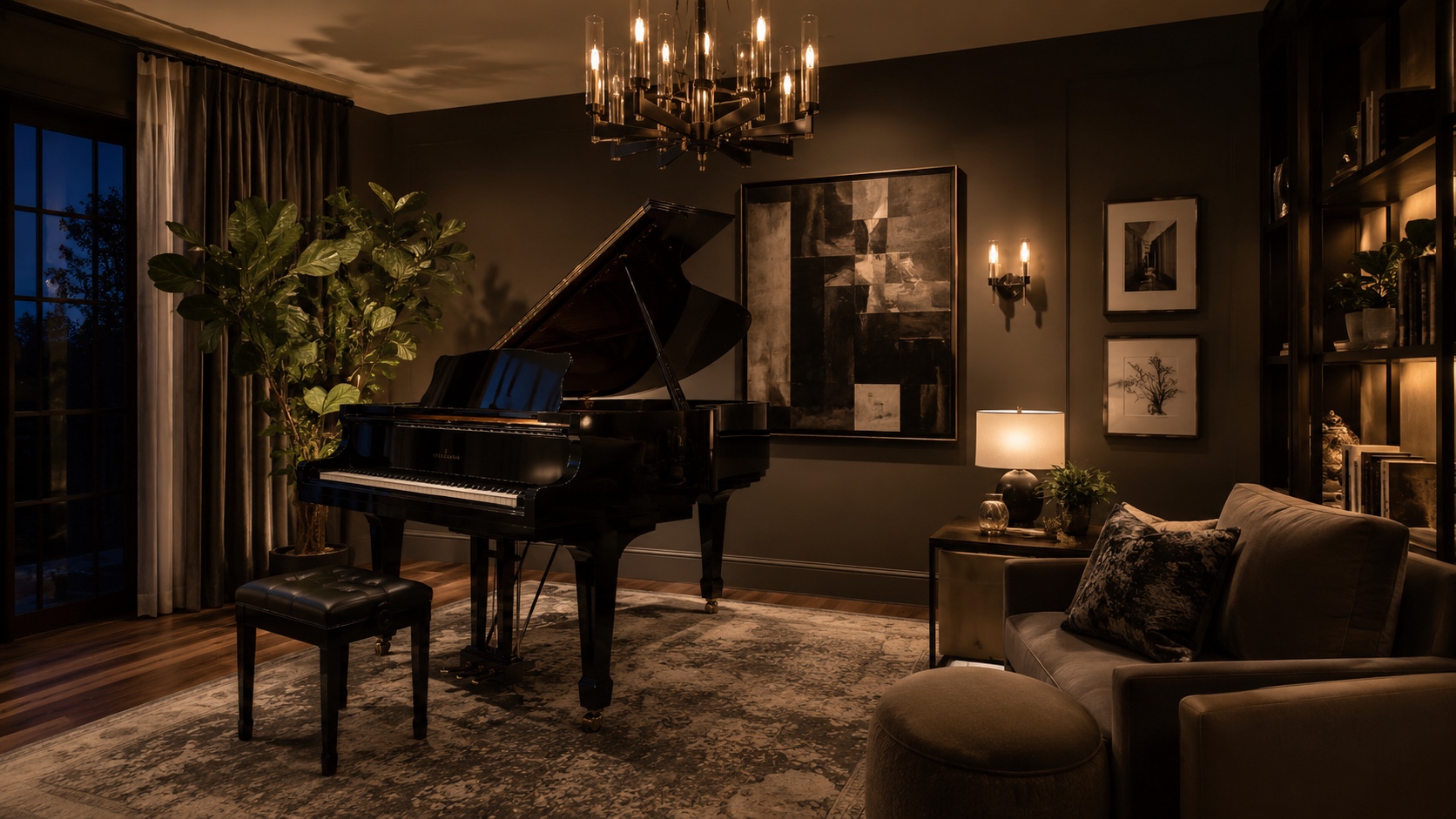
There was a time when the piano room was considered a formal, almost sacred space in the home. Think polished wood floors, a carefully placed baby grand, and guests politely pretending they knew the difference between Chopin and Beethoven. Today, piano rooms are having a stylish comeback, but with a much more relaxed, design-forward personality.
For Maryland homeowners, where historic architecture often meets modern family living, a piano room can become one of the most beautiful and memorable spaces in the house. Whether you are placing a grand piano in a classic Annapolis home, an upright piano in a Baltimore rowhouse, or a digital piano in a contemporary Bethesda living room, the right design choices can turn the instrument into a true centerpiece.
And let’s be honest. Even if you only play “Chopsticks” after a glass of wine, the piano still looks spectacular.
Design a Piano Room That Feels Natural
The biggest mistake homeowners make when designing a piano room is treating it like a museum exhibit. A piano should feel connected to the room, not isolated like a rare artifact no one is allowed to touch.
Start by thinking about how the room will actually be used. Will it be a quiet practice space, a formal music room, a family gathering area, or part of an open living room? Once you know the purpose, it becomes much easier to choose the layout, seating, lighting, and decor.
If your Maryland home includes traditional details like crown molding, built-in shelving, wood floors, or a fireplace, a piano can complement those architectural features beautifully. In a more contemporary home, a sleek upright piano paired with modern seating and sculptural lighting can create a clean, elegant focal point.
Choose the Right Location for the Piano

Location matters for both design and sound. A piano should be placed where it feels intentional, but it also needs a stable environment. Avoid placing the instrument directly beside heating vents, fireplaces, exterior doors, or windows that receive harsh sunlight.
Humidity and temperature changes can affect a piano over time. The Piano Technicians Guild notes that pianos perform best under consistent conditions that are neither too wet nor too dry. That makes placement especially important in Maryland homes, where humid summers and dry winter heating can create seasonal swings.
A quiet living room, library, formal sitting room, finished basement, or spacious hallway nook can all work well if the space has enough room for the piano, seating, and comfortable movement around the instrument.
Think About Sound Before You Choose the Rug
A piano room should sound as beautiful as it looks. Hardwood floors and high ceilings can create a bright, lively sound, but too much echo can make the room feel harsh. On the other hand, too many heavy fabrics can make the music feel muted.
The solution is balance. Area rugs, upholstered chairs, curtains, bookshelves, and fabric window treatments can help soften the sound without making the room feel overly padded. If the piano sits in an open floor plan, these softer elements become even more important because sound can travel throughout the house.
For homeowners who play often, acoustic panels can be useful, but they do not have to look like a recording studio. Many modern panels are designed to look like wall art, fabric panels, or decorative architectural details.
Use Lighting to Make the Piano Room Come Alive
Lighting can completely change the mood of a piano room. A single overhead fixture may be practical, but it rarely creates the warmth and polish the room deserves.
Layered lighting works best. Combine ceiling lighting with table lamps, floor lamps, picture lights, or wall sconces. A small lamp near the piano can help illuminate sheet music, while softer accent lighting can make the room feel elegant in the evening.
For a more dramatic look, consider placing the piano near a statement chandelier, a pair of sconces, or a softly lit gallery wall. The goal is to make the space feel inviting, not like a practice room where someone has been repeating the same three measures for 45 minutes.
Make the Room Comfortable for Guests
A piano room should not only serve the person playing. It should also feel comfortable for the people listening, gathering, or simply enjoying the atmosphere.
Add seating that fits the scale of the room. A pair of upholstered chairs, a small sofa, or a bench can make the space feel finished. If the room is small, choose lighter furniture that does not crowd the piano. If the room is larger, create a conversation area nearby so the piano becomes part of the social setting.
This is where a piano room can become more than a music space. With comfortable seating, a small cocktail table, and thoughtful lighting, it can feel like a quiet lounge, reading room, or intimate entertaining area.
Choose Decor That Supports the Instrument
When decorating a piano room, restraint matters. The piano should remain the visual star, especially if it is a grand or baby grand. Too many accessories can make the room feel cluttered and distract from the instrument.
Wall art, mirrors, framed sheet music, black-and-white musician photography, or a simple gallery wall can add personality without overwhelming the space. Plants can also work beautifully, especially if placed away from direct contact with the instrument.
If the piano has a glossy black finish, pair it with warm wood, soft neutrals, brass accents, or textured fabrics to avoid a room that feels too cold. If the piano is wood-toned, let that finish guide the rest of the palette.
Create a Multi-Purpose Music Space
Modern piano rooms do not have to be formal. In many homes, the best piano room is also a library, sitting room, family room, study, or entertainment space.
If your home is short on square footage, look for ways to make the space work harder. Built-in shelves can hold music books, family photos, and decor. A slim console can store accessories. A storage bench can hide sheet music, headphones, or smaller instruments.
For more ideas on making limited square footage work better, see our guide on how to create more space in a small home.
Consider Technology for Modern Music Rooms
If you compose, record, teach, or enjoy digital music, technology can be built into the piano room without taking over the design. A small recording setup, discreet speakers, a tablet stand, or hidden charging station can make the room more functional.
For digital pianos, headphones and recording equipment may be part of the setup. For acoustic pianos, technology may be limited to lighting, sound systems, or a nearby device for sheet music. The key is keeping cords, stands, and equipment organized so the space still feels polished.
If the room also serves as a media or listening space, you may want to review our article on affordable all-in-one home theater options for additional ideas.
Protect the Piano From Maryland Weather Swings
Maryland weather can be hard on interiors, especially when humid summers shift into dry heated winters. Because pianos are made with wood, felt, strings, and delicate mechanical parts, environmental stability matters.
Keep the piano away from direct sunlight, damp exterior walls, heating vents, and drafty windows. Consider using a hygrometer to monitor humidity in the room. If the room changes dramatically by season, a technician may recommend a humidity-control solution designed for pianos.
This is not the glamorous part of piano room design, but it is the part that helps protect the instrument. A beautiful room is only successful if the piano inside it stays in good condition.
Do Not Forget the Rest of the Room
A piano may be the star, but the surrounding space still matters. Look at the entire room as one design story. Flooring, window treatments, wall color, furniture, art, and lighting should all support the mood you want to create.
Deep navy, charcoal, warm white, soft taupe, and rich green can all work well in piano rooms. Darker walls can make a black or wood piano feel dramatic and intentional, while lighter walls create an airy, relaxed look.
If the room feels cramped, use mirrors, lighter furniture, and careful layout choices to open it up visually. You may also find helpful ideas in our guide on ways to make your home look more spacious.
The Truth About Piano Rooms
Here is the honest truth about piano rooms: many people do not play as often as they think they will.
But that does not mean the room loses its value. A beautifully designed piano room adds character, warmth, and architectural interest to a home. It becomes a place where family gathers, conversations linger, and occasionally someone brave enough sits down to play a song.
And if the music happens to be slightly off-key, that is just part of the charm.
A well-designed piano room is not only about performance. It is about atmosphere. It gives the home a sense of personality, culture, and quiet elegance. After all, every great home deserves a little music.