


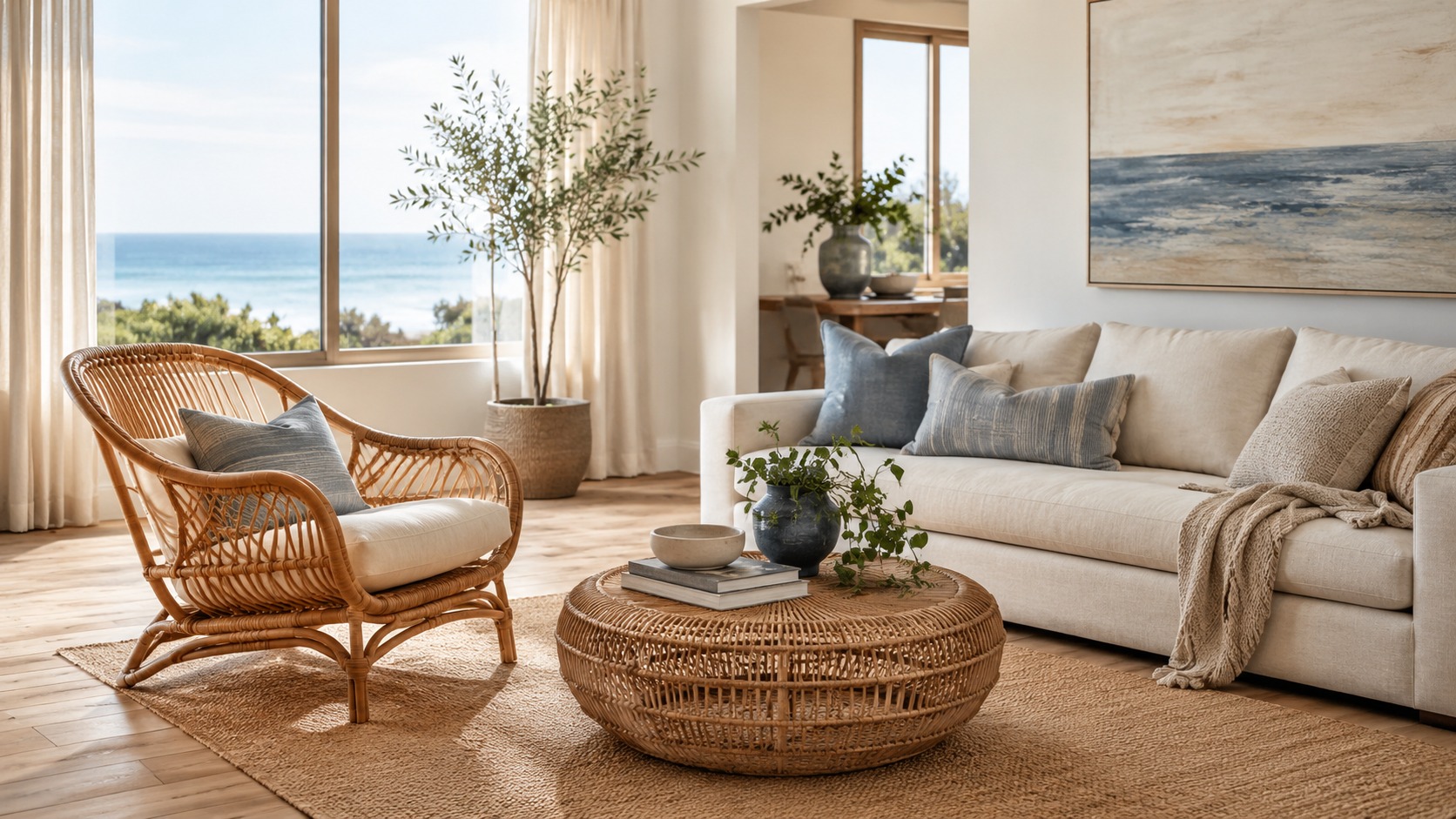
Rattan furniture has an easygoing quality that feels naturally at home near the coast. Its woven texture adds warmth to bright rooms, complements sandy neutral colors, and creates a relaxed atmosphere without requiring seashells, anchors, or a single sign announcing that life is better at the beach.
The key is restraint. A beach home does not need an entire matching rattan furniture collection to feel coastal. In most rooms, one or two thoughtfully chosen pieces will create more impact than a full suite.
These rattan furniture ideas can help you add warmth, texture, and function to a beach home while keeping the overall design fresh and current.
Understand the Difference Between Rattan and Wicker
Before shopping, it helps to understand two terms that are frequently used interchangeably.
Rattan is a natural material obtained from climbing palms, while wicker describes the weaving technique rather than the material itself. Wicker describes a weaving technique rather than one specific material. A wicker chair may therefore be woven from natural rattan, willow, bamboo, paper fiber, synthetic resin, or another flexible material.
Natural rattan is beautiful, lightweight, and especially well suited to indoor furniture. However, it is not naturally water-resistant and should generally be protected from rain and prolonged moisture. Synthetic resin wicker is normally the safer choice for exposed outdoor areas because it is designed to withstand moisture, sunlight, and changing temperatures.
That distinction becomes especially important in a beach home, where humidity, salt air, intense sunlight, and damp swimsuits are part of everyday life.
Begin With One Statement Chair
A sculptural rattan chair can establish the mood of an entire living room without making the space look overly themed.
Consider a curved lounge chair, a high-backed vintage-inspired design, or a clean-lined woven armchair beside a linen sofa. The open weave allows light to move through the piece, which can make a smaller room feel less crowded than it would with another upholstered chair.
Choose a chair with comfortable proportions rather than buying solely for appearance. Add a seat cushion in a washable performance fabric if the chair will be used frequently.
A single strong piece usually looks more current than a matching rattan sofa, loveseat, chair, and ottoman set.
Add Rattan Dining Chairs Around a Solid Table
Rattan dining chairs work particularly well when paired with a table made from a heavier material.
Try woven chairs around an oak, reclaimed wood, stone, concrete, or plaster-finished table. The contrast between the airy chairs and substantial table creates visual balance.
For a cleaner look, choose chairs with simple silhouettes and tightly woven seats. For a more collected interior, mix rattan armchairs at the ends of the table with upholstered or wood side chairs.
Dining chairs in a beach home should also be easy to clean. Removable cushions, durable fabric, and sealed or painted frames can make everyday maintenance easier.
Bring Texture Into the Bedroom
A rattan headboard can soften a bedroom filled with straight architectural lines, white walls, and simple bedding.
Look for an arched, scalloped, sunburst, or gently curved design. Then allow the headboard to remain the focal point by keeping the other furniture relatively quiet.
A beach bedroom may also benefit from smaller woven elements, such as:
- Cane-front nightstands
- A rattan bench at the foot of the bed
- Woven pendant lights
- A rattan-framed mirror
- Natural fiber storage baskets
Avoid using every item at once. Two or three related textures will usually be enough to make the room feel layered.
Use Rattan Bar Stools to Warm Up the Kitchen
Coastal kitchens frequently rely on white cabinetry, pale stone, light wood, and large windows. While that combination can feel fresh, it can also look flat if every surface is smooth and light.
Rattan bar stools introduce texture and a warmer natural tone. They work especially well against white, cream, navy, sage, or light oak cabinetry.
Before buying, check the seat height carefully. Counter stools and bar stools are not the same height, and a beautiful stool is considerably less impressive when no one can sit at the counter comfortably.
For family kitchens, look for sturdy frames, reinforced footrests, and tightly woven surfaces that will not catch easily on clothing.
Try a Woven Coffee Table or Side Table
A woven coffee table can make a living room feel casual and inviting, particularly when the larger furniture is upholstered.
Round rattan coffee tables are useful in rooms with tight traffic patterns because they eliminate sharp corners. They also pair well with sectionals, curved sofas, and conversation areas.
A glass-topped design can provide a more stable surface for drinks, books, and decorative objects. A woven trunk-style table can add concealed storage for blankets, games, or beach towels.
In smaller rooms, a rattan side table may be enough. Place it between two chairs or beside a reading nook where it can add texture without taking up much floor space.
Introduce Rattan Through Lighting
Rattan lighting is one of the simplest ways to bring a coastal feeling into a room without replacing furniture.
A woven pendant can work over a dining table, kitchen island, breakfast nook, or covered outdoor table. Rattan sconces can add warmth beside a bed or in a hallway, while a woven floor lamp can soften a living-room corner.
The weave also creates subtle shadows when the light is on, adding depth to otherwise plain walls.
Scale matters. A tiny pendant over a large dining table will look lost, while an oversized fixture can become an attractive architectural feature. Make sure the bulb is not overly harsh, since warm or softly diffused light usually complements natural fibers more effectively.
Pair Rattan With Linen and Natural Wood
Rattan looks most convincing when it is part of a broader material palette rather than a stand-alone beach reference.
Pair it with linen upholstery, cotton bedding, warm wood, jute, wool, clay, plaster, leather, and stone. These materials give the home a tactile, layered quality while maintaining a calm coastal mood.
Current coastal design is moving away from obvious nautical decoration and toward warmer neutrals, handcrafted finishes, natural textures, and rooms that feel personal rather than themed.
That means rattan can sit comfortably beside contemporary furniture, vintage pieces, modern art, and polished stone. It does not have to be surrounded by blue stripes and driftwood.
Use a Rattan Console in the Entryway
An entryway is a good place to use rattan because it introduces the beach-home atmosphere immediately without overwhelming the rest of the interior.
A woven console or cane-front cabinet can hold keys, sunglasses, hats, dog-walking supplies, and other items that tend to accumulate near the door.
Style the top simply with a ceramic lamp, a tray, a bowl, or a large mirror. Avoid crowding the surface with miniature boats, coral replicas, and signs pointing toward the beach. The furniture already provides the coastal reference.
A cabinet with doors or drawers is especially useful in a vacation property because it gives guests a clear place to put everyday necessities.
Add Rattan Storage That Looks Intentional
Beach homes require practical storage. Towels, sandals, sunscreen, outdoor cushions, hats, and recreational equipment can create clutter quickly.
Large rattan baskets can help organize these items while looking more decorative than plastic bins. Use them beside a sofa for blankets, under a console for shoes, in a bathroom for rolled towels, or in a bedroom for extra pillows.
Lidded baskets are useful when the contents are not particularly attractive. Open baskets work well for frequently used items.
Choose basket sizes based on what they need to contain. A collection of small baskets can sometimes create more visual clutter than one appropriately sized storage piece.
Mix Rattan With Upholstered Furniture
A room filled entirely with woven furniture may feel more like a sunroom than a comfortable living space.
Balance rattan with upholstered pieces that provide softness and support. A cream, oatmeal, pale gray, or muted blue sofa can serve as the room’s anchor, while rattan chairs, side tables, or lighting add texture around it.
This combination also makes the space more practical. Upholstered seating offers comfort for longer periods, while the woven pieces keep the room from feeling heavy.
YHDC’s guide to mixing leather furniture with softer, curved decor offers another useful approach. Rattan can soften leather, dark wood, metal, and other visually substantial materials.
Choose Weather-Resistant Pieces for Outdoor Spaces
Natural rattan should not be treated as all-weather patio furniture. Even a covered porch may receive wind-driven rain, mist, condensation, or strong afternoon sun.
For an exposed deck, patio, or pool area, select outdoor furniture made with polyethylene or another quality synthetic weave over a rust-resistant aluminum frame. Outdoor versions can reproduce the look of natural rattan while offering better resistance to moisture and ultraviolet exposure.
Check the manufacturer’s care instructions and confirm that the cushions use outdoor-rated fabric and quick-drying inserts.
The patio should connect visually with the interior, but the materials need to be suitable for harsher conditions. YHDC’s article on curved outdoor furniture and the softer patio trend explains how rounded woven furniture can create that connection without simply copying the indoor room.
Protect Rattan From Coastal Conditions
Even indoor rattan benefits from thoughtful placement in a beach home.
Avoid positioning natural rattan where it will be repeatedly soaked by wet towels, exposed to leaking windows, or blasted by intense direct sunlight all day. Excessive moisture can contribute to swelling, warping, mildew, and weakened fibers, while prolonged sun can make natural material brittle or faded.
Dust woven furniture regularly with a soft brush or a vacuum fitted with a brush attachment. For light cleaning, use a barely damp cloth and dry the surface promptly. Natural rattan should not be saturated with water. Synthetic outdoor wicker can generally tolerate more thorough washing, although the manufacturer’s instructions should always take priority.
Near the ocean, wipe outdoor frames periodically to remove salt residue and inspect joints, feet, and hardware for corrosion.
Avoid the Matching Furniture Set
One of the fastest ways to make rattan look dated is to buy every piece from the same collection.
Instead, mix shapes, materials, and finishes. A vintage rattan chair can sit beside a contemporary sofa. Cane-front nightstands can accompany an upholstered bed. Woven dining chairs can surround a solid wood table.
The room should feel assembled over time rather than delivered in one afternoon.
YHDC’s guide to curvy furniture and decor provides additional ideas for combining curved rattan with simpler furniture and heavier materials.
Keep the Coastal References Subtle
Rattan already suggests ease, warmth, and a connection to nature. It does not need much help communicating a coastal mood.
Use a restrained palette of sand, cream, warm white, sea-glass green, weathered blue, clay, or natural wood. Add personality with artwork, books, handmade ceramics, vintage objects, and textiles rather than filling the room with literal beach symbols.
A successful beach home should still feel attractive in the middle of winter. The goal is not to recreate a souvenir shop. It is to design a comfortable home that happens to be inspired by the coast.
Make Rattan Furniture Work for Real Life
Rattan furniture for a beach home can be stylish, practical, and surprisingly versatile when each piece is chosen for the correct location.
Use natural rattan indoors, select outdoor-rated synthetic wicker for exposed spaces, and mix woven pieces with upholstered furniture, stone, wood, and soft textiles. Most importantly, resist the temptation to match everything.
A statement chair, textured headboard, woven pendant, or set of dining chairs may be all the room needs. When rattan is used thoughtfully, it creates the relaxed feeling people want from a beach home without allowing the decorating theme to take over.
