


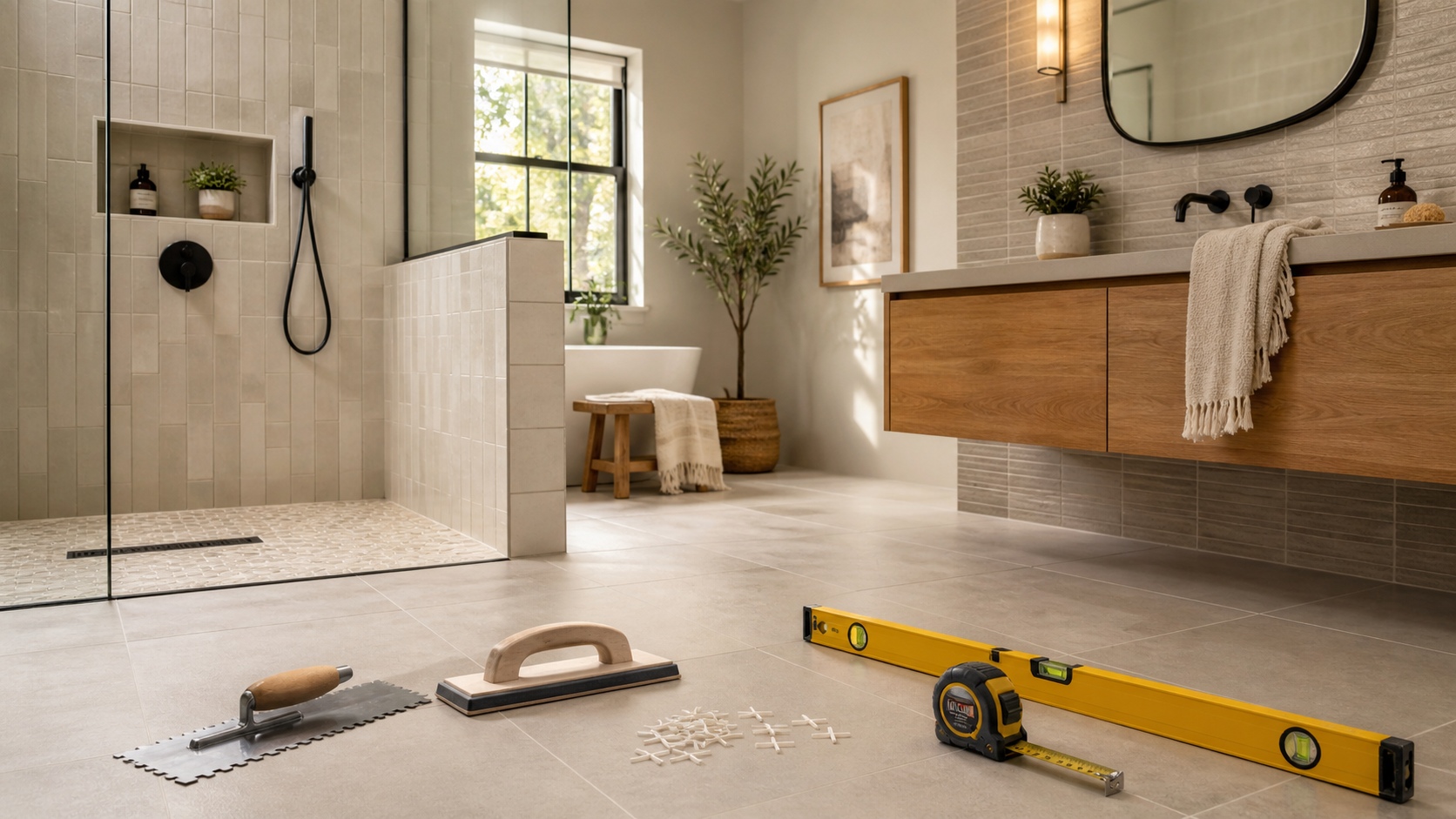
Tile can completely change the look of a bathroom, kitchen, laundry room, entryway, or outdoor space. Done well, it looks clean, polished, and built to last. Done badly, it announces every shortcut immediately. Uneven lines, cracked grout, loose tiles, awkward cuts, and strange spacing are not little details. They are the kind of mistakes that make a renovation look more “weekend panic project” than finished home improvement.
The good news is that most tiling mistakes are preventable. Whether you are planning a DIY project or hiring a contractor, the success of the job starts long before the first tile is placed. The right tile, surface preparation, layout, adhesive, grout, and curing time all matter.
Here are the most common tiling mistakes homeowners should avoid before starting a tile project.
Not Ordering Tile Samples First
One of the easiest mistakes to make is choosing tile online or in a showroom and ordering the full amount without seeing it in your actual space. Tile can look very different depending on the lighting, wall color, cabinet finish, flooring nearby, and time of day.
A small sample can help you understand the color and finish. A full-size tile sample is even better because it shows the actual scale, texture, edge detail, and variation. This is especially important with large-format tile, patterned tile, handmade tile, stone-look tile, and anything with strong veining or color movement.
Before ordering, place the sample in the room where it will be installed. Look at it in morning light, evening light, and artificial light. Tile is not something you want to “hope” looks right after it is already mortared to the wall.
Skipping Surface Preparation
Tile is only as good as the surface beneath it. If the wall or floor is dirty, uneven, damp, damaged, or unstable, the finished tile job may fail even if the tile itself is beautiful.
Before installation, the surface should be clean, flat, dry, and structurally sound. Old adhesive, loose paint, dust, grease, cracked material, and uneven areas should be addressed before tile goes down. Skipping this step can lead to loose tiles, cracked grout, uneven surfaces, or tiles that simply do not bond properly.
This is the unglamorous part of tiling, but it is also one of the most important. The tile gets the compliments. The prep work does the heavy lifting.
Using the Wrong Backer Board or Underlayment
Underlayment matters because tile needs a stable base. If the floor flexes, shifts, or has the wrong support underneath, tile and grout can crack over time.
For floor tile, the base must be stiff enough to support the tile system. In many projects, cement backer board, uncoupling membrane, or another approved tile underlayment may be needed. The right choice depends on the subfloor, tile type, room conditions, and installation method. The Tile Council of North America explains that tile installation methods require a properly designed, constructed, and prepared substructure.
Bathrooms, showers, laundry rooms, and other wet areas need special attention. Moisture-prone spaces often require waterproofing systems, not just tile and grout. Tile may look waterproof, but the full installation system is what protects the structure behind it.
Choosing the Wrong Tile for the Space
Not every tile belongs in every room. A glossy wall tile may look beautiful in a backsplash, but it may be too slippery for a bathroom floor. A delicate handmade tile may be charming on a feature wall but impractical for a busy mudroom. Outdoor tile needs to be rated for exterior use and local weather conditions.
Before buying, check whether the tile is appropriate for the intended location. Consider slip resistance, durability, water exposure, cleaning needs, and whether the tile is rated for floors, walls, showers, or outdoor use.
This is where homeowners sometimes get distracted by the pretty sample and forget the real-life conditions. A tile has to do more than photograph well. It has to survive the room.
Not Planning the Layout Before Installation
A tile layout should never be improvised as the installer goes. Planning the layout helps avoid awkward slivers of tile at the edges, strange cut lines, crooked patterns, and focal points that feel slightly off.
Before installation begins, dry-lay the tile or create a layout plan. This helps determine where full tiles will go, where cuts will land, and how the pattern will line up with doors, cabinets, drains, niches, corners, and walls.
For backsplashes, consider outlets, range hoods, windows, and open shelving. For bathrooms, think about shower niches, drains, tub edges, and vanity walls. For floors, plan around doorways and the most visible sightlines.
If you are updating more than one room, it is worth reviewing your overall renovation plan before materials arrive. Our guide on how to prepare your home for renovation can help you organize the project before tile, flooring, or demolition work begins.
Miscalculating the Number of Tiles Needed
Ordering the exact amount of tile needed is almost always a mistake. Tile projects involve cuts, breakage, pattern matching, and occasional miscalculations. You also want extra tiles available for future repairs.
As a general rule, order at least 10 percent extra for a straightforward layout. For diagonal layouts, complicated patterns, large-format tile, or rooms with many cuts, you may need more. If the tile has heavy color variation or pattern movement, extra material also helps the installer blend the pieces more naturally.
Running out of tile mid-project can be a real problem. A second order may come from a different dye lot, which means the color or tone may not match exactly. Nothing says “almost finished” quite like a floor with one suspiciously different section.
Using the Wrong Trowel Size
The trowel size affects how much mortar sits beneath the tile. If the trowel is too small, the tile may not get enough coverage. If it is too large, the installation can become messy and uneven.
Larger tiles generally need more mortar coverage and a larger notch trowel than smaller tiles. The tile size, back texture, substrate, and installation area all affect the correct choice. This is especially important with large-format tile, which needs proper support to avoid hollow spots and lippage.
Do not guess on trowel size. Check the mortar and tile manufacturer’s guidance, or ask a professional before starting.
Using the Wrong Adhesive or Mortar
The wrong adhesive can ruin a tile project. Different tiles and spaces require different setting materials. What works for a simple ceramic backsplash may not be right for a shower wall, large-format porcelain floor, glass tile, natural stone, or outdoor patio.
Wet areas need materials designed for moisture exposure. Large-format tile often needs a mortar formulated to support larger pieces. Natural stone may require specific products to avoid staining or bonding issues.
When in doubt, do not choose the cheapest bag and hope for the best. Tile installation is not the place to let optimism make technical decisions.
Ignoring Moisture Protection in Wet Areas
Bathrooms, showers, tub surrounds, laundry rooms, and backsplashes need more than attractive tile. They need proper moisture management. Grout and tile are not enough by themselves to protect against water damage.
In showers and wet rooms, waterproofing membranes, properly sealed seams, correct slope, and suitable backer materials all matter. If water gets behind the tile system, it can lead to mold, rot, loose tile, and expensive repairs. The Ceramic Tile Education Foundation offers useful guidance on why waterproofing shower walls correctly matters before tile is installed.
This is one of the most important places to hire a qualified installer if you are not experienced. A shower that looks good on day one can still fail later if the waterproofing behind it was done incorrectly.
Forgetting About Tile Spacing
Tile spacing affects the entire finished look. Uneven grout joints, crooked lines, and inconsistent spacing are some of the fastest ways to make a tile job look amateur.
Use tile spacers and check the layout as you go. Do not assume the walls or floors are perfectly square. Most homes have small irregularities, especially older homes. A good layout accounts for those imperfections instead of letting them control the finished result. The Tile Council of North America grout FAQ explains that grout joint width depends on tile variation, layout, and installation requirements.
Also remember that some tiles have slight size variations. Handmade or artisan-style tiles may require a slightly wider grout joint to keep the overall look balanced.
Grouting Too Soon
Grouting before the mortar has properly cured can weaken the installation and create problems with the finished surface. Mortar needs time to set before grout is applied.
Always follow the setting material instructions for cure time. Rushing the process can trap moisture, disturb tile placement, or lead to grout problems. It may be tempting to finish quickly, but tile rewards patience and punishes shortcuts.
Choosing the Wrong Grout
Grout is not just filler between tiles. It affects the look, durability, maintenance, and water resistance of the finished project. The wrong grout color can make tile look busy, dull, or poorly matched. The wrong grout type can create maintenance problems later.
Bathrooms, showers, kitchens, and high-traffic floors need grout that suits the environment. Some projects may benefit from stain-resistant grout, epoxy grout, or a grout designed for easier maintenance. For homeowners comparing grout choices, Better Homes & Gardens gives a useful overview of common grouting mistakes, including using too much water, choosing the wrong grout type, and forgetting to seal grout when required.
Color also matters. A contrasting grout can highlight the tile pattern, while a closer color match can create a softer, more seamless look. Neither is wrong, but the decision should be intentional.
Leaving Excess Grout on the Tile
Fresh grout needs to be cleaned properly during installation. If excess grout sits too long on the tile surface, it can leave haze, residue, or hardened patches that are difficult to remove later.
Clean as you go, using the right sponge technique and fresh water as needed. Do not over-wash the joints, but do not let the tile surface become coated in grout haze either. The goal is clean tile and consistent grout lines, not a cloudy reminder of where things went wrong.
Not Allowing the Tile to Cure Before Use
Once tile is installed and grouted, it still needs time before regular use. Walking on floor tile too soon, using a shower too quickly, or placing heavy furniture before the installation is ready can damage the finished job.
Follow the recommended cure times for mortar, grout, and sealers. This is especially important for bathrooms, showers, and floors that will see daily traffic. Waiting a little longer now can prevent cracked grout, shifting tiles, and repair work later.
Forgetting About Long-Term Maintenance
A tile project does not end the day the installer leaves. Tile and grout need maintenance to stay looking good. Some grout may need sealing. Natural stone may need special cleaners. Shower tile needs regular care to prevent soap scum, mildew, and mineral buildup.
Before choosing tile, think about how much maintenance you are willing to do. A high-texture tile may look beautiful but collect more grime. White grout can look crisp but may require more cleaning. Natural stone can be stunning, but it usually needs more care than porcelain or ceramic.
The best tile choice is not just the one you love on installation day. It is the one you can live with five years from now.
Final Thoughts
Tiling mistakes can be expensive, frustrating, and very visible. The best way to avoid them is to slow down before the project begins. Order samples, prepare the surface, choose the right underlayment, plan the layout, buy extra tile, use the correct setting materials, and respect curing times.
Tile is one of those home upgrades where the details matter. When the preparation is right, the finished result can look beautiful, last for years, and make the entire room feel more polished. When the preparation is skipped, even expensive tile can look disappointing.
In other words, tile does not forgive chaos. Plan first, install carefully, and let the finished room be the part that gets attention — not the mistakes.
Flooring and Tile Renovation Guide
Planning a flooring or tile project? These related guides can help you avoid common renovation mistakes, choose better materials, and prepare your home before work begins.