


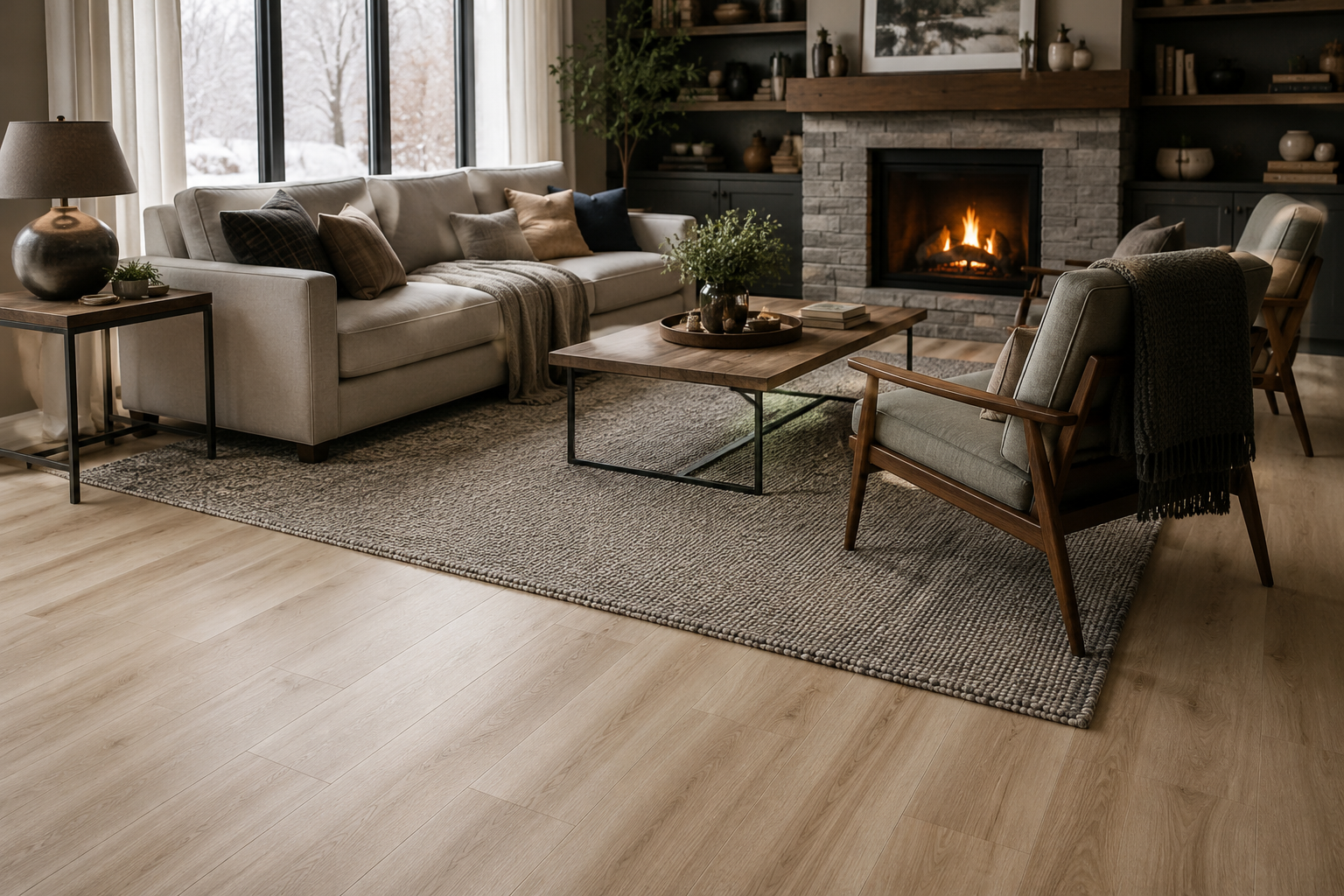
Vinyl flooring can look warm, natural and beautifully finished. Then a cold morning arrives, your bare feet touch the floor and the room suddenly feels much less welcoming.
This is especially common in basements, ground-floor rooms, additions and homes built on concrete slabs. The vinyl itself is not always the main problem. In many cases, the cold feeling comes from the slab, subfloor, crawlspace or unconditioned room beneath it.
The good news is that you may not need to tear out a perfectly serviceable floor. Rugs, safe rug pads, draft control, better heat circulation and targeted insulation can make a noticeable difference without turning the room into a major construction project.
Why Does Vinyl Flooring Feel Cold?
Vinyl flooring tends to reflect the temperature of the material below it. When it is installed directly over concrete, the slab can remain cool even when the air in the room feels comfortable. The flooring above it then takes on that lower surface temperature.
A similar problem can occur when the room sits above an unheated basement, vented crawlspace, garage or poorly insulated section of floor framing. Cold air entering around exterior doors and windows may make matters worse because it settles near floor level.
The U.S. Department of Energy’s guidance on insulating existing concrete slabs explains that an uninsulated slab can contribute to heat loss and uncomfortable interior surfaces. Retrofitting insulation beneath an existing slab is rarely simple, but understanding the cause helps homeowners choose a more realistic solution.
Before buying anything, determine whether only the floor feels cold or whether the entire room is difficult to keep comfortable. A cold floor in an otherwise warm room may respond well to rugs and surface-level changes. A consistently cold room probably needs closer attention to drafts, insulation or heating performance.
Start With a Properly Sized Area Rug
A large area rug is the fastest way to make vinyl flooring feel warmer without changing the floor itself. The key is to place it where people naturally walk barefoot or remain seated for longer periods.
In a bedroom, position the rug so it extends beyond the sides of the bed. Your feet should land on the rug naturally rather than requiring a carefully calculated morning step. A runner on each side can also work when a larger rug does not suit the room.
In a living room, use a rug large enough to reach beneath at least the front legs of the sofa and chairs. This creates a warmer surface across the main seating zone while making the furniture arrangement feel more connected.
Hallways, galley kitchens and routes leading to exterior doors can benefit from runners. Washable designs are particularly useful in kitchens and entryways, where moisture, dirt and everyday spills tend to arrive without checking the decorating plan first.
A well-scaled rug can also refresh a room visually. YHDC’s guide to affordable ways to refresh your home without renovating includes additional ways to add softness, color and comfort without committing to major construction.
Use a Rug Pad Made for Vinyl Flooring
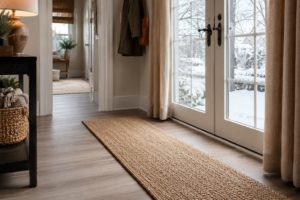
A quality rug pad creates another layer between the cold floor and the rug. It can make the surface feel softer, keep the rug in position and reduce premature wear.
However, not every rug pad is compatible with vinyl. Certain rubber, latex and chemically treated backings may react with some flooring finishes and cause yellowing or discoloration over time.
Look for a pad specifically identified as safe for vinyl, luxury vinyl plank or luxury vinyl tile. It should feel dense and stable rather than excessively thick or spongy. The pad should also sit completely beneath the rug without showing around the edges.
Check the flooring warranty and the pad manufacturer’s compatibility information before leaving a large rug in place permanently. A warmer floor is useful. A permanent rug-shaped stain is less of an improvement.
Stop Cold Drafts From Reaching the Floor
Sometimes the flooring feels cold because outside air is entering the room.
Inspect the weatherstripping around exterior doors, the seals on sliding patio doors and the edges of older windows. A worn door sweep or a small gap at the threshold can create a cold zone that reaches much farther into the room than expected.
ENERGY STAR’s Seal and Insulate guidance identifies cold floors and drafts as common comfort problems that may be improved through appropriate air sealing and insulation. Simple repairs may include replacing damaged weatherstripping, adjusting a threshold or adding a properly fitted door sweep.
Window coverings can also make rooms with large windows or glass doors feel more comfortable. Cellular shades, lined curtains and layered treatments may reduce the effect of cold glass when they fit correctly and do not obstruct heating vents.
For help choosing treatments that balance comfort, light and privacy, read YHDC’s guide to choosing the right window treatments for every window.
Make Sure Heat Can Circulate Through the Room

Before increasing the thermostat, check whether furniture, rugs or curtains are blocking the heat you already have.
Floor registers should remain open and unobstructed. Sofas and storage pieces should not sit directly in front of baseboard heaters or radiators, and long curtains should not cover heating vents.
In rooms with high ceilings, a ceiling fan operating at a low speed on the manufacturer’s recommended winter setting may help redistribute warm air that has collected overhead. The aim is not always to create more heat. Sometimes it is simply to stop the warmth you are already paying for from spending the evening near the ceiling.
Bedroom comfort is particularly sensitive to temperature and airflow. YHDC’s bedroom sleep design ideas offer additional ways to manage bedding, curtains, airflow and seasonal comfort without overcomplicating the room.
Know What Type of Vinyl Floor You Have
Before considering underlayment or underfloor heating, identify how the vinyl was installed.
Glue-down vinyl is attached directly to the subfloor. Adding anything beneath it normally requires removing the existing flooring. Floating vinyl uses a click-lock system and may permit an approved underlayment, depending on the product. Some rigid-core planks already have an attached pad and should not receive an additional layer.
The Resilient Floor Covering Institute’s explanation of LVT and LVP installation distinguishes between glue-down, floating and loose-lay systems. Each installation method has different requirements, which is why a solution suitable for one vinyl floor may damage another.
Look for leftover product boxes, receipts or installation records. When those are unavailable, a flooring professional may be able to identify the system by inspecting a transition or removable trim area.
Should You Add Thermal Underlayment?
Thermal underlayment may help when compatible floating vinyl is installed over a cold subfloor, but it is not a universal fix.
Vinyl flooring needs firm and consistent support. An underlayment that is too thick or soft can allow the planks to move, damage the locking edges or create gaps between boards. Products with an attached pad may not permit an additional underlayment at all.
Underlayment also cannot simply be pushed beneath an installed floor. The flooring usually needs to be lifted, the subfloor inspected and the planks reinstalled. That may be worthwhile during a planned renovation, but it is no longer a quick solution.
Follow the installation instructions for the exact flooring product rather than relying on general advice. Manufacturer requirements should always take priority because they determine product performance and warranty coverage.
Improve Insulation Beneath the Room
When vinyl sits above a garage, unconditioned basement or crawlspace, improving the insulation below may provide a more lasting solution.
The U.S. Department of Energy notes that floors above unconditioned spaces can become a significant source of heat loss and uncomfortable cold surfaces. Its guidance on insulating floors over unconditioned spaces emphasizes the importance of combining insulation with an effective air barrier.
Depending on the home, the work may involve sealing gaps around pipes and wiring, improving insulation between floor joists or addressing leakage around the rim joist. Moisture problems should be corrected before insulation is added.
This is one area where professional advice can prevent expensive mistakes. Crawlspaces and basements have different moisture and ventilation requirements, and adding insulation in the wrong place may conceal rather than solve the problem.
When this work becomes part of a larger project, YHDC’s guide to remodeling a house on a budget without cutting the wrong corners can help separate essential structural improvements from cosmetic upgrades that can wait.
Can You Use Underfloor Heating With Vinyl?
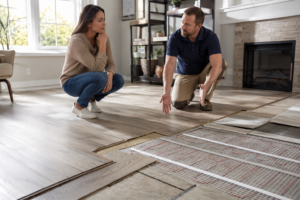
Many vinyl flooring products can be installed over compatible radiant heating systems, but compatibility should never be assumed.
The flooring manufacturer must approve the product for radiant heat, and the heating system must be suitable for use beneath vinyl. Temperature limits, subfloor preparation, moisture control and thermostat requirements vary between products.
Installing underfloor heating beneath an existing floor usually requires lifting the vinyl. It is most practical when the floor is already being repaired or when reusable click-lock planks can be removed and reinstalled without damage.
This is not the simplest no-replacement option, but it may be worth exploring during a larger renovation, particularly in bathrooms, bedrooms and basement living areas.
When Cold Flooring May Signal a Larger Problem
A cool floor is not necessarily defective. Cold flooring combined with lifting edges, separating planks, soft spots, moisture, discoloration or musty odors deserves professional attention.
Those symptoms may point to subfloor damage, trapped moisture or an installation problem. A rug may make the surface more comfortable, but it should not be used to hide movement or moisture that needs to be investigated.
The Your Home Design Center Take
Do not begin by assuming the entire floor needs to come out.
Start with the places where the cold is most noticeable. Add a properly sized rug, use a pad confirmed as safe for vinyl, soften long walking routes and stop obvious drafts. Then make sure furniture and curtains are not blocking the room’s heat.
If the room still feels cold, look beneath the finish. Concrete slabs, garages, crawlspaces and unconditioned basements can affect comfort far more than the vinyl itself.
For future renovations, treat the floor as a complete system. Review the subfloor, moisture conditions, insulation, underlayment and heating compatibility before choosing the visible finish.
A good floor should do more than look warm in photographs. It should also let you cross the room on a cold morning without immediately reconsidering your decision to leave the bed.
