


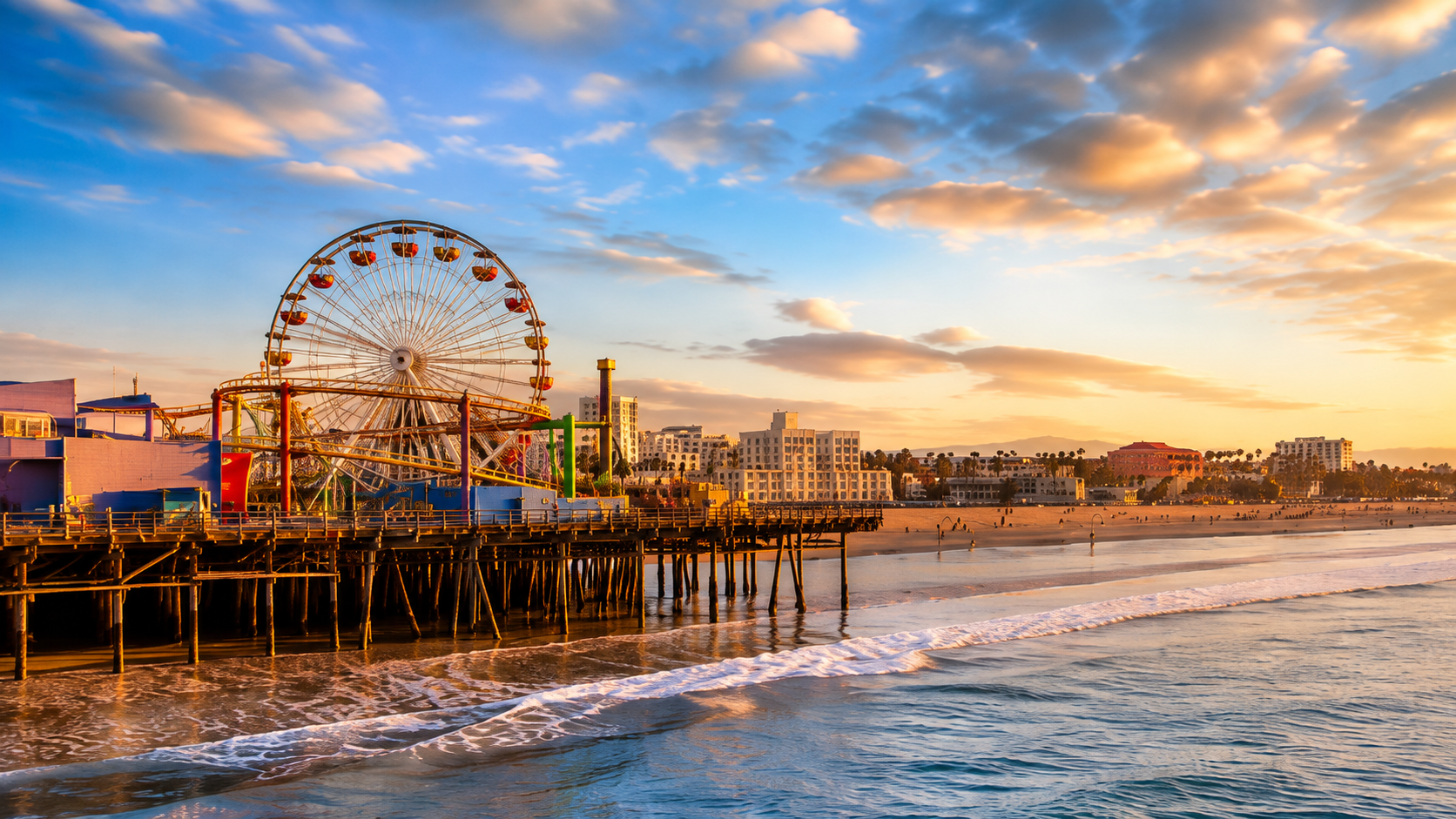
Most people recognize the Santa Monica Pier before they ever visit it. The Ferris wheel glowing above the Pacific, the weathered wooden deck, the beach stretching in both directions and that unmistakable Southern California setting have made it one of the most photographed landmarks on the West Coast.
But there is considerably more beneath the postcard image. The Pier has survived changing tastes, storms, redevelopment threats and more than a century of California history. Even a digital puzzle tour created several years ago was built around the idea that some of the most interesting parts of the Santa Monica Pier are the stories hiding in plain sight.
The Secret Story Tour Put the Pier’s History Into a Game
In 2020, the Santa Monica Pier Corporation partnered with game designers The Wild Optimists to introduce the Secret Story Tour, a location-based digital experience that sent visitors around the Pier solving 12 puzzles. Each successful clue revealed another piece of Pier history while moving players to a different location.
It was a clever concept because the Santa Monica Pier is unusually well suited to this kind of exploration. What appears at first to be a collection of rides, restaurants and oceanfront entertainment is actually layered with more than a century of history. The original Secret Story Tour is no longer prominently promoted among the Pier’s current attractions, so visitors should not assume the 2020 experience is still available. The idea behind it, however, remains useful: slow down and actually look around.
The Santa Monica Pier Was Not Originally Built for Amusement
The story begins in 1909, when the Santa Monica Municipal Pier opened. Surprisingly, roller coasters and carnival games were not the reason it was built. The original municipal structure was constructed as part of the city’s sanitation infrastructure, extending a pipeline out over the ocean. Fishermen and people looking for a waterfront stroll quickly found more enjoyable uses for it.
The entertainment story really took shape in 1916, when amusement entrepreneur Charles Looff developed an adjoining pleasure pier. Looff brought rides and his ornate carousel building, helping transform the waterfront into the recreational destination people recognize today. The historic Looff Hippodrome survived even as much of the surrounding amusement landscape changed and is now a National Historic Landmark.
For anyone interested in architecture and design, that history matters. The Pier did not emerge from a single master plan. It evolved layer by layer, which is one reason it feels so different from a modern entertainment complex built all at once.
The Historic Carousel Is Worth Stepping Inside to See
It is easy to walk toward the louder attractions and miss one of the Pier’s most important buildings. The carousel is housed inside the Looff Hippodrome, an ornate structure dating to the Pier’s early amusement era.
The carousel operating there today is historic in its own right, and stepping indoors provides a completely different visual experience from the bright contemporary rides outside. Decorative details, painted horses and old-fashioned craftsmanship offer a reminder that amusement parks once placed an enormous amount of attention on ornamentation.
That contrast between old and new is part of the Pier’s appeal. Historic architecture sits alongside modern entertainment without turning the destination into a museum where visitors are afraid to touch anything.
Pacific Park Provides the View Everyone Comes to See
Of course, history is only part of the reason people come here. Pacific Park brings the familiar amusement-park energy with rides, midway games and the Pacific Wheel rising above the ocean. From the Ferris wheel, the setting becomes the attraction, with views stretching across the coastline and back toward Santa Monica.
The West Coaster offers a decidedly less peaceful way to appreciate the scenery, while the surrounding games and food stands keep the Pier feeling like the seaside amusement destination generations of visitors expect.
There is no admission charge simply to walk onto the Pier, so visitors can decide whether the day involves rides and games or nothing more complicated than an oceanfront stroll.
Look Under the Pier Too
One of the easiest attractions to overlook is literally underneath part of the Pier. Heal the Bay Aquarium operates a marine education center below the historic carousel building, with exhibits focused on the animals and ecosystems found along the Southern California coast.
It adds another layer to a visit because the Pacific becomes more than a backdrop for photographs. Tide-pool creatures, marine habitats and local conservation efforts help connect what visitors see from the deck with what is happening beneath the water.
For travelers interested in places where design and the natural environment overlap, that relationship is worth noticing. We found a similar connection farther down the Southern California coast in our look at Alila Marea Beach Resort Encinitas, where architecture takes many of its cues from the surrounding coastline.
Some of the Best Pier Experiences Are Still the Simplest
You do not need an itinerary to enjoy the Santa Monica Pier. Walk to the end and watch fishermen working along the rail. Stop for something to eat. Listen to a street performer. Look back toward the beach and city. Stay long enough to watch the light change over the Pacific.
Those quieter moments help explain why the Pier has lasted while so many other historic amusement destinations disappeared. It functions as both an attraction and a public gathering place. You can spend money on rides, games and food, but you can also simply walk out over the ocean.
That sense of place is something we also explored in Tecate Through the Eyes of Art, Architecture and Nature, where understanding the history and landscape makes the destination considerably more interesting than rushing from one attraction to the next.
Visiting the Santa Monica Pier in 2026 Is a Little Different
There is one important detail visitors should know before heading to Santa Monica this year. The city is in the middle of a major replacement of the bridge connecting Ocean Avenue with the Pier.
A temporary pedestrian bridge opened in June 2026 and now serves as the primary pedestrian entrance while the old bridge is demolished and replaced. The Pier itself remains open, including its attractions, restaurants and businesses. The bridge project is scheduled to continue through 2027, so visitors should expect construction activity and follow current directional signage.
Parking remains available, although the City of Santa Monica recommends checking current access information before driving into the area. Nearby alternatives include Beach Lot 3 North, Beach Lot 4 South and Parking Structure 8. Public transportation can eliminate much of the parking complication, with the Metro E Line and Big Blue Bus serving downtown Santa Monica within walking distance of the Pier. For the latest construction and access information, check the City of Santa Monica’s Pier access updates before visiting.
The Pier’s Real Secret Is How Much History Survived
The original Secret Story Tour approached Santa Monica Pier as a puzzle, but you do not need an app to discover why this place has remained relevant for more than a century.
Look past the Ferris wheel and you find a municipal pier from 1909, an amusement legacy dating to 1916, a landmark carousel building, generations of fishing and entertainment history and a public space that Santa Monica residents once fought to save from demolition.
Then there is the wonderfully uncomplicated part. You are still standing on a wooden pier over the Pacific Ocean with a beach on one side, an amusement park on the other and a sunset that requires no technology whatsoever.
For current attractions, events and visitor information, visit the official Santa Monica Pier website.