


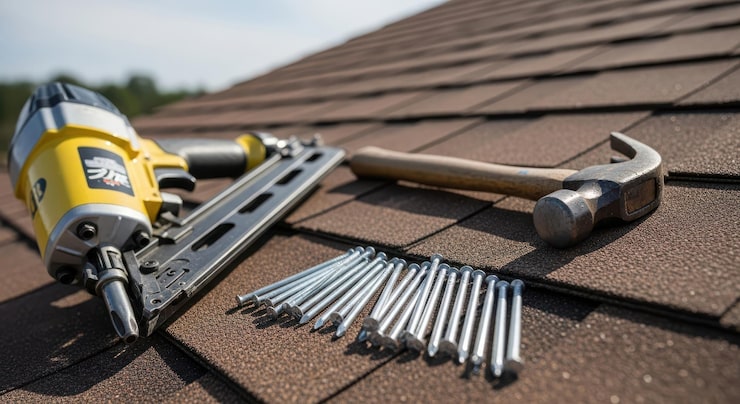
A roofing project may look straightforward from the ground, but the work happening on the roof involves careful measurements, precise cuts, material removal, fastening and finishing details. The tools a contractor brings to the job can tell homeowners a lot about how prepared the crew is for the work ahead.
Understanding common roofing hand tools does not mean homeowners should climb onto the roof and attempt the work themselves. Instead, it offers a clearer picture of how professional roofers approach installation, repairs and tear-offs. A prepared contractor should have tools suited to the roof and the materials being installed rather than relying on improvisation.
Many of the most useful roofing hand tools are simple, proven tools that help crews work with greater control and precision. Here are 10 essentials worth knowing.
Roofing Hammer or Hatchet
A roofing hammer is one of the most recognizable tools on a professional roofing job. It can be used to drive individual nails, position materials and handle smaller removal tasks.
Some roofing hammers include a shingle gauge to help maintain consistent spacing during installation. A balanced tool with a comfortable grip can also make repetitive work easier to control.
Its limits matter, too. A hammer works well for individual nails and detail work, but it is not a replacement for a proper tear-off bar when large sections of old roofing need to be removed.
Pry Bar or Tear-Off Bar
Removing an existing roof requires leverage, and that is where a pry bar or tear-off bar becomes important. Professional crews use these tools to lift shingles, pull nails and separate old roofing materials.
Longer bars can provide additional leverage, while shorter options may offer better control around tighter areas. The key is using the appropriate tool without applying unnecessary force to the roof deck.
Aggressive prying can damage decking that may otherwise be in good condition. This is one reason the right equipment and careful technique both matter during a tear-off.
Utility Knife With Hook Blades
A utility knife is a daily essential for cutting shingles, underlayment and roofing felt. Hook blades are particularly useful because they allow roofers to cut many roofing materials with greater control.
A secure blade mechanism and easy blade replacement are practical features on a busy job site. More importantly, the blade needs to stay sharp. Forcing a dull blade through roofing materials can lead to uneven cuts and increase the risk of slipping.
Aviation or Roofing Snips
Roofing often involves cutting thin sheet metal for flashing, vents and other details. Aviation snips give crews more control when making these cuts than a general-purpose cutting tool.
Different snips may be designed for straight, left or right cuts, depending on the work being performed. Matching the tool to the material and cut helps protect both the finished detail and the tool itself.
Using one pair of snips for every type and thickness of metal can produce poor cuts and unnecessary wear.
Tape Measure
Few roofing hand tools are as basic or as important as a reliable tape measure. Accurate measurements help crews calculate material needs, position components and make cuts before installation.
Roof surfaces are not always as simple as they appear. Additions, valleys, dormers and irregular sections can create measurements that are easy to miss from the ground. Double-checking important dimensions helps prevent costly mistakes before materials are cut or installed.
Homeowners considering a roofing project can also explore How to Find a Roofer for Your Home for practical guidance on evaluating a roofing professional.
Chalk Line
A chalk line turns a measurement into a visible guide across the roof surface. Roofers use it to establish straight layout lines and maintain consistent positioning during installation.
Clear layout lines can make a noticeable difference in the appearance and alignment of roofing materials. Wind, moisture and dusty surfaces can affect how well chalk marks remain visible, so crews need to confirm their reference lines before moving forward.
Flat Bar
A flat bar is a compact but highly versatile tool. It can help lift shingles, pull nails, separate materials and reach areas where a larger tear-off bar would be awkward to use.
Its smaller size gives roofers more control around flashing and other detailed areas. At the same time, it still provides significant leverage, which means careless positioning can damage surrounding materials.
For homeowners, seeing a crew use the right removal tools rather than forcing materials apart can be a small but useful sign of attention to detail.
Hammer Tacker
A hammer tacker allows crews to place staples quickly when staples are approved for the specific roofing application. It can be useful for securing certain underlayment products and other materials that are designed to be fastened this way.
Speed should not determine the fastening method. Staples are not appropriate for every roofing material or installation situation, so professional crews should follow the manufacturer’s installation instructions and applicable requirements for the roofing system being used.
Caulking Gun
A caulking gun allows roofers to apply compatible sealants with greater control around flashing details, penetrations and other areas where the roofing system calls for sealant.
A smooth trigger can make application more consistent, particularly when working with thicker roofing sealants. However, sealant should never be treated as a shortcut for proper construction.
It cannot correct incorrectly installed flashing, missing fasteners or other underlying problems. A professional repair should address the cause of the issue rather than simply covering it with more sealant.
For homeowners thinking about maintenance beyond the roof itself, Cleaning Your Roof and Gutter — DIY or Hire a Roof Cleaning Service offers another useful perspective on exterior home maintenance.
Magnetic Nail Sweeper
A roofing project is not finished when the last shingle is installed. Cleanup around the property is an important part of professional workmanship.
A magnetic nail sweeper helps collect loose nails and other ferrous metal debris from driveways, lawns and surrounding areas. It is especially useful after a tear-off, when old fasteners can easily end up around the home.
Still, a magnetic sweeper should not be the only cleanup step. A thorough crew should also inspect the work area visually and remove other debris that a magnet cannot collect.
Roofing Safety Goes Beyond the Toolbox
The right tools are only one part of a professional roofing job. Safe roofing work also depends on appropriate fall protection, suitable footwear, properly positioned ladders and job-site procedures that match the conditions and type of work being performed.
OSHA identifies fall hazards as a major concern in roofing and residential construction. In general, OSHA requires fall protection for employees working six feet or more above lower levels in residential construction, although the specific requirements and permitted methods can depend on the work being performed and the applicable OSHA standard.
For homeowners, a contractor’s approach to safety can be just as important as the equipment in the truck. A professional roofing company should have trained workers and safety practices suited to the specific project rather than treating every roof as the same.
Choosing Tools That Match the Job
A professional roofing toolkit is not about having the largest collection of equipment. It is about bringing the right tools for the roof, the materials and the work being performed.
For homeowners, understanding these 10 essentials can make it easier to recognize the difference between a prepared roofing crew and one that appears to be improvising. The quality of a finished roof depends on far more than the tools themselves, but proper equipment, skilled installation and attention to safety are all signs that a contractor is taking the job seriously.
When evaluating a roofing company, the best question is not whether the crew owns every possible tool. It is whether the contractor has the knowledge, preparation and professional approach needed to do your particular roof correctly.
