


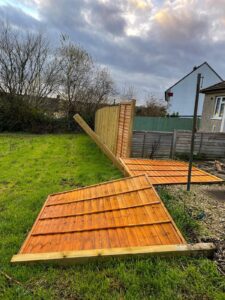
I didn’t notice the fence fell first during the storm. There was no dramatic crash, no moment where I ran outside in slippers. It happened quietly, the way winter damage usually does. The next morning, coffee in hand, I looked out at the backyard and realized something was… off.One section of the fence leaned forward like it was tired. Another panel had fully given up and was resting against a shrub that definitely didn’t sign up for this.My wife walked up beside me, took a sip of her coffee, and said calmly,“Well, I guess we’re replacing the fence.”That was it. No panic. No discussion. Just a fact of homeowner life.And suddenly, I was the guy who had to figure out how to replace a fence.
The First Question Wasn’t How — It Was What
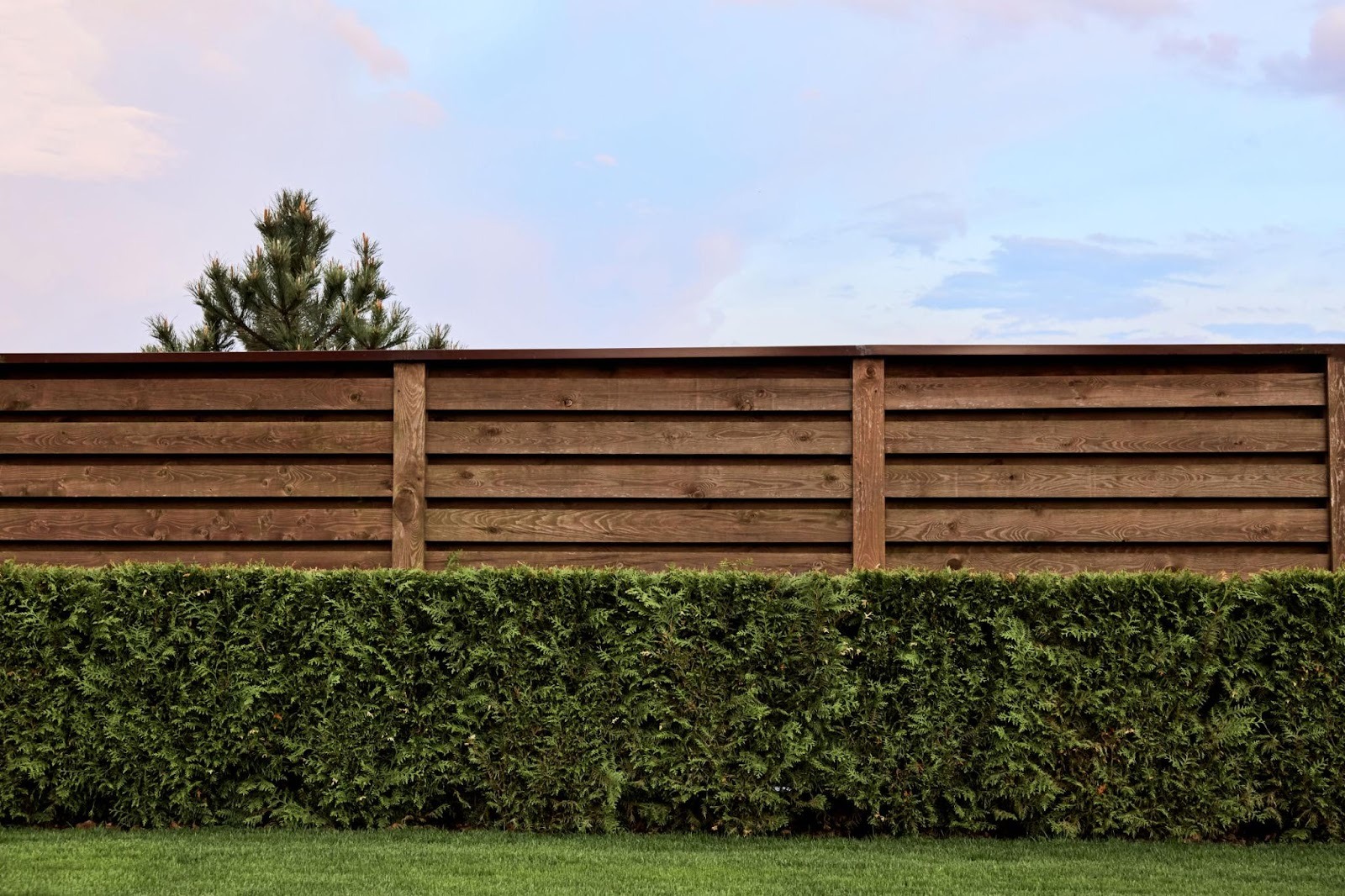
Before I touched a tool or watched a single tutorial, I stood in the yard trying to answer the real question:What kind of fence do we even want now?Because once you’re rebuilding, you’re not just fixing damage. You’re making a decision that’ll stare back at you every day.I knew the options.The traditional vertical wood fence felt familiar. Safe. The kind of fence that blends into the background and doesn’t ask questions. Easy to repair, easy to stain, easy to explain.Then there was the horizontal fence — cleaner, more architectural, quietly confident. The kind of fence that makes people ask, “Did you redo your yard?” instead of “What happened to your fence?”And then there were the plastic and composite options. Tempting. Weatherproof. Low maintenance. Practically immune to the kind of winter storms that started this whole mess.But standing there, looking at the house, I realized something:If I was going to do this once, I wanted it to feel intentional.I chose a horizontal wood fence. Still natural. Still warm. But clearly a step forward.
Then Came the Tools (Reality Check Included)
This is the part no one romanticizes.You don’t rebuild a fence with optimism alone. You need tools that don’t flinch when the ground fights back.The first thing I bought was a real shovel not the flimsy one that had survived three apartments and a garden phase.I went with a heavy-duty round shovel like this one:👉 Bully Tools 14-Gauge Round ShovelThat shovel and I got very close, very fast.The second realization hit when I started thinking about clean, consistent cuts for horizontal boards. This wasn’t a “borrow a saw and hope” situation.I needed a table saw — something accurate, stable, and forgiving.I used one similar to this:👉 DEWALT 10-Inch Jobsite Table SawBuying a table saw felt like crossing a homeowner threshold. Once you own one, you’re officially in it.
Digging Post Holes Will Humble You when fence fell first
 Nothing prepares you for digging post holes.Not your gym membership.Not your confidence.Not your belief that “it’s just dirt.”Each hole had to be deep enough to survive the next storm, not just look good today. I measured. Dug. Hit rocks. Dug again. Checked alignment. Dug more.By the time I set the posts in concrete, I understood something fundamental:If the posts are wrong, the fence will always look wrong.So I slowed down. Used a level obsessively. Walked away and let the concrete cure instead of rushing ahead.That patience paid off later.
The Moment It Started Looking Like a Fence
The first horizontal board changed everything.Up until that point, it felt like labor. Holes. Posts. Measurements. Dust. Noise.But once the boards started going up, the yard began to take shape again. Each cut mattered. Each line mattered. There was nowhere to hide sloppy work — and that made me care more.I stopped trying to finish quickly and focused on getting it right.Board by board, the fence stopped being a project and started being part of the house again.
What I Learned the Hard Way
I learned that fences don’t forgive shortcuts.That winter damage isn’t cosmetic — it’s structural.And that rebuilding something properly feels very different than patching it.I also learned that:
- Digging is harder than it looks
- Measuring twice saves hours later
- Tools matter more than enthusiasm
- Starting early beats working tired
The Part I Didn’t Expect
I thought replacing the fence would feel like another chore.Instead, it felt like a quiet milestone.The yard felt finished again. Defined. Protected. Intentional.And when the next storm rolled through, I stood at the window, coffee in hand, watching the wind hit a fence I built — and watched it hold.That moment made every shovel scoop worth it.When winter knocks something down, you have a choice.You can put it back the same way — or you can rebuild it better.For me, replacing the fence wasn’t just about wood and posts.It was about stepping into the role of someone who fixes what breaks and makes it stronger the second time around.If your fence just fell, take it as permission.Build it right.Build it intentionally.And don’t underestimate the shovel.