


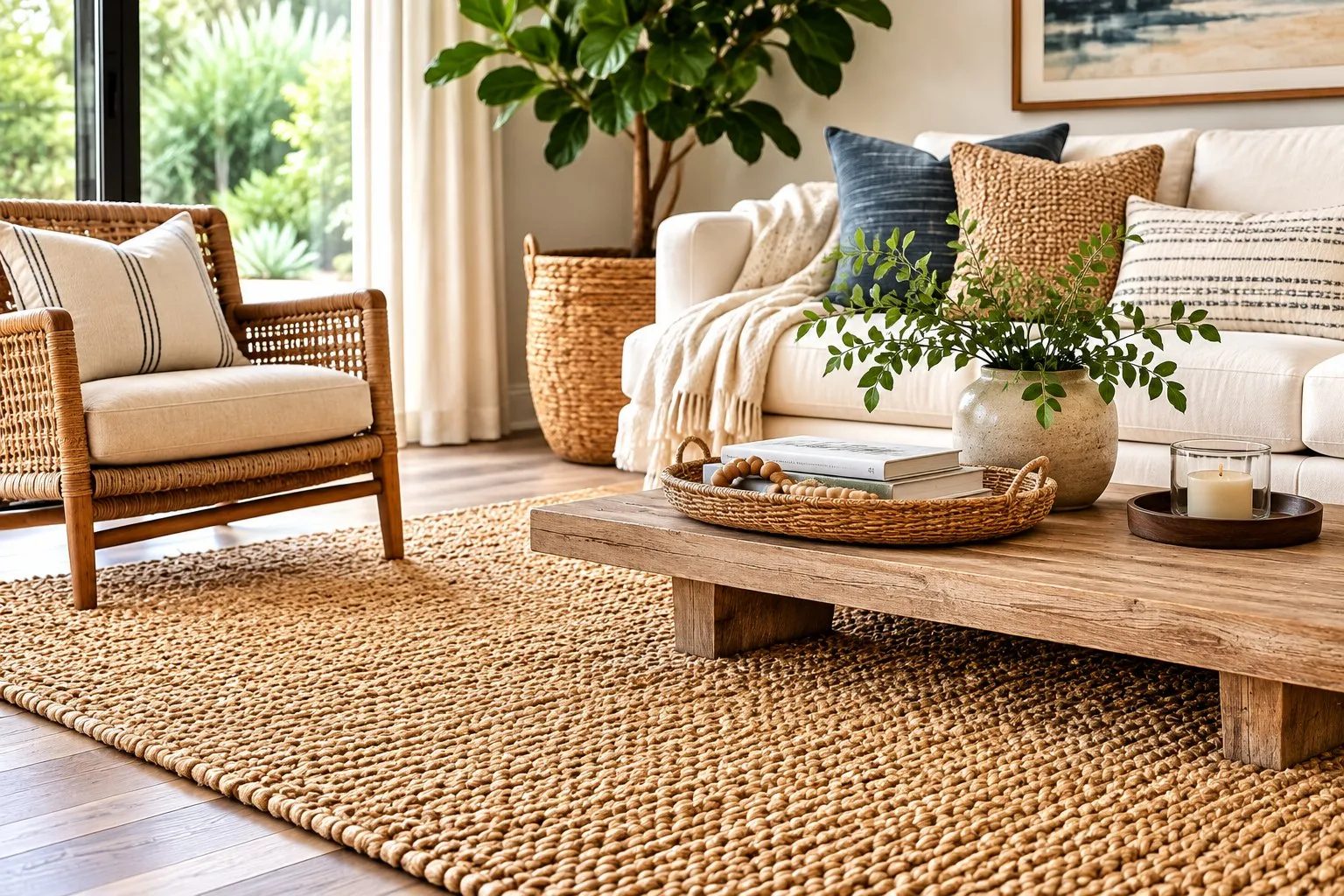
Jute rugs photograph beautifully. Their warm color, chunky texture, and relaxed good looks can make a room feel finished without making it feel overly decorated. Then comes the practical question that styled room photos rarely answer: Is a jute rug actually comfortable to walk on?
The honest answer is yes, within reason. Jute is generally softer than rougher plant fibers such as sisal and coir, but it will never feel like plush wool or thick carpet. A well-made jute rug feels firm, textured, and pleasantly natural underfoot. Whether that sounds inviting or slightly scratchy depends on the rug’s weave, the room, and how much barefoot lounging you expect to do.
What a Jute Rug Actually Feels Like
Jute rugs have a dry, woven texture rather than a cushioned pile. Under shoes, the surface usually feels comfortable and stable. Under bare feet, you will notice the weave. Some people enjoy that subtle texture, while others want something softer beside the bed or beneath a favorite reading chair.
Construction matters as much as the fiber itself. A finely woven jute rug usually feels smoother than one made with oversized loops or a highly irregular braid. Thick does not automatically mean soft, either. A chunky rug may look substantial while still feeling noticeably bumpy underfoot.
Jute Is Comfortable but Not Plush
A jute rug can make a room feel warmer, both visually and physically, but it should not be mistaken for a padded floor covering. It does not compress around the foot in the way wool, shag, or a high-pile synthetic rug does.
That distinction makes jute a good fit for homeowners who prefer natural texture and a firmer surface. It is less appealing for anyone expecting the floor-rug equivalent of a bathrobe. For long periods of standing, such as in front of a kitchen sink, an anti-fatigue mat or more cushioned rug will usually be the better choice.
The Weave Makes a Noticeable Difference
Before buying, look closely at product photos showing the rug from the side and at close range. A tight, even weave generally creates a smoother walking surface. Large knots, thick braids, and exaggerated loops create more pronounced ridges that may be uncomfortable beneath bare feet or lightweight furniture.
Jute blends can also change the experience. Rugs combining jute with cotton may feel more flexible, while wool-and-jute designs can add softness without losing the natural appearance. Check the fiber percentages rather than relying on the product name, since a rug marketed as “jute” may contain several materials.
A Rug Pad Improves More Than Comfort
A quality rug pad is one of the simplest ways to make a jute rug more comfortable. It adds a thin layer of cushioning, helps reduce movement, and prevents the rug from grinding directly against the flooring beneath it.
Choose the pad according to the surface. Hardwood, tile, laminate, and luxury vinyl may require different backing materials, and some inexpensive rubber or PVC pads can discolor certain floors. The pad should also be slightly smaller than the rug so it remains hidden around the edges.
For dining rooms, a thinner nonslip pad may be sufficient. In living rooms and bedrooms, a denser felt-and-rubber pad can provide more cushioning. It will not transform jute into a cloud, but it can move the experience from “rustic basket” to “comfortably textured.”
The Best Rooms for a Jute Rug
Living rooms are a natural match for jute, particularly when much of the walking happens in shoes or slippers. The neutral color works easily with wood, leather, linen, and patterned upholstery. A rug pad can make the seating area feel more comfortable without changing the room’s clean, organic look.
Bedrooms can also work well, despite jute’s reputation for roughness. Place a softer rug beside the bed, layer a smaller wool rug over the jute, or select a tightly woven jute blend. Layering is particularly useful when you want the broad coverage and texture of jute but prefer something gentler where your feet land each morning.
Dining rooms are another practical location because chairs tend to move more easily across a low, firm weave than across deep pile. Make sure the rug extends far enough beyond the table for the back legs of the chairs to remain on it when pulled out.
Where Jute Can Become a Bad Idea
Jute and moisture are not close friends. Bathrooms, damp basements, uncovered patios, and areas regularly exposed to wet shoes are risky locations. Water can cause staining, discoloration, odor, distortion, and fiber damage.
Kitchens are possible but not particularly forgiving. A jute runner may look wonderful until tomato sauce, cooking oil, or a full mug of coffee becomes part of the design. Homes with puppies, accident-prone pets, or toddlers carrying open cups should also consider a washable or stain-resistant alternative.
Entryways require similar judgment. An interior foyer in a dry climate may be suitable, but a door that regularly admits rain, mud, or melting snow calls for a tougher and easier-to-clean material.
Jute Requires Dry, Gentle Care
Regular vacuuming removes the grit that settles into a textured weave. Use low suction when possible, turn off the rotating beater bar, and avoid repeatedly pulling the vacuum across bound edges or fringe. Loose fibers should be trimmed carefully rather than pulled.
Spills need immediate attention. Blot the area with a clean, absorbent cloth and follow the manufacturer’s instructions for that particular rug. Avoid saturating, shampooing, or steam-cleaning jute. The Carpet and Rug Institute’s care guidance classifies plant-fiber rugs as specialized products and recommends professional cleaning methods when deeper treatment is needed.
Jute also sheds, particularly when new. The amount varies by construction and quality, but a little fiber dust beneath the rug is not unusual. Frequent vacuuming during the first few weeks can keep it under control.
How to Choose a More Comfortable Jute Rug
Whenever possible, touch the rug before buying. Run your palm across the weave and press down with your fingertips. If it feels sharp or excessively rigid to your hand, it probably will not become a luxurious barefoot surface simply because it arrives in your living room.
Look beyond color when comparing jute rugs, since weave, fiber blends, thickness, and edge construction all affect how the rug feels underfoot. compare weave style, fiber blend, backing, thickness, edge construction, and return policies rather than choosing by color alone. Customer photos can also reveal whether the surface is relatively smooth or dramatically knotted.
Consider how the room is actually used. A formal sitting room can accommodate a more textured rug than a family room where children play on the floor. Beautiful materials still have to survive real life, which has an irritating habit of involving crumbs.
Is a Jute Rug Right for Your Home?
A jute rug is comfortable enough for most living rooms, dining rooms, offices, and thoughtfully planned bedrooms. Its appeal comes from its warm texture, natural variation, and firm feel—not from deep cushioning.
Choose a tighter weave, add an appropriate rug pad, and keep it away from persistent moisture and frequent spills. For homeowners who understand what jute does well, it can be an attractive and practical foundation for a more comfortable home. For anyone seeking softness above everything else, wool, cotton, or a quality synthetic rug will be the better match.
